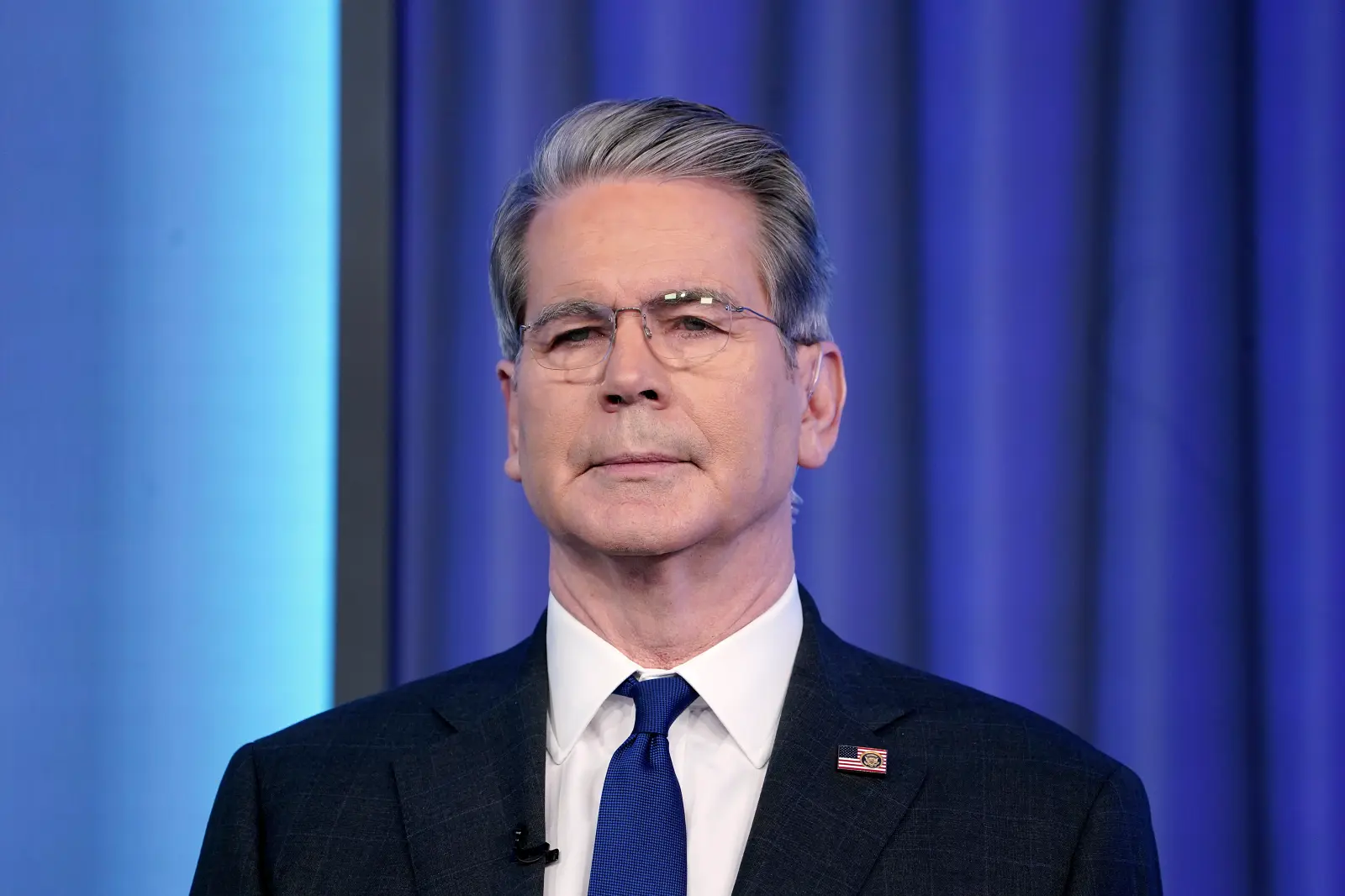

After President Donald Trump floated the idea of giving most Americans a $2,000 direct payment funded by tariff revenue, Treasury Secretary Scott Bessent has begun clarifying who might actually qualify.
Why It Matters
The administration has faced criticism over its extensive tariffs, with opponents arguing they have increased prices for everyday consumers and risk sparking broader trade conflicts.
A $2,000 rebate could help offset higher costs for groceries and essential goods — but distributing those payments would almost certainly require approval from Congress.
What To Know
Trump has promoted the rebate as a way to return tariff revenue to U.S. households.
“A dividend of at least $2000 a person (not including high income people!) will be paid to everyone,” Trump wrote Sunday on Truth Social.
Bessent said on Fox News that eligibility would likely extend to those earning “less than, say, $100,000,” though the specifics are still under review.
Financial expert Kevin Thompson, CEO of 9i Capital Group and host of the 9innings podcast, told Newsweek that placing the income cap at $100,000 could make roughly 120 million Americans eligible — an effort that could cost around $240 billion.
“According to the tax foundation, we have only made roughly $130B from both new and old tariffs thus far, so that would basically wipe away all tariff revenue and then also call for additional spending,” Thompson said. “This will end up just like our DOGE dividends and be repositioned as ‘in the tax bill.’”
Trump first introduced the idea in July, tying it to billions collected in tariffs from his trade policies.
Bessent added that payments could be delivered “in lots of forms,” including potential tax changes such as eliminating taxes on tips, overtime, Social Security benefits or vehicle loan deductions.
What People Are Saying
Thompson said:
“A lot of people are assuming this will look like the pandemic-era stimulus, but I don’t see that as being the case.
If anything does pass, it will be symbolic. Hard checks aren’t happening.”
He noted that sending physical checks would run counter to the administration’s stated goal of reducing the national debt.
Alex Beene, a financial literacy instructor at the University of Tennessee at Martin, told Newsweek that such a proposal would cover a significant share of Americans — but faces major hurdles.
“There are so many ‘what-ifs’ to account for. We still don’t know if the Supreme Court is going to allow the current tariff policy to stand,” Beene explained, noting concerns within Congress about the growing federal deficit.
What Happens Next
The Treasury Department says more than $220 billion in tariff revenue has already been collected. Meanwhile, CNN estimates that $2,000 rebate checks could cost the country around $326 billion.
Moving forward would likely require Congress to pass a new law authorizing the Treasury Department to distribute payments — similar to how previous stimulus checks were enacted during both the Trump and Biden administrations.