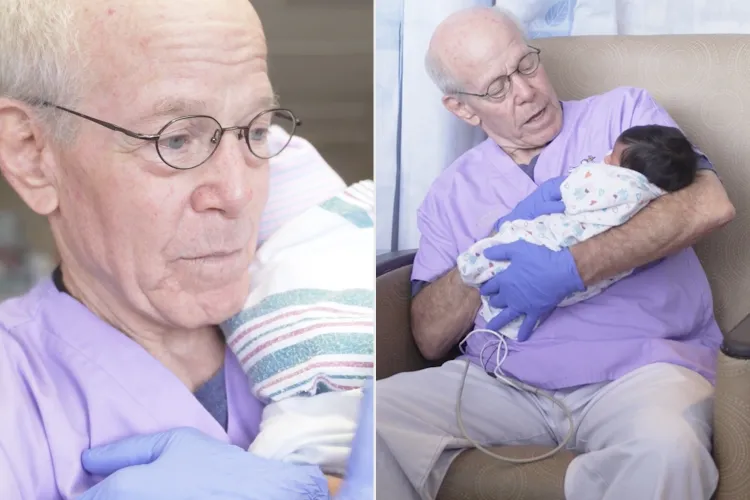

Lynn Harris is embracing a gentler chapter of life.
The 83-year-old retired salesman and Army veteran spent most of his career in what he calls a tough, no-nonsense line of work. In retirement, he’s found a very different calling: volunteering in a neonatal intensive care unit, where he helps soothe fussy newborns by holding and comforting them.
Harris was drafted into the Army at 23 and served in Vietnam as a medic. Afterward, he moved into sales, spending years selling sandpaper and other abrasive materials. Though he once worked in a hospital environment, he didn’t expect to return—until a conversation at a church potluck inspired him to volunteer at St. David’s Medical Center in Austin, Texas.
Nearly two decades later, Harris has served in many roles at the hospital. About eight years ago, he began volunteering regularly in the NICU, focusing on calming babies who are upset or restless.
:max_bytes(150000):strip_icc():focal(1157x390:1159x392):format(webp)/83-Year-Old-Army-Vet-021226-4-aacb9a3a4431447d9b954b974baa8d7b.jpg)
“Outside of my own family, I’ve never been that good with kids,” Harris, a father of two, said.
He admits the NICU can be intimidating. His goal, he explained, is to keep the babies as calm as possible—because once one starts crying, the others often follow.
During his shifts, Harris moves from one infant to the next, doing whatever helps: picking them up, rubbing their forehead, patting their back, and easing them into rest.
He’s noticed one unexpected advantage as one of the few male volunteers. With most staff and volunteers being women, his deeper voice can catch babies’ attention and quiet them quickly, especially when he chats in a playful, offbeat way.
“They have no idea what I’m talking about,” he said. “It’s just that someone’s talking to them.”
That trick doesn’t last forever. Once babies get used to him, he says they react the same way they do with everyone else—meaning there are still moments when multiple infants cry at once and there’s no easy fix. When that happens, he jokes, his best strategy is simple: step into another room.
But the role isn’t always lighthearted. Harris says the hardest part is witnessing families who don’t get to bring their babies home.
“It’s not good at all,” he said, noting that while it’s rare, some infants are extremely fragile and don’t survive despite weeks or months of care.
Even the happy transitions can feel bittersweet. When babies finally go home, Harris says he’s glad for them—but he can’t help joking that some leave without so much as a goodbye.
:max_bytes(150000):strip_icc():focal(1010x378:1012x380):format(webp)/83-Year-Old-Army-Vet-021226-2-ccc17deac2d348e3ab69740363809623.jpg)
In early 2025, Harris was diagnosed with labyrinthitis, an inner-ear infection that affects balance and makes it difficult to tell where sounds are coming from. The condition forced him to change what he does in the NICU. Although he can no longer pick up babies, he still supports the unit by stocking supplies and lifting spirits for nurses and parents.
:max_bytes(150000):strip_icc():focal(924x307:926x309):format(webp)/83-Year-Old-Army-Vet-021226-3-990372e7b5a24ae9be9495782c589103.jpg)
Harris hopes more people—especially men—will consider volunteering in NICUs that need extra hands.
“Men don’t know what it’s all about,” he said. “They don’t know how rewarding and how satisfying that is… you come back a day or two later, and they recognize you.”
And, with a grin, he adds the only real downside: “The pay sucks.”