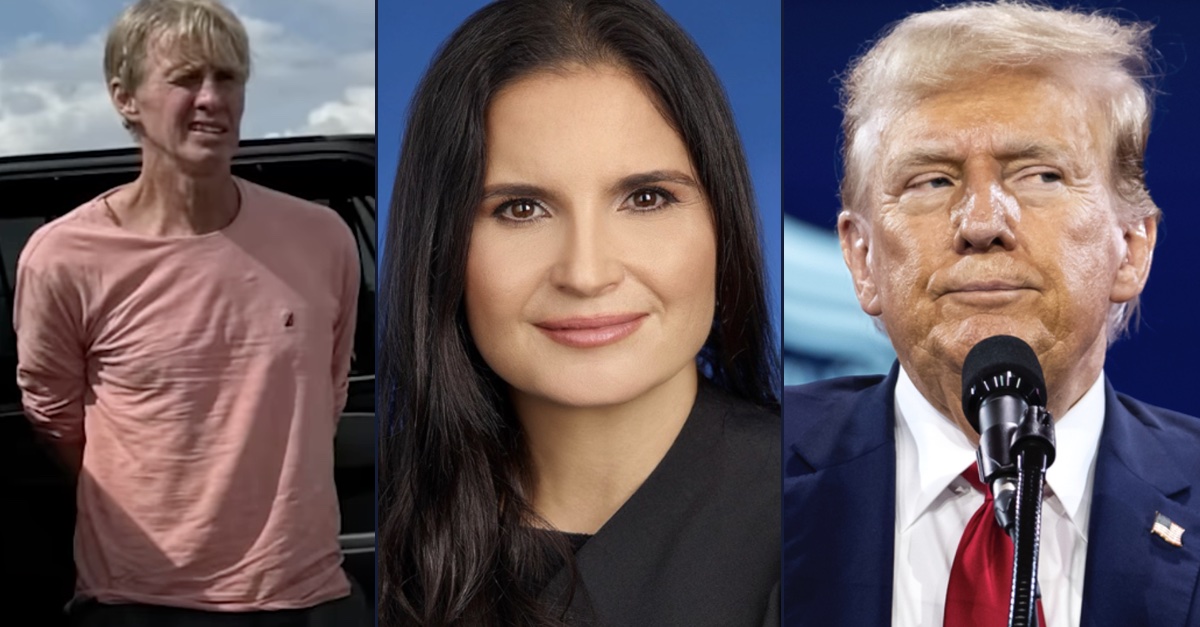

A federal judge has ruled that Ryan Routh, the man accused of attempting to assassinate Donald Trump, may represent himself at trial—prompting alarm from federal prosecutors who fear the courtroom could descend into chaos.
U.S. District Judge Aileen Cannon, a Trump appointee, approved Routh’s request to waive legal counsel on Thursday. The 59-year-old defendant is set to face a jury in September on multiple charges, including attempted assassination of a presidential candidate, assaulting a federal officer, and several weapons violations.
Federal prosecutors warned the court that Routh’s self-representation could derail the proceedings. “This court has a responsibility to ensure that trial does not become a circus,” the Department of Justice wrote in a Thursday filing, expressing concern over the introduction of “plainly inadmissible evidence.”
Routh, who pleaded not guilty, allegedly brought an illegally obtained SKS rifle to Trump International Golf Club in 2024 with the intent to assassinate Trump. He also faces charges of possessing a firearm as a convicted felon and possessing a weapon with a defaced serial number—crimes carrying potential sentences of 15 and 5 years, respectively.
The DOJ alleges that two individuals helped Routh acquire the weapon, including Tina Cooper, a former employee who has since pleaded guilty to conspiracy charges in North Carolina.
In a handwritten, rambling legal response to a recent DOJ motion, Routh accused prosecutors of attempting to silence his defense. He referenced “Trump, Bondi, and the new DOJ,” argued that character is “the whole of this entire case,” and claimed the government was cherry-picking evidence. “You propose to extract just the segment that suits your need,” he wrote, “and attempt to exclude the balance.”
He also questioned why the DOJ seemed “fearful of current events, basic news, and the truth,” mocking their efforts to control trial content with typos like, “teh truth … suace for the go§se and teh gander.”
Prosecutors fired back, stating that Routh’s filings demonstrated why strict limits on evidence are necessary. “It is the defendant’s evidence that is most likely to upend this trial,” they warned, citing concerns over potential attempts to introduce hearsay, self-published writings, and inflammatory character attacks.
“None of the substantive legal arguments raised … has merit,” the DOJ wrote, adding that Judge Cannon’s pretrial rulings would now be “even more critical” to keeping the trial focused on the facts.