
Here’s what scientists uncovered from a remarkable discovery in Saudi Arabia:
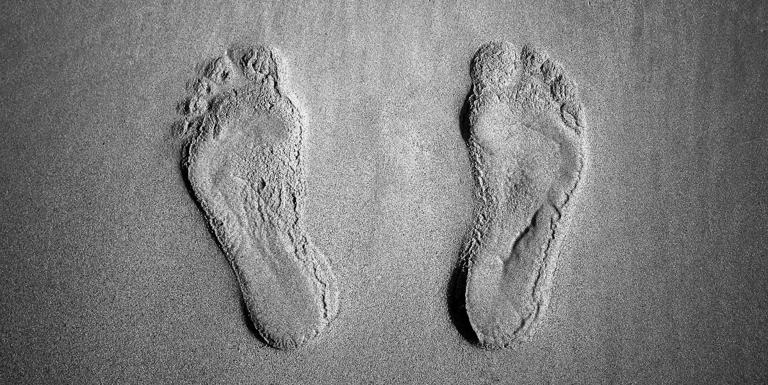
- Seven fossilized human footprints, possibly the oldest ever found on the Arabian Peninsula, were left in ancient mud over 115,000 years ago.
- The prints were found alongside hundreds of prehistoric animal tracks, yet there’s no sign of hunting—suggesting humans were passing through only to drink water.
- The footprints were preserved in an exceptionally rare way, providing a time capsule into human migration just before an ice age.
The site, located in the Nefud Desert and nicknamed “Alathar” (“the trace” in Arabic), was first uncovered in 2017 after shifting sands and erosion revealed the ancient lakebed beneath. Scientists believe this prehistoric watering hole served as a rest stop along a natural migration corridor used by both animals and early humans as they followed shifting climates and resources.
While similar discoveries often come from unique preservation conditions—like the famous Burgess Shale or a mud-entombed armored dinosaur found on the ocean floor—this site’s conditions were especially fragile. Footprints in mud typically lose definition within two days and vanish entirely after four. The fact that these tracks remained intact points to a rare combination of timing, sediment type, and environmental stillness.
Among hundreds of animal prints, researchers identified seven distinct hominin footprints. Based on their shape and size, along with archaeological context, the team concluded they were left by Homo sapiens, not Neanderthals. The conclusion is based on several lines of evidence:
“Seven hominin footprints were confidently identified,” the researchers wrote. “Given the fossil and archaeological evidence for the spread of H. sapiens into the Levant and Arabia during the period 130,000 to 80,000 years ago—and the absence of H. neanderthalensis from the Levant at that time—we argue that H. sapiens was responsible for the tracks at Alathar.”
Interestingly, the site lacked any typical signs of longer-term human presence, such as stone tools or butchered animal remains. This led scientists to believe that these ancient humans stopped briefly at the lake, likely just to drink, before moving on:
“The lack of archaeological evidence suggests that the Alathar lake was only briefly visited by people,” the study noted. “These findings indicate that transient lakeshore use by humans during a dry period of the last interglacial was likely primarily tied to the need for potable water.”
In other words, the people who made these tracks were likely on the move—perhaps among the last groups to pass through a temperate region before a new ice age descended. Their footprints, frozen in time, offer one of the clearest glimpses yet into how early humans navigated the shifting landscapes of prehistoric Arabia.