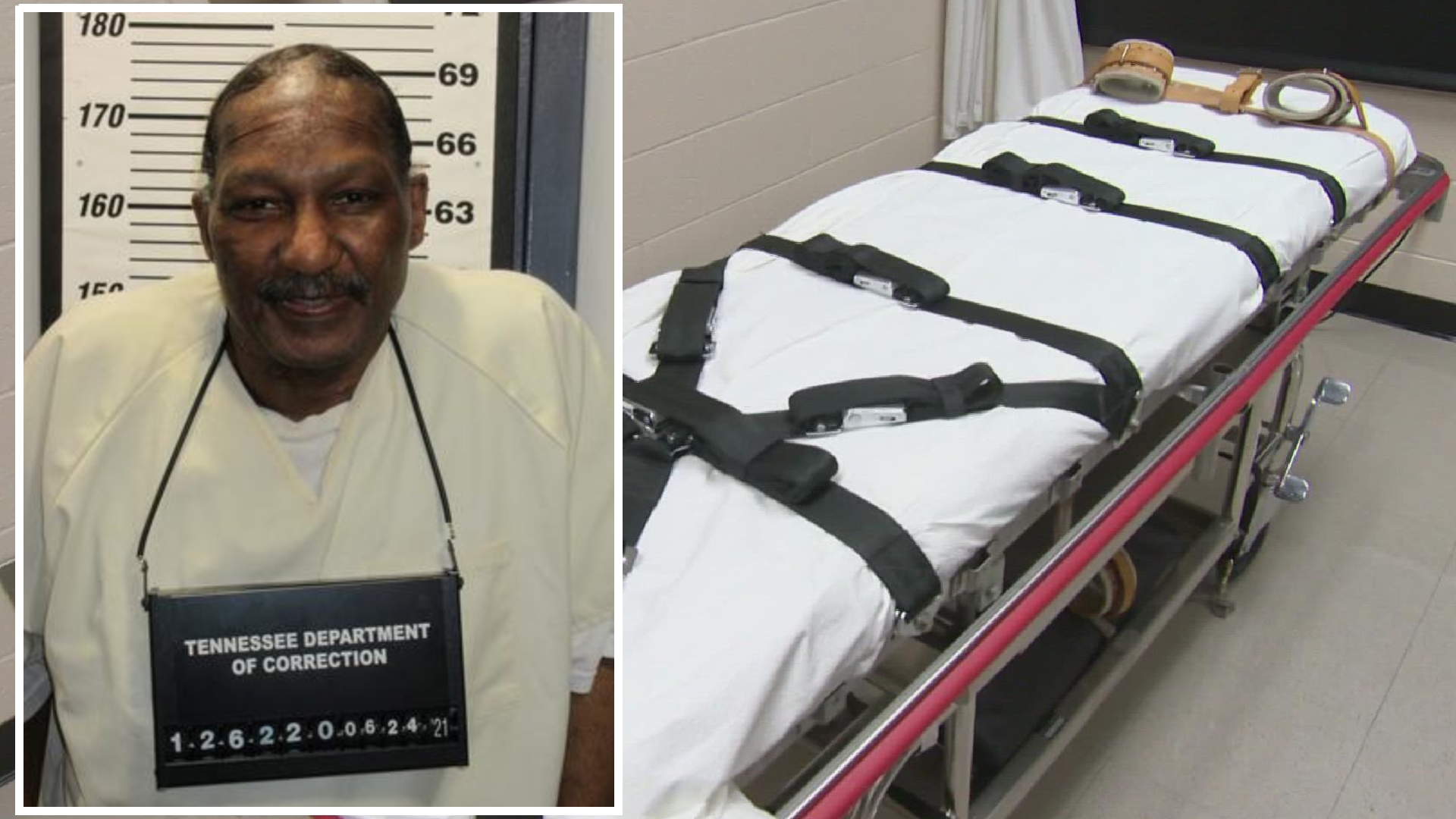

NASHVILLE, Tenn. — A Tennessee judge has ruled that the state must disable a death row inmate’s heart-regulating implant before his scheduled execution, to avoid the risk that the device could deliver painful electric shocks during the lethal injection process.
Chancellor Russell Perkins issued the order on Friday in advance of the planned August 5 execution of Byron Black. Attorneys representing Black argued that his implantable cardioverter-defibrillator—a device meant to restore normal heart rhythm—could attempt to intervene during the execution, potentially shocking him multiple times and causing unnecessary suffering.
The court’s directive requires Tennessee to shut off the device just before the lethal injection is administered. This must be done with trained medical or technical personnel and proper equipment present. Perkins emphasized that the ruling should not delay the execution itself, which he said is beyond his authority to postpone. He also noted that the procedure would not create a significant logistical burden for the state.
According to Black’s legal team, the only reliable method to disable the device is to have a physician use a special programming tool placed over the implant to send a shutdown signal. However, it remains uncertain how quickly the state can secure a medical professional willing to carry out the procedure. A swift appeal from the state is expected.
The implantable cardioverter-defibrillator, installed in May 2024, is a small battery-powered device typically positioned near the left collarbone. It functions both as a pacemaker and as a defibrillator capable of sending electric shocks to correct irregular heartbeats. During a two-day hearing earlier this week, experts gave conflicting testimony about how the device might respond to the lethal dose of pentobarbital, and whether Black would be conscious enough to feel any shocks.
State attorneys argued that the likelihood of the drug activating the device is extremely low. And even if it did, they claimed, Black would be unconscious and unable to feel pain. They also questioned the judge’s authority to mandate the device’s deactivation.
However, Black’s legal team pushed back, saying the state relied on flawed studies conflating unresponsiveness with lack of awareness. Their argument emphasized that pentobarbital may cause unresponsiveness and amnesia, but not necessarily prevent a person from feeling pain.
“This frail old man being shocked repeatedly as the device tries to resuscitate him—even as the state executes him—is a horrifying thought,” said Kelley Henry, one of Black’s attorneys. “Today’s ruling prevents that torturous scenario.”
The Tennessee attorney general’s office has yet to comment on the decision, though in previous court filings it accused Black of attempting to delay justice for a brutal crime.
Black was sentenced to death for the 1988 murders of his girlfriend Angela Clay, 29, and her daughters Latoya, 9, and Lakeisha, 6. Prosecutors said he acted out of jealousy, shooting the three in their home. At the time of the killings, Black was out on a work-release program while serving time for shooting Clay’s estranged husband.
Three previous execution dates for Black were postponed due to the COVID-19 pandemic and a temporary halt on executions ordered by Gov. Bill Lee, following revelations that the Department of Correction had failed to properly test execution drugs for potency and purity. If carried out, Black’s execution would be the second under a revised pentobarbital protocol adopted in December.
Black’s attorneys have long contended that he should not be executed due to intellectual disability, a claim they say would render his execution unconstitutional under state law. That argument has thus far failed to gain traction in court.
Recently, the Tennessee Supreme Court declined to grant a hearing on whether Black is mentally competent to be executed. A separate appeal to the U.S. Supreme Court is still pending.
Black’s lawyers have also petitioned the governor to commute his sentence to life in prison. Their clemency request states that Black suffers from dementia, brain damage, kidney failure, congestive heart failure, and other serious health problems. It also notes that he endured prenatal alcohol exposure and lead poisoning as a child, which they argue severely impacted his cognitive development.
Now 69 years old and confined to a wheelchair, Black’s legal team says he would have qualified for protection under a 2021 Tennessee law—had his claim of intellectual disability been filed later.
His request regarding the deactivation of his heart device is part of a broader legal challenge brought by multiple inmates against Tennessee’s updated execution procedures. That trial is not expected to begin until 2026.