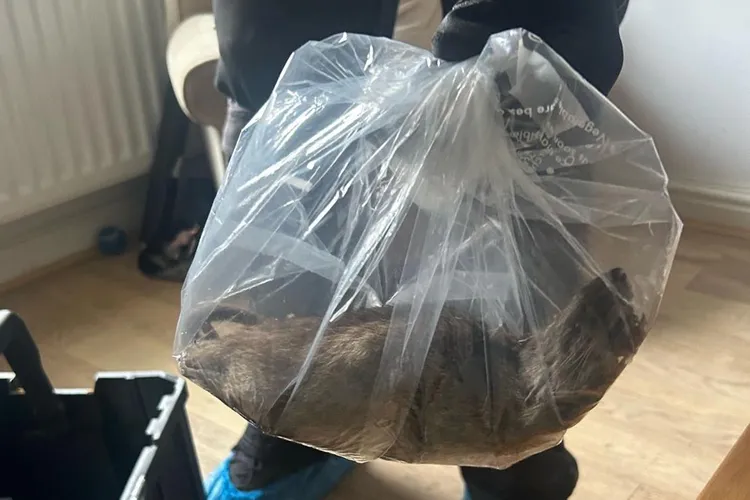

A massive 22-inch rat was recently discovered in a North Yorkshire neighborhood, alarming residents and local officials.
Eston Ward Councilors David Taylor and Stephen Martin shared the news in a Facebook post on July 28, revealing that the rodent — measuring “over 22 inches long from nose to tail” — was found by a pest control worker.
“It’s almost the size of a small cat. And it’s not a one-off,” the councilors wrote, describing the infestation as “a growing problem.” They urged swift action, warning that “the longer this is ignored, the worse it will get. We need action — not just advice.”
In an Aug. 3 update, the councilors noted this was not the first rodent issue in the area. They said effective measures had been taken “two years” ago, but now “the rats are back, and in even greater numbers.” They also shared photos showing “rat holes” in the community.
Later that same day, the officials reported that the photo of the giant rat — along with their initial post — had made national headlines. They expressed hope the attention would spur concrete steps toward resolving the problem.
PEOPLE reached out to the Redcar and Cleveland Borough Council, the North Yorkshire authority overseeing the affected districts, for comment on Aug. 3, but no response was immediately received.
:max_bytes(150000):strip_icc():focal(749x0:751x2):format(webp)/giant-rat-1-080325-498aa142b1e444ffb87b55b67679209b.jpg)
The U.K.’s brown rat is an “incredibly adaptable” species found “almost everywhere” in the country, according to the Wildlife Trust. They are especially common in towns and cities, where they dig their own burrows.
Female brown rats can reproduce from around three months old, typically producing five litters a year, with up to 12 young in each — making them “famously good breeders,” the Wildlife Trust notes.