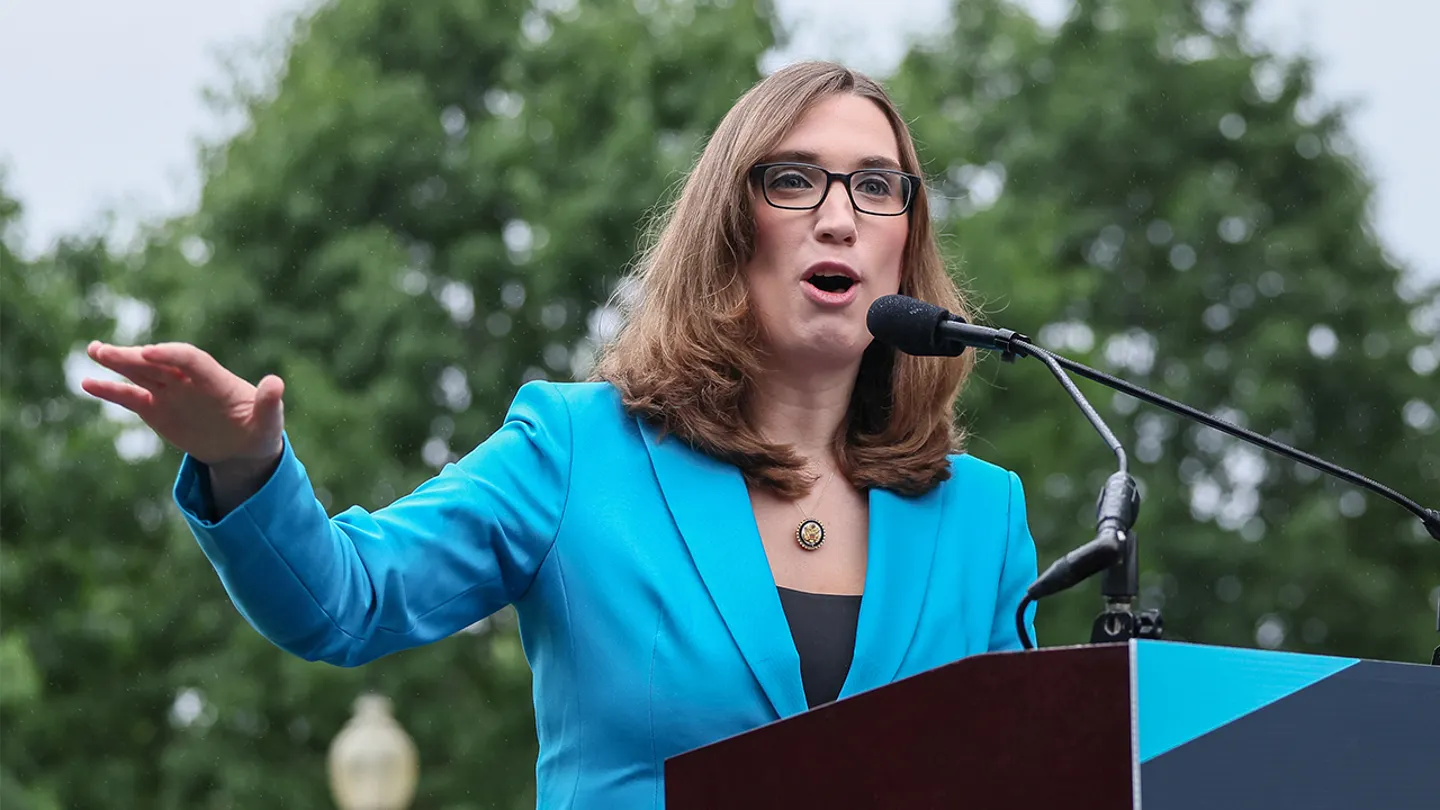

Rep. Sarah McBride, D-Del., criticized the Democratic Party’s silence on Republican-led attacks targeting trans issues, arguing Tuesday that the party needs to learn how to respond effectively.
“I do think it was a problem that our party didn’t explicitly respond to the anti-trans attacks. We can’t ignore these issues. We can’t just not respond and leave the narrative entirely to the Republicans,” McBride said during a conversation with ex-DNC chair Jaime Harrison on his podcast.
Highlighting the 2024 campaign ad by President Donald Trump that portrayed former Vice President Kamala Harris as supporting “they/them” pronouns and himself as “for you,” McBride emphasized the need for Democrats to clearly articulate their stance.
As a transgender lawmaker, McBride stressed that the party should prioritize reaching a “diverse working class” and move away from what she called “absolute purity politics.”
“I will say one of the reasons why, the sense that I have gotten from some Democrats as I talked to them, that you often see silence from Democrats in response to these attacks is because, to your point, they don’t know how to respond, not because they don’t know what they believe or how they feel, but because they feel like there is no way to respond in a way that doesn’t result in everyone yelling at them,” McBride explained on Harrison’s podcast, At Our Table.
McBride suggested that Democrats don’t need perfect terminology or to take a “maximalist position” on trans issues, but they could acknowledge concerns about transgender people in sports.
“You can grapple with concerns around, for instance, trans people participating in sports, acknowledge that there are very real questions out there. But who is best able to answer those questions about how to balance respect and fairness in women’s sports? It’s not 435 members of Congress who know nothing about women’s sports and even less about trans people. It’s the individual athletic associations that understand their sports the best,” she said.
The lawmaker also criticized Republican rhetoric on trans issues as a misdirection, accusing Trump of trying to “line the pockets” of corporations and wealthy individuals.
“And I think we have to be crystal clear about that while also pushing back against these attacks in ways that don’t dismiss everyone with a question or a concern as a closed-minded bigot,” McBride added.
In a June interview with The New York Times’ Ezra Klein, McBride acknowledged that the party may have overreached on trans issues.
“I think that’s an accurate reflection of the overplaying of the hand in some ways — that we as a coalition went to Trans 201, Trans 301, when people were still at a very much Trans 101 stage,” she said.
She noted that many cultural discussions around transgender issues may have been premature for much of the public.
“We became absolutist — not just on trans rights but across the progressive movement — and we forgot that in a democracy we have to grapple with where the public authentically is and actually engage with it. Part of this is fostered by social media,” McBride said.