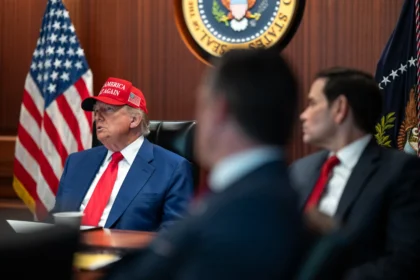

President Donald Trump appeared to waver Monday over deploying National Guard troops to Chicago, suggesting that Gov. JB Pritzker should request the assistance—a request the Illinois governor has made clear will not happen.
“We may wait. We may or may not. We may just go in and do it, which is probably what we should do,” Trump said. “You know, I hate to barge in on a city and then be treated horribly by corrupt politicians and bad politicians like a guy like Pritzker,” he added, mocking the governor and labeling him “a disaster.”
Later, Pritzker firmly reiterated that the state is not inviting federal troops.
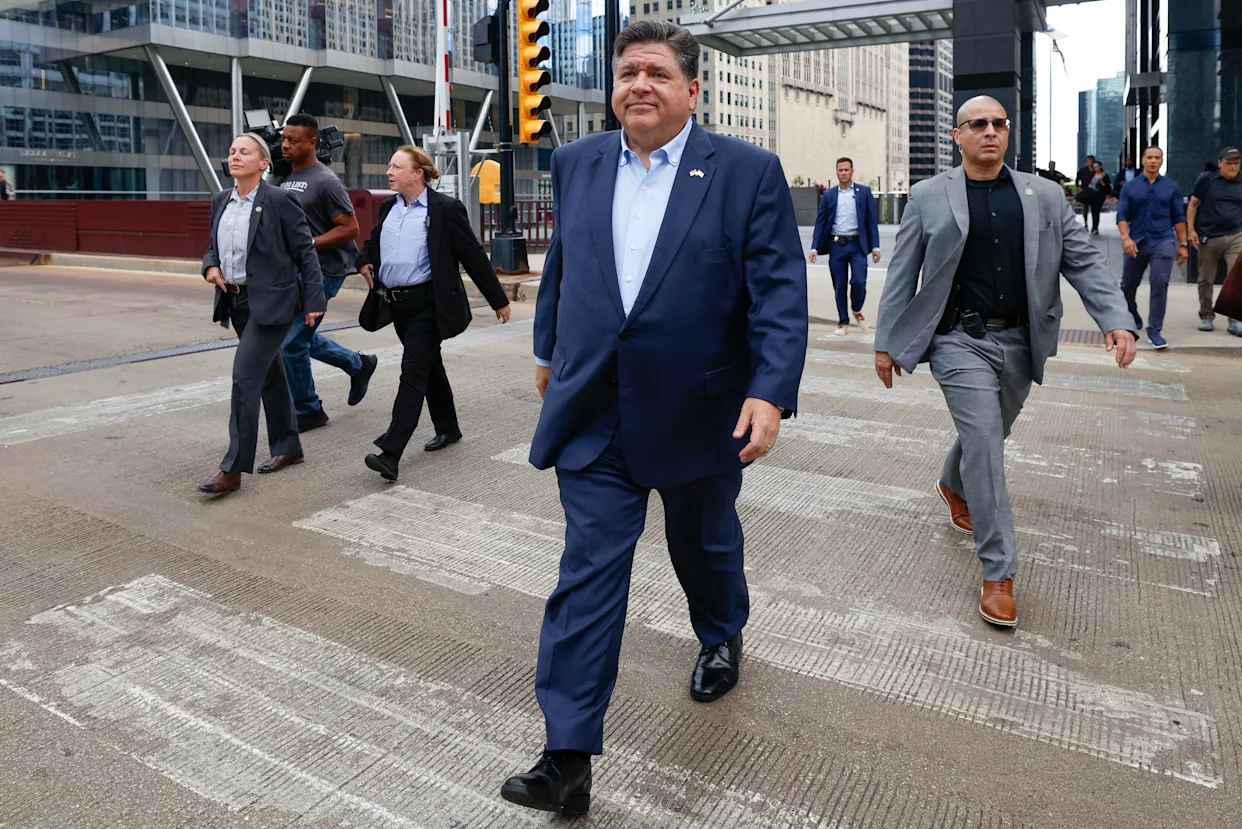
“Earlier today, in the Oval Office, Donald Trump looked at the assembled cameras and asked for me personally to say, ‘Mr. President, can you do us the honor of protecting our city?’” Pritzker said during a press conference overlooking the Chicago River. “Instead, I say, Mr. President, do not come to Chicago.”
The governor emphasized there is no current emergency justifying the Guard’s deployment, warning such a move would infringe on Illinois’ sovereignty.
“This is exactly the type of overreach that our country’s founders warned against, and it’s the reason that they established a federal system with a separation of powers built on checks and balances,” Pritzker said.
Trump’s comments came as he signed an executive order targeting Illinois and other jurisdictions that have removed cash as a condition for pretrial release. On Friday, he suggested deploying the Guard to Chicago, following similar actions in Los Angeles and Washington, D.C. The Pentagon has reportedly been reviewing such plans for weeks. These proposals prompted swift criticism from Pritzker and Chicago Mayor Brandon Johnson.
Trump said Monday that Pritzker’s criticism was a factor in reconsidering deployment.
“I made the statement that next should be Chicago, because, as you all know, Chicago is a killing field right now, and they don’t acknowledge it, and they say we don’t need them,” Trump said. “A lot of people are saying, ‘Maybe we’d like a dictator.’ I don’t like a dictator. I’m not a dictator. I’m a man with great common sense and a smart person. When I see what’s happening to our cities, and then you send in troops, instead of being praised, they’re saying, ‘You’re trying to take over the Republic.’”
Over the weekend, Johnson and Pritzker emphasized that crime in Chicago has been steadily declining since its post-pandemic peak. Officials stressed that neither the governor’s office nor City Hall has formally discussed federalizing the Illinois National Guard with the Trump administration.
So far this year, shootings in Chicago are down 36% and homicides 31%, according to Chicago police data. Johnson attributes this progress to the leadership of Police Superintendent Larry Snelling, along with youth employment initiatives and anti-violence programs.
“There is no emergency that warrants the president of the United States federalizing the Illinois National Guard, deploying the National Guard from other states, or sending active-duty military within our own borders,” Pritzker said.
Attempting to counter that narrative, the White House released a roundup of local news headlines to highlight crime concerns in Chicago.
At a press conference with Pritzker and other Illinois officials, Mayor Johnson accused Trump of targeting the city because it opposes his agenda.
“We are being targeted because of what and who we represent,” Johnson said, citing Chicago’s pro-working class, pro-immigration, and pro-labor stance.
Pritzker pledged to use all legal tools to defend Illinois residents’ rights and noted that National Guard members could face consequences if called into service.
“The state of Illinois is ready to stand against this military deployment with every peaceful tool we have,” Pritzker said. “We will see the Trump administration in court.”
Johnson told NPR’s “Morning Edition” that deploying troops would not address the root causes of crime.
“The National Guard and federal troops will not drive unemployment down. It will not put food on the table,” Johnson said. “The way we build safe communities is that we actually invest in them and make them affordable. That’s what I’m doing here in Chicago.”
Chicago has long been a focus of Trump’s criticism, particularly regarding crime and illegal immigration. During his first term, he declared he would “send in the Feds!” in response to gun violence in the city, a statement then-police superintendent Eddie Johnson described as vague and disconnected from reality.
The executive order Trump signed Monday, along with another addressing cashless bail in Washington, D.C., directs the attorney general to identify jurisdictions that have reduced cash bail and explore suspending related federal funds.
At the White House, Deputy Chief of Staff Steven Miller called cashless bail policies “a key driver of the disorder we see on city streets all over America,” citing Illinois as an example.
Yet Chicago’s crime rate has declined since the state’s cashless bail system began nearly two years ago, consistent with trends in other major cities such as New York, Los Angeles, and Philadelphia.
State Sen. Robert Peters, a Chicago Democrat who championed the policy, said Trump’s actions targeting cashless bail and threatening troop deployment are connected.
“These two things aren’t separate. He’s attacking the Pretrial Fairness Act and threatening to send troops. They’re literally tied together,” Peters said.