

Florida’s state-run immigration detention center in the Everglades could be empty within days, even as Governor Ron DeSantis’ administration and the federal government fight a court order to close it by late October, according to an email obtained by The Associated Press.
Kevin Guthrie, head of the Florida Division of Emergency Management, wrote in an August 22 message that the facility was “probably going to be down to 0 individuals within a few days.”
The email was sent to a South Florida rabbi regarding chaplaincy services at the site, and its authenticity was confirmed by the rabbi’s office.
“Under President Trump’s leadership, we are working at turbo speed on cost-effective and innovative ways to deliver on the American people’s mandate for mass deportations of criminal illegal aliens,” a Department of Homeland Security official told Newsweek.
“DHS is complying with this order and moving detainees to other facilities. We will continue to fight tooth-and-nail to remove the worst of the worst from American streets.”
Newsweek reached out to DeSantis’ office for comment via email on Wednesday.
Why It Matters
The news of the possible closure comes less than a week after a federal judge ordered the facility—nicknamed “Alligator Alcatraz”—to wind down operations and remove its last detainee within 60 days.
When Was Alligator Alcatraz Built?
Alligator Alcatraz was the first in a series of new U.S. Immigration and Customs Enforcement (ICE) detention facilities created under agreements between the federal and local governments.
The center was quickly built two months ago at a single-runway training airport in the middle of the Everglades. State officials signed contracts totaling more than $245 million for building and operating the facility, which officially opened on July 1.
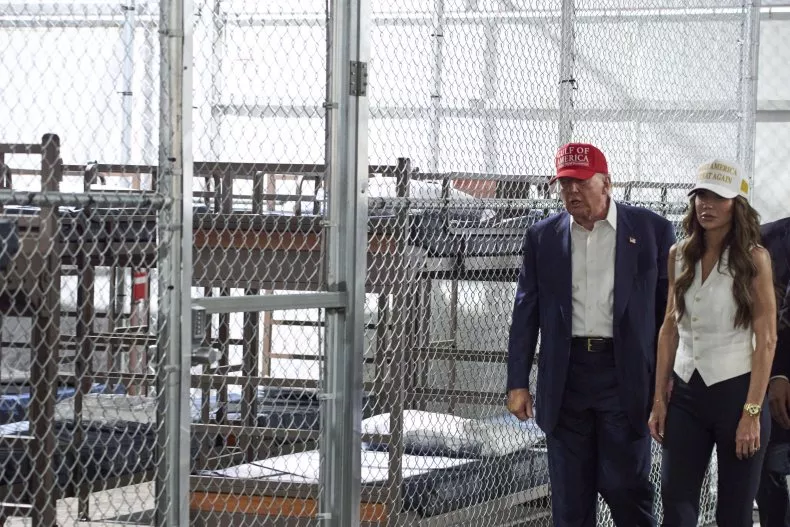
President Donald Trump toured the facility last month and suggested it could be a model for future detention centers nationwide as his administration works to expand deportation infrastructure.
Miccosukee Tribe Lawsuit
Environmental groups and the Miccosukee Tribe argued in their lawsuit that construction and operations should stop until federal and state officials followed federal environmental laws. The lawsuit claimed the facility threatens wetlands that are home to protected plants and animals and could undo decades of environmental restoration.
Florida has appealed the judge’s decision to close the site, and the federal government has asked U.S. District Judge Kathleen Williams to pause her order during the appeal. They argue that the Everglades facility’s thousands of beds are needed because Florida detention centers are overcrowded.
The environmental groups and the Miccosukee Tribe opposed the request, saying the facility is not needed—especially since Florida plans to open another immigration detention center in north Florida, which DeSantis has called “Deportation Depot.”
During a tour last week, Democratic Representative Maxwell Frost said that only a small portion of the center’s capacity was being used, with between 300 and 350 detainees. Williams had not ruled on the pause request as of Wednesday.
What People Are Saying
A DHS official told Newsweek:
“This activist judge’s order is yet another attempt to prevent the President from fulfilling the American people’s mandate to remove the worst of the worst—including gang members, murderers, pedophiles, terrorists, and rapists from our country. Not to mention this ruling ignores the fact that this land has already been developed for a decade.
“This activist judge doesn’t care about the invasion of our country facilitated by the Biden administration, but the American people do. We have the law, the facts, and common sense on our side.”
Civil rights attorneys, in another lawsuit against the detention center, said:
“Lawyers often cannot find their clients, and families cannot locate their loved ones inside ICE’s vast detention system. Detainees have been prevented from accessing attorneys in numerous ways. Detainees without counsel have been cut off from the normal channels of obtaining a lawyer.”
What Comes Next?
The judge’s order stated that the facility population should drop within 60 days as detainees are moved to other locations. Once that happens, the fencing, lighting, and generators should be removed. The state and federal governments cannot bring anyone new to the facility besides those already detained there.


