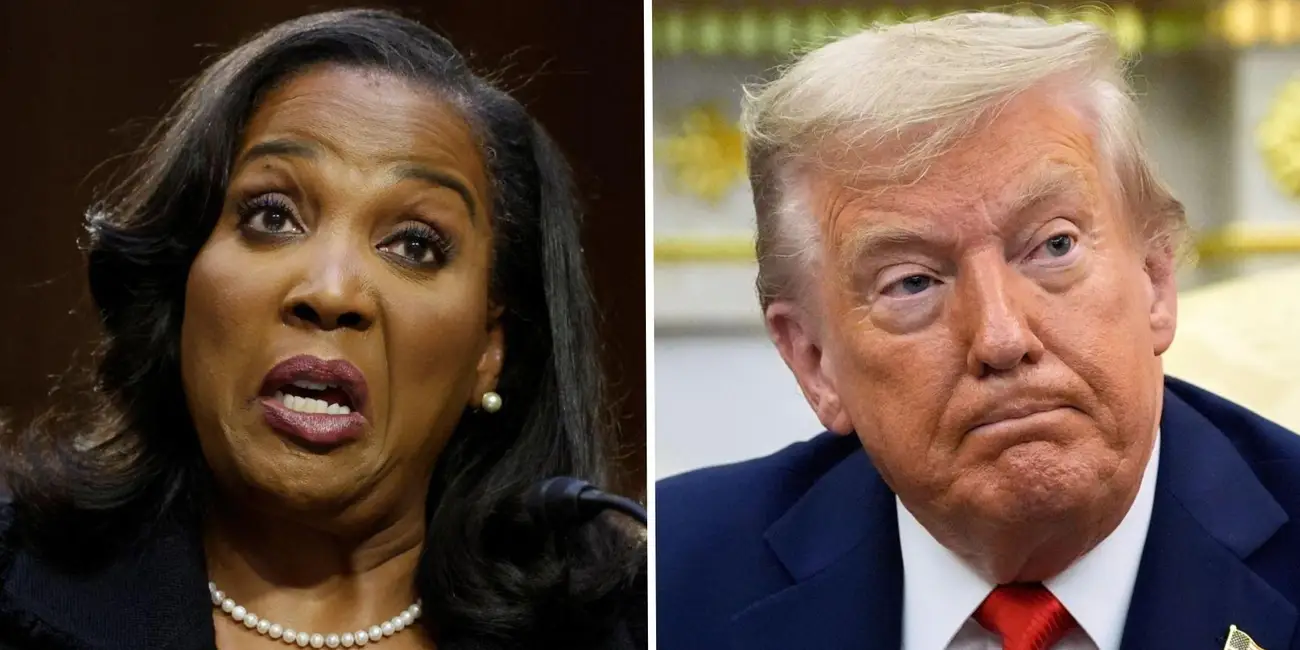

Lisa Cook has filed a lawsuit challenging President Donald Trump’s attempt to remove her from the Federal Reserve’s board of governors. The case sets up a major courtroom showdown over the independence of the central bank.
“This case challenges President Trump’s unprecedented and illegal attempt to remove Governor Cook from her position which, if allowed to occur, would [be] the first of its kind in the Board’s history,” the lawsuit says.
Filed in federal court in Washington, DC, Cook is asking a judge to confirm her position on the Federal Reserve’s board and let her continue working. US District Judge Jia M. Cobb, appointed by President Biden, will oversee the case.
The lawsuit names Trump as a defendant, as well as Federal Reserve Chair Jerome Powell and the board itself, to the extent they “effectuate President Trump’s purported termination of Governor Cook.”
Cook’s legal action emphasizes the importance of the Federal Reserve’s independence. The lawsuit notes that if presidents could easily remove board members, it could harm the US economy.
“Presidents, facing pressure to boost the economy, may favor lower interest rates and a more expansive policy to achieve a temporary economic lift,” the lawsuit says. “However, this approach often fuels long-term inflation. A politically insulated Board of Governors can make appropriate, albeit unpopular, decisions — such as raising interest rates to combat inflation — that are crucial for the nation’s long-term financial health.”
Trump posted a letter to Cook on Truth Social Monday night announcing her removal from the Federal Reserve.
Because the Federal Reserve is independent, presidents have limited power to remove its members. Board members are appointed by the president and confirmed by the Senate for 14-year terms. Cook’s term is scheduled to end in 2038.
A Federal Reserve spokesperson declined to comment on the lawsuit but previously said the agency would “abide by any court decision.”
“Long tenures and removal protections for governors serve as a vital safeguard, ensuring that monetary policy decisions are based on data, economic analysis, and the long-term interests of the American people,” the spokesperson said.
Trump’s attempt to remove Cook comes as he seeks lower interest rates, which he believes would benefit his economic agenda.
White House spokesperson Kush Desai said Thursday that Trump’s firing was “lawful.” Trump claimed in his letter that he was removing Cook for “cause,” based on a criminal referral from Federal Housing Finance Agency Director Bill Pulte, who accused Cook of lying about which homes were her primary residence.
“The conduct at issue exhibits the sort of gross negligence in financial transactions that calls into question your competence and trustworthiness as a financial regulator,” Trump wrote.
Cook’s lawsuit calls these allegations “unsubstantiated” and says they do not meet the legal standard for cause.
“President Trump does not have the power to unilaterally redefine ’cause’ — completely unmoored to caselaw, history, and tradition — and conclude, without evidence, that he has found it,” the lawsuit states.
Cook is represented by attorneys Abbe Lowell and Norm Eisen, who have previously criticized Trump and represent government employees he has fired.
The lawsuit also claims Trump created the controversy to pressure the Federal Reserve to lower interest rates, putting the economy at risk.
“Indeed, President Trump’s conception of ’cause’ has no limiting principle; it would allow him to remove any Federal Reserve Board member with whom he disagrees about policy based on chalked-up allegations,” the lawsuit says. “That the President says he has found (or created) some basis for removing a Governor does not magically make such a basis grounds for a ‘for cause’ removal.”
Pulte mocked the lawsuit on X, questioning why Cook didn’t include her personal address.
On Wednesday, White House officials continued to pressure Cook. Kevin Hassett, director of the National Economic Council, suggested she take leave, claiming her refusal undermined the Fed’s reputation.
Cook’s case could eventually reach the Supreme Court, which has recently weighed in on the removal of independent agency leaders. While the Court has often sided with Trump in similar disputes, it has indicated that the Federal Reserve may deserve special legal protection.
In May, the Supreme Court allowed Trump’s firing of board members from two other agencies to take effect while legal proceedings continued. But the Court also noted the Federal Reserve has a “distinct historical tradition,” though it did not fully explain why this should make it different.
Cook’s lawsuit says any claim of “cause” does not justify removing her over policy disagreements.
“Allowing the President to remove members of the Board over policy disagreements would also render illusory the Board’s independence,” it states.