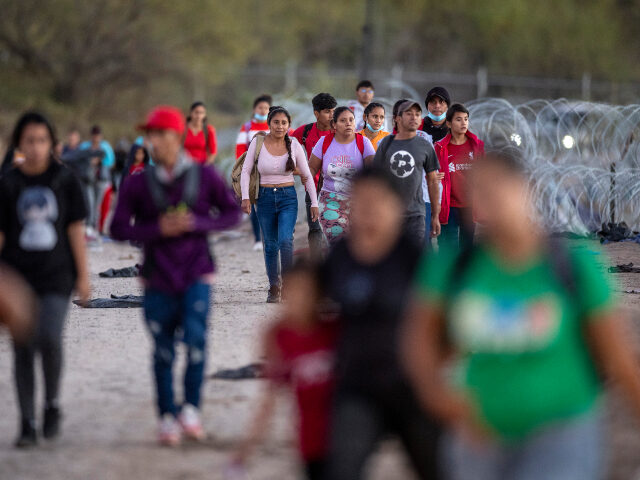

During his first day back in office, President Donald Trump signed 26 executive orders, many focused on immigration. One of the biggest changes was shutting down the CBP One app, which had been used under the Biden administration to help asylum-seekers schedule appointments at the border. In March, Trump replaced it with the CBP Home app, which now helps people self-deport and access other immigration services.
President Trump also declared a national emergency at the U.S.-Mexico border, allowing armed forces to help immigration agencies stop illegal crossings. This action has blocked thousands of people from seeking asylum in the United States.
Since then, many migrants traveling north have been left stranded. A joint report from the governments of Colombia, Panama, and Costa Rica found that more than 14,000 people—mostly from Venezuela—were forced to give up their plans and turn back, with borders closed and asylum opportunities nearly gone.
As reported by The Guardian, this movement is called “reverse flow.” It describes migrants being pushed or deciding to return home through self-deportation, repatriation, or removal.
One of them is Gabriela, a Venezuelan mother who traveled with her daughter and other relatives to the U.S. border earlier in 2025. Their visa appointment was canceled on January 20, the day Trump returned to office. Left without options, they turned around and began the long trip back to South America by bus.
Gabriela and her daughter had fled Venezuela after Nicolás Maduro claimed victory in a disputed presidential election. Like many others, they spent months waiting in Mexico, only to be forced to return after their visas were canceled.
The Guardian notes that lawyers, human rights groups, and officials warn reverse migration can be just as dangerous—sometimes worse—than the original journey north.
Scott Campbell, a United Nations human rights representative in Colombia, explained that many migrants had already suffered abuse traveling north and now face what he called “a repeat gauntlet of abuse” as they return south.
“Most of these people are already victims of human rights abuses,” Campbell told The Guardian. “We urge authorities to help migrants in reverse flow to prevent exploitation or falling into trafficking networks run by armed groups.”
A report supported by the United Nations High Commissioner for Human Rights shows that many stranded migrants end up in areas controlled by criminal organizations, leaving them vulnerable to violence and exploitation.
Migrants often spend hundreds of dollars traveling by bus from Mexico to Central America. In Panama, many pay more to take unsafe boats toward Colombia, sometimes being abandoned or left without money along the Pacific coast. Campbell warned this puts them at higher risk of sexual violence or being recruited by armed groups.
Because these abuses are rarely punished, criminal organizations grow stronger while migrants remain unprotected.
In northern Panama, the village of Miramar has become a stop for many returning migrants. Abril Staples, a field coordinator for the Panamanian Red Cross, told The Guardian that between 30 and 130 migrants arrive each day, most of them exhausted, hungry, and without money.
“People went to chase the American dream, and they are coming back crushed,” Staples said.