
The deadly U.S. military strike on a suspected drug boat in the Caribbean on Tuesday marked a sharp escalation in the Trump administration’s approach to fighting drug trafficking. Secretary of State Marco Rubio said more such actions are likely.
On Wednesday, Rubio argued that the long-standing practice of intercepting drug ships has failed. Instead, he said, the U.S. is “going to wage war on narco-terrorist organizations.”
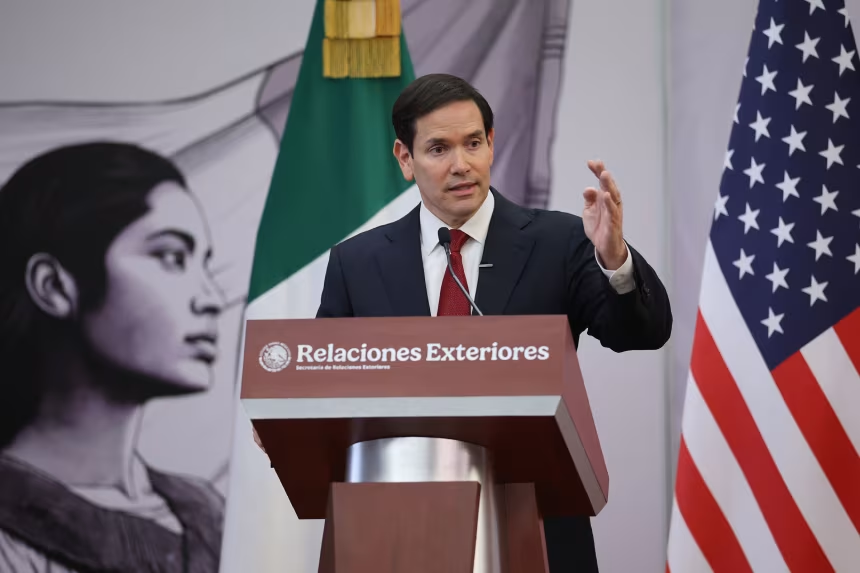
“The United States has for many years used intelligence to track and stop drug boats. We did that. And it doesn’t work,” Rubio told reporters at a press conference in Mexico City.
“What will stop them is when you blow them up, when you get rid of them,” he added, saying drug cartels expect to lose about 2% of their shipments and plan for it.
Rubio said the destroyed vessel came from Venezuela and allegedly had ties to the criminal group Tren de Aragua. He explained that intelligence suggested it was heading toward the U.S.
“Instead of interdicting it, on the president’s orders, we blew it up. And it’ll happen again. Maybe it’s happening right now,” Rubio said.
Earlier this year, the Trump administration labeled several Latin American cartels and gangs, including Tren de Aragua, as foreign terrorist organizations.
Both Rubio and Vice President JD Vance have pointed to these terrorist designations as legal grounds for the strikes. President Donald Trump, Rubio said, has the authority “to eliminate imminent threats to the United States.”
Still, many questions remain about Tuesday’s operation. The U.S. recently moved more military assets into the Caribbean and South America, but Rubio did not share details on the type of drugs aboard or how exactly the vessel was destroyed. He directed questions about the strike to the Pentagon, which has not briefed reporters.
The attack, which killed 11 people, was unprecedented, according to retired U.S. Ambassador Luis Moreno, who spent much of his career on counter-narcotics.
“If it really was a major drug trafficking operation, why not do what we’ve always done? Track it, find out where it’s headed, follow it to a bigger drop or a mothership, and then seize everything,” Moreno told CNN.
“Blowing it up in international waters without warning is not the normal way. It was done for drama, for Hollywood effect,” he said.
Benjamin Gedan, a foreign policy fellow at Johns Hopkins University who worked on Venezuela during the Obama administration, said targeting traffickers isn’t unusual, but the level of force is.
“Normally, the U.S. would intercept the ship, arrest the traffickers, prosecute them, and maybe get information on higher-level leaders. They’d also seize the money and the drugs,” he said.
“Firing from the air and killing 11 alleged traffickers is not the typical approach.”