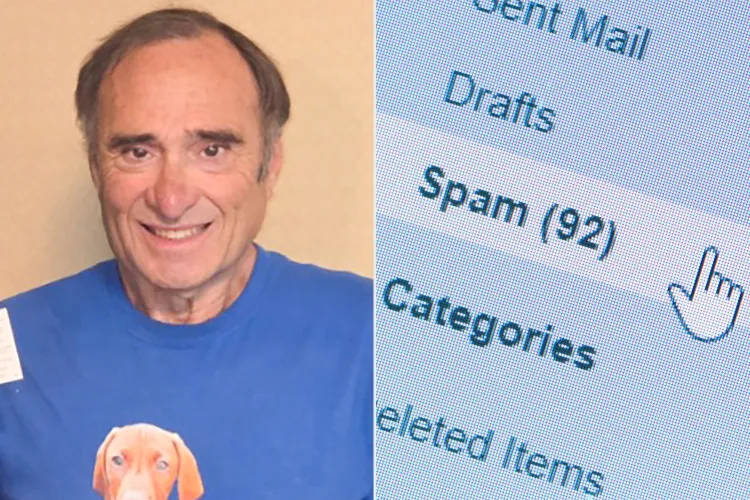

On most days, Laurence Canter checks his email and, like everyone else, grumbles about the endless junk messages filling his inbox — fake job offers, phony giveaways, and scam bank alerts.
But unlike billions of other internet users, the 72-year-old feels a little guilty. That’s because, back in 1994, Canter and his then-wife, Martha Siegel, were among the first to send mass commercial emails on the early internet.
“Everybody gets tons of it,” Canter says. “Am I responsible for that? Only in the most indirect way. If we hadn’t done it, somebody else would have.”
In April 1994, the Phoenix-based immigration attorneys blasted ads for their “green card lottery” services to more than 5,500 Usenet discussion groups. At the time, online advertising was rare and even discouraged.
:max_bytes(150000):strip_icc():focal(553x0:555x2):format(webp)/Laurence-Canter-Trivial-Pursuit-card-082025-d51d60e306ca4a17b37ff31c520daa1d.jpg)
The response was brutal. They got death threats and prank calls, and their law firm’s phones and fax machines were overwhelmed. Their internet provider eventually shut down their account after too many complaints.
“It was quite surprising,” Canter recalls, estimating that the ad brought in $100,000 to $200,000 in business. “They thought what we did was inappropriate … and were really angry at us because they thought we were destroying the internet.”
Despite the outrage, the couple gained national attention, even making the front page of The New York Times. Critics were also angry that they charged people for help with the green card lottery, even though entering was free.
Still, Canter remained unapologetic. “What [that first spam] did was open up the internet as a big marketing opportunity at a very low cost,” he says.
The couple went on to write a 1995 book, How To Make A Fortune on the Information Superhighway, published by HarperCollins. Critics blasted it — one article compared it to “Godzilla publishing a textbook on urban planning.”
By 1996, Canter and Siegel divorced, and four years later, Siegel died. Canter later moved to Northern California, shifted to software development, and was disbarred in Tennessee in 1997 for unrelated issues.
Today, he lives with his wife Patty and runs doggylips.com, selling digital dog artwork printed on shirts and mugs.
:max_bytes(150000):strip_icc():focal(499x0:501x2):format(webp)/Laurence-Canter-Jeopardy-question-082025-e540fb644cb640b38cc6e626e5fad539.jpg)
Though amused when he’s called the “father of spam,” Canter admits the reality of modern spam bothers him. Scams trick people into giving away personal information or downloading harmful software.
“It’s become a very scary thing,” he says, adding that some of his relatives have lost “significant” amounts of money to email scams. “I don’t think I bear responsibility for that — but maybe I did open the door a little.”
:max_bytes(150000):strip_icc():focal(999x0:1001x2):format(webp)/Laurence-Canter-Trivial-Pursuit-card-082025-1-f68c4c876aa343fcae67ed36bb44b1ac.jpg)
He laughs about one final irony: some of the emails he sent to this reporter ended up in the spam folder.
“That seems appropriate,” he joked. “Got to hate whoever is responsible for spam!”