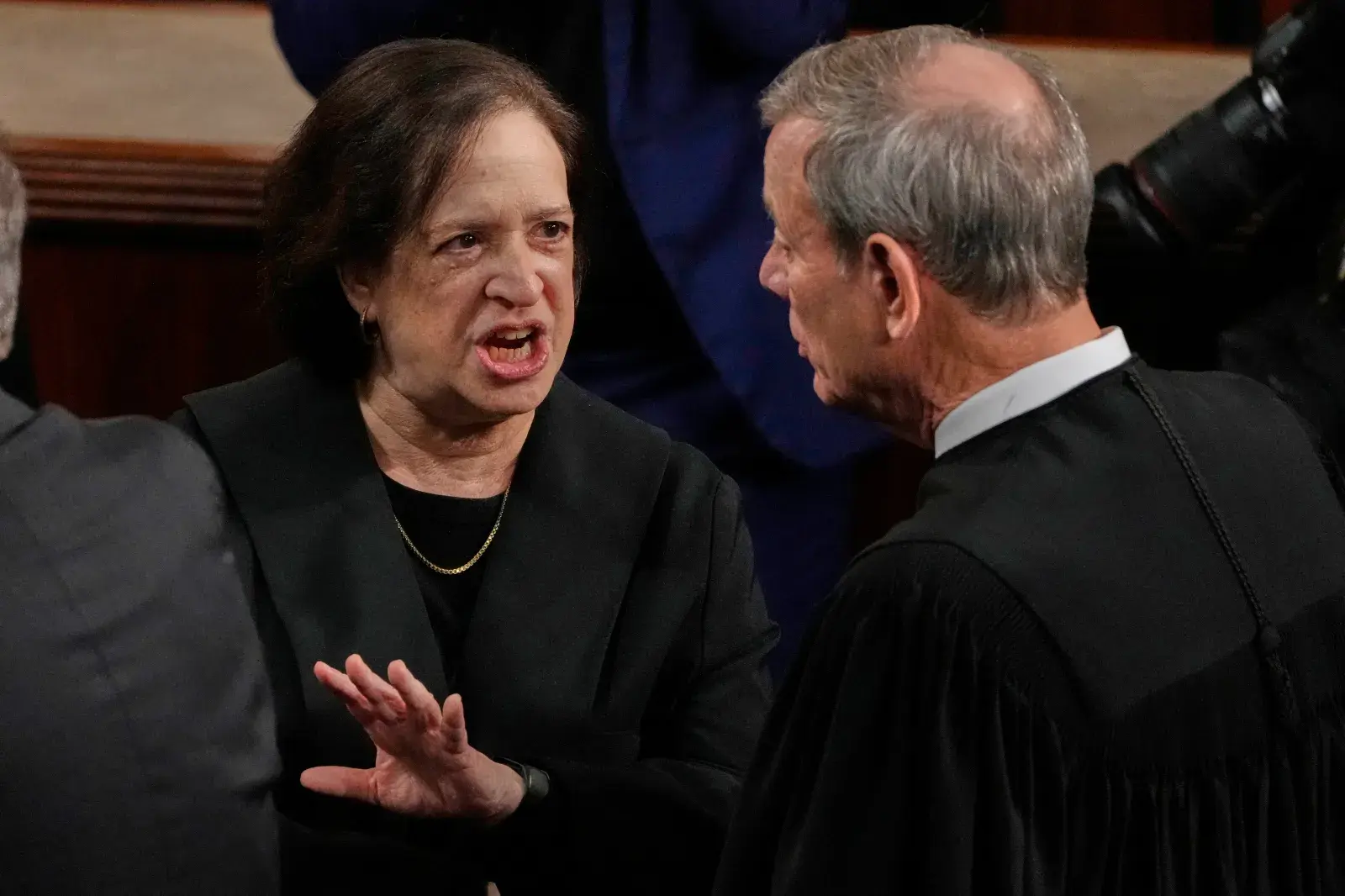

The Supreme Court on Friday extended an order allowing President Donald Trump’s administration to keep nearly $5 billion in foreign aid on hold — a move that sparked a sharp rebuke from Justice Elena Kagan, who said the conservative majority had gone “too far.”
In a 6–3 decision, the court’s conservatives granted the administration’s emergency appeal in a dispute over funds that Congress had already approved. Trump announced last month he would not release the money, citing a rarely used budgetary maneuver called a “pocket rescission,” last attempted by a president about 50 years ago.
The unsigned order said Trump’s foreign affairs authority carried significant weight but stressed the decision was not final. For now, however, the ruling ensures the funds remain blocked while the case proceeds in lower courts.
Why It Matters
The ruling marks another win for Trump at the high court, which has repeatedly granted his administration emergency relief in recent months. Past decisions have allowed restrictions on migrant protections, removal of federal workers, and dismissals of independent agency leaders.
While the administration has framed foreign aid cuts as a core policy stance, the sums involved are relatively small compared with the federal deficit. Government lawyers noted that another $6.5 billion in aid will still be spent before the fiscal year ends Tuesday, but the $4.9 billion at the center of this dispute will likely never be distributed.
The Dissent
Justice Kagan, joined by Justices Sonia Sotomayor and Ketanji Brown Jackson, argued the court had overstepped by siding with the administration. She warned the decision undermines Congress’s constitutional authority to control federal spending and said the administration failed to meet the high bar for emergency relief.
“But even at that, the majority goes too far,” Kagan wrote. She stressed the executive branch had not shown it would prevail on the merits or that it faced irreparable harm if the lower court ruling stood.
Kagan further noted that blocking the aid effectively guaranteed the funds would expire at the end of the fiscal year, cutting short Congress’s role in deciding how public money is spent. She concluded that the ruling “undermines separation of powers and cuts short the judicial process this case deserves.”
Lower Court Rulings
Earlier this month, U.S. District Judge Amir Ali ruled Trump’s action was likely unlawful and that only Congress could approve withholding the funds. The D.C. Circuit Court of Appeals refused to pause Ali’s ruling, but Chief Justice John Roberts temporarily froze it. Friday’s order now extends that freeze indefinitely.
Critics said the court’s intervention weakens constitutional checks and balances. Nick Sansone, an attorney with Public Citizen Litigation Group representing the AIDS Vaccine Advocacy Coalition, warned the ruling “further erodes separation of powers principles that are fundamental to our constitutional order” and could have a “grave humanitarian impact on vulnerable communities throughout the world.”
Expert Reaction
Suzanne Goldberg, a constitutional law professor at Columbia University, told Newsweek that it was “startling” for the Supreme Court to let the administration refuse to spend billions already authorized by Congress without providing a detailed explanation.
Goldberg noted the court’s opinion was preliminary, but said the effect was clear: the money will remain frozen while litigation continues. “Stepping back, this opinion seems to be another step in the Court authorizing the president to step into Congress’ lane of authorizing funds on behalf of the American people, raising additional risk of destabilizing our separation-of-powers system,” she said.
Justice Department lawyers, meanwhile, defended Trump’s move, arguing that obligating the contested funds would undermine the administration’s request to rescind them.
What Comes Next
The case now returns to the U.S. Court of Appeals for the District of Columbia Circuit, which will hear arguments on the legality of Trump’s “pocket rescission” in the coming months. If the appellate court rules against the administration, the dispute is likely headed back to the Supreme Court for a full review.
Until then, the justices’ stay means the $4 billion in aid will almost certainly expire at the end of the fiscal year, never reaching its intended recipients.