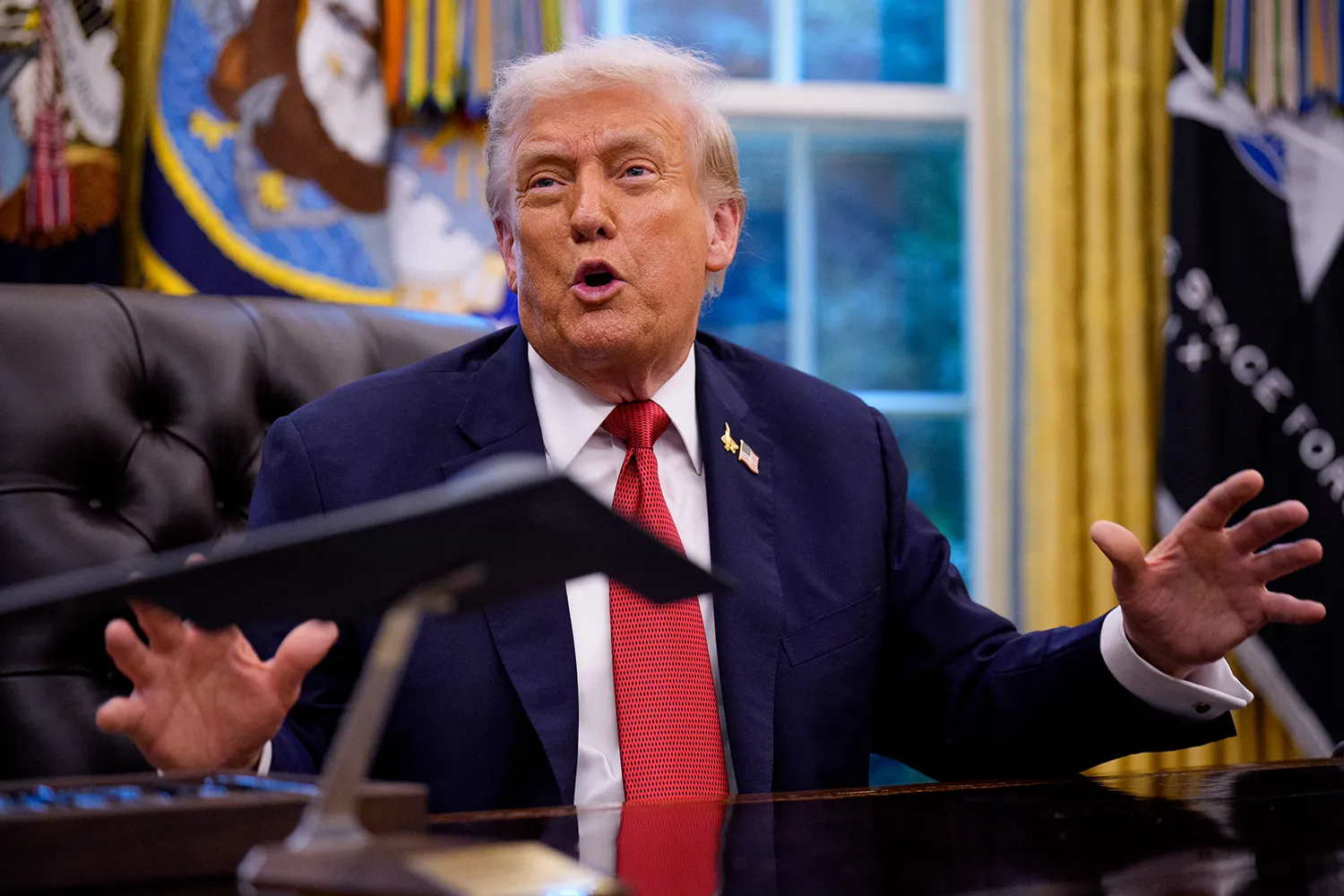

President Donald Trump recently posted an AI-generated video on Truth Social featuring himself promoting a so-called cure-all “medbed” – a medical conspiracy theory. The clip, which has since been removed from his account, mimicked a Fox News segment hosted by the president’s daughter-in-law, Lara Trump, though it never actually aired on the network.
“Every American will soon receive their own medbed card,” the AI-generated version of Trump claimed.
In reality, “medbeds” do not exist. The conspiracy, which has roots in the QAnon movement, falsely asserts that cure-all medical beds are being withheld from the public.
This incident highlights how quickly medical misinformation can spread on social media, especially with AI-generated content – even when it appears to come from prominent figures or seemingly verified sources. While health and wellness innovations continue to emerge, “medbeds” are not among them.
A 2024 poll by the Kaiser Family Foundation found that most Americans encounter false health information online and often struggle to discern its accuracy. Experts emphasize the importance of distinguishing accidental misinformation from deliberate disinformation.
The Real-World Impact of Medical Misinformation
Medical misinformation has tangible consequences. A 2023 poll revealed that nearly 70% of doctors believe patient trust declined between 2020 and 2022, compared with just 21% of the general public.
“Misinformation isn’t a point of view; it does actual harm,” said Brian Castrucci, president of the de Beaumont Foundation, which commissioned the poll. “It’s hurting physicians. It’s hurting medical practice. And it’s hurting the American public.”
During the pandemic, for example, patients with autoimmune diseases struggled to access hydroxychloroquine because misinformation led many to wrongly believe it could prevent or treat COVID-19.
Castrucci noted that while the poll focused on COVID-19, the problem extends far beyond the pandemic. Most doctors and members of the public rely on online sources, though they prioritize different types. Doctors tend to trust medical journals, peer networks, and reputable searches, while the general public often relies on broader internet searches, which can include unverified posts and websites.
Social media amplifies the reach of misinformation, spreading false claims “not from town to town but to millions with one click,” Castrucci said.
How to Spot Medical Misinformation
Experts recommend evaluating sources carefully. David Novillo Ortiz of the World Health Organization explained that misinformation, by promoting fear or false hope, can cause both mental and physical fatigue, while eroding trust in government and public health guidance.
Philosopher and author Lee McIntyre advises asking key questions: Where does this information come from? Who benefits from it? What’s at stake? Reliable sources, such as the CDC or well-known hospitals and universities, provide a higher likelihood of accuracy, according to Dr. Richard Baron, president and CEO of the American Board of Internal Medicine.
Dr. Franziska Haydanek, an OBGYN and online health educator, encourages discussing new health information with a personal physician: “You might say, ‘Hey, I learned about this condition. I feel it might apply to me. Can we talk about if I meet the diagnosis criteria?’”
Being vigilant and cross-referencing information from trustworthy sources remains critical as AI-generated content continues to blur the lines between fact and fiction.