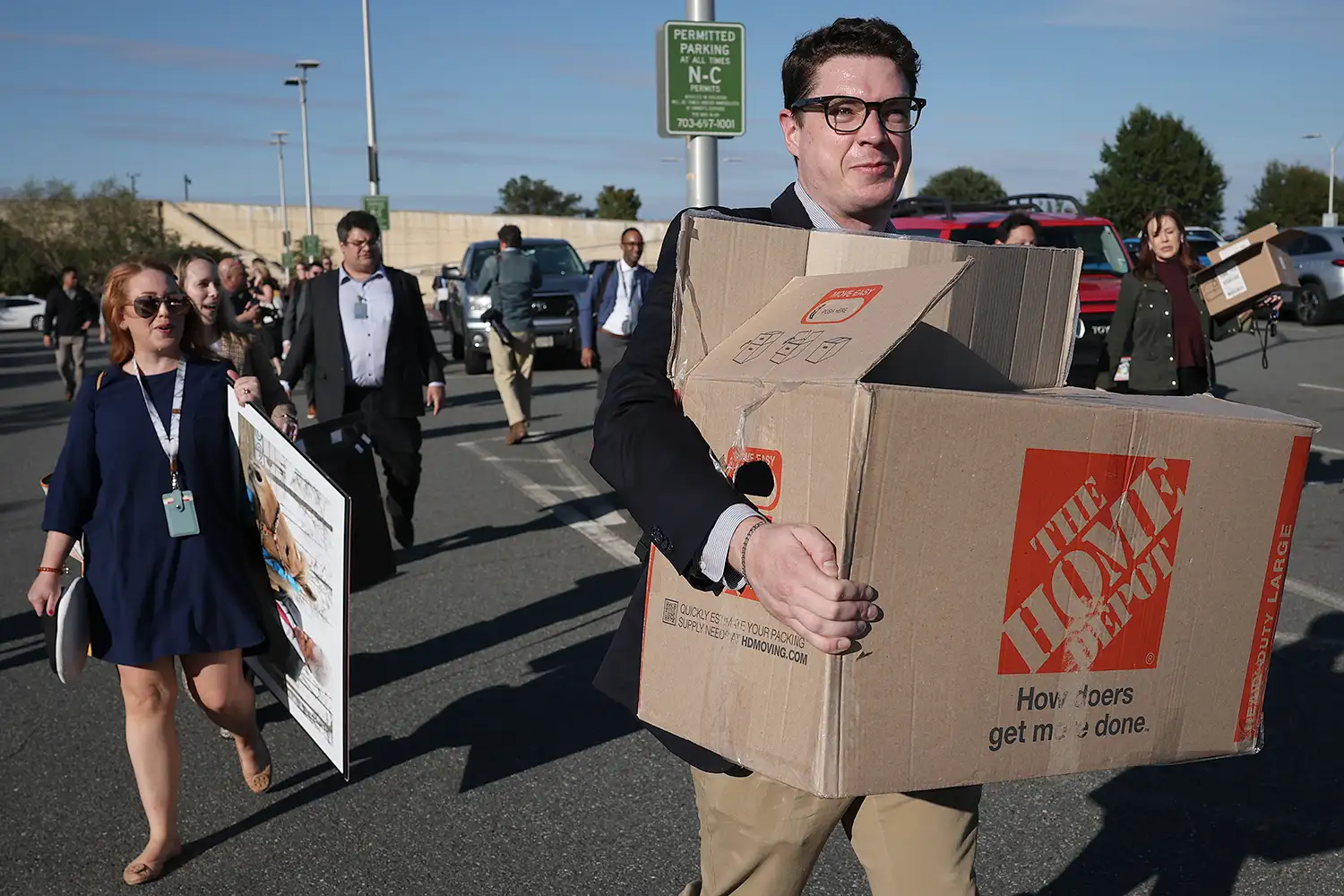

Reporters who have long covered the Pentagon handed over their Department of Defense credentials and walked out of the building on Wednesday, Oct. 15, after the Trump administration introduced sweeping restrictions that would drastically limit coverage of the U.S. military.
For years, journalists seeking Pentagon press passes were required to sign a brief one-page agreement that covered basics like identification, security, and safety procedures. That changed when Defense Secretary Pete Hegseth issued a new, expanded agreement that added extensive restrictions—terms that reporters say would force them to surrender key rights and risk prosecution just to maintain access.
Only one outlet agreed to sign. Every other major organization—including ABC News, NBC News, CBS News, Fox News, CNN, Newsmax, The Associated Press, Reuters, Bloomberg News, The New York Times, The Washington Post, The Wall Street Journal, The Guardian, The Atlantic, The Washington Times, Financial Times, Politico, and NPR—refused.
The major broadcast networks issued a joint statement on Tuesday, Oct. 14, saying, “Today, we join virtually every other news organization in declining to agree to the Pentagon’s new requirements, which would restrict journalists’ ability to keep the nation and the world informed of important national security issues. The policy is without precedent and threatens core journalistic protections.”
:max_bytes(150000):strip_icc():focal(725x374:727x376):format(webp)/pentagon-walk-out-101625-1-bae16ad9191042d18c1b77eb886ff783.jpg)
NPR’s Tom Bowman added in an op-ed that signing the new document would turn reporters into “stenographers parroting press releases, not watchdogs holding government officials accountable.”
Even Newsmax, a conservative outlet, called Hegseth’s terms “unnecessary and onerous.”
As of Oct. 14, the only outlet to sign on was One America News Network (OANN), which has described itself as one of Donald Trump’s “greatest supporters.” Under the new agreement, OANN reporters will only be allowed to report material pre-approved by the Department of Defense.
The group walkout—described by some as unprecedented—marks the first time since the Eisenhower administration that no major American outlet will maintain a permanent presence inside the Pentagon.
The New York Times outlined the new policy, noting that it “threatens to punish journalists for ordinary news gathering protected by the First Amendment” and limits their movement within the building, requiring escorts in previously accessible areas.
The Associated Press reported that the new rules could “leave journalists vulnerable to expulsion if they sought to report on information—classified or otherwise—that had not been approved by Hegseth for release.”
:max_bytes(150000):strip_icc():focal(749x0:751x2):format(webp)/pentagon-walk-out-101625-2-b7ba1f94134948f4a59cacd0ba544538.jpg)
Hegseth summarized the policy himself on X (formerly Twitter) on Oct. 13, writing: “Pentagon access is a privilege, not a right. Press no longer roams free. Press must wear visible badge. Credentialed press no longer permitted to solicit criminal acts. DONE. Pentagon now has same rules as every U.S. military installation.”
The phrase “soliciting criminal acts” refers to a new clause warning that if journalists “solicit the disclosure” of information from Department of Defense personnel—or even “encourage” violations of disclosure laws—they may be deemed a “security or safety risk.”
This definition of “solicitation,” the policy clarifies, includes contacting military staff for tips or background information, something reporters routinely do through calls or direct messages.
The Pentagon Press Association criticized the restriction, saying it attempts to “stifle a free press” and sends “an unprecedented message of intimidation to everyone within the DoD.” The group warned that the rule wrongly implies that speaking to the press without permission “is criminal,” when it is not.
Hegseth appeared unbothered by the backlash, reposting statements from various outlets explaining their refusal to sign and responding with a simple waving hand emoji.
Many journalists affected by the policy have since voiced their decision publicly, pledging to continue covering military affairs from outside the Pentagon walls. By refusing to agree to the new terms, they maintain their independence—and their right to report freely on one of the most powerful institutions in the world.