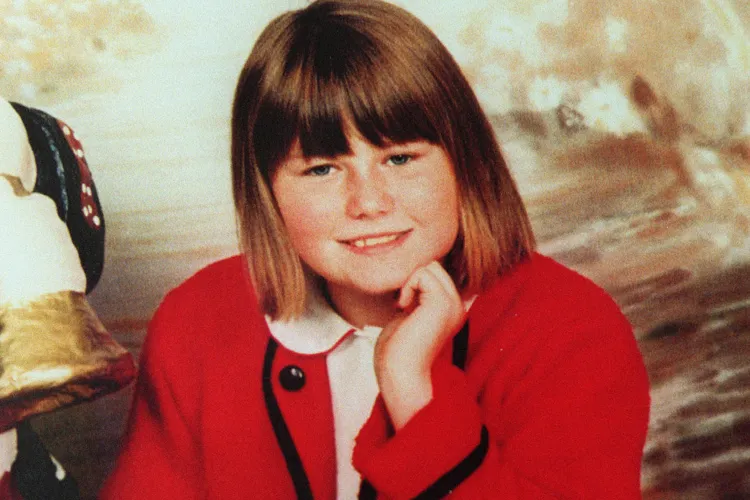

For eight years, Natascha Kampusch lived hidden beneath a quiet home outside Vienna — a child stolen off the street and kept behind a trapdoor, her world reduced to concrete walls and the man who controlled, beat, and humiliated her. She was just 10 when she was abducted — and 18 when she finally ran to freedom.
Her abductor, 36-year-old Wolfgang Priklopil, built a soundproof cellar beneath his home in Strasshof, Austria. The underground bunker — accessible only through a hidden hatch and steel door — became her prison, according to The Guardian.
“It was beneath a trapdoor in the garage, down some stairs, through a hollowed-out concrete wall hidden behind a cupboard,” she told the outlet. “It was five by five meters, bare, soundproofed, windowless — and filled with the rattle of a fan.”
Kampusch said she was beaten “up to 200 times a week,” describing injuries so severe she once heard bones crack, per CNN. Priklopil often forced her to clean half-naked and sometimes chained her to his bed at night.
In her memoir 3,096 Days, she chose not to describe intimate details, writing only that the sexual abuse was “minor,” The Guardian reported. Years later, the 2013 film 3096 Days dramatized her ordeal, including scenes of sexual assault that Kampusch herself has never confirmed or discussed publicly.
:max_bytes(150000):strip_icc():focal(999x0:1001x2):format(webp)/Natascha-Kampusch-kidnappers-house-101525-4cd02b5845f149c79c1c55b90fd79bc0.jpg)
In one chilling passage, she recalled the night he bound their wrists together and pulled her into his bed. She braced for rape, but instead, “the man who beat me… wanted to cuddle,” she wrote.
Over time, Kampusch learned to survive by controlling what little she could. Early on, she said she regressed “to the age of a dependent toddler,” asking to be tucked in and read bedtime stories, she told The Guardian. At 12, she imagined her future 18-year-old self promising to one day overpower her captor — a vow that kept her going.
She also clung to routine, filling her days with reading, cooking, and cleaning “year in and year out,” according to ABC News Australia. As she grew older, she began to resist in small ways, refusing to call Priklopil “Maestro,” as he demanded.
“I proved to myself that I was strong … that I hadn’t lost my self-respect,” she told A&E.
On August 23, 2006, while vacuuming the same white van used in her abduction, Priklopil became distracted by a phone call.
“I stood frozen,” she recalled in her memoir. “Then everything happened so fast. I dropped the vacuum cleaner and bolted to the garden gate. It was open.”
A neighbor called police, and hours later, DNA confirmed Kampusch’s identity. Before he could be arrested, Priklopil died by suicide.
:max_bytes(150000):strip_icc():focal(599x0:601x2):format(webp)/Natascha-Kampusch-file2-101525-915724b4470d4300a0606ed16c61ee16.jpg)
In the aftermath, Kampusch drew both attention and disbelief for the empathy she expressed toward her captor.
“I mourn for him,” she told The Guardian after his death. “Had I met him only with hatred, that hatred would have eaten me up and robbed me of the strength I needed to make it through.”
:max_bytes(150000):strip_icc():focal(999x0:1001x2):format(webp)/Natascha-Kampusch-talk-show-101525-128ce8b3f4fd4c4eacf25fce30fa2d2b.jpg)
Now 37, Kampusch still lives in Vienna. She has written several books, hosted a talk show, and even bought the Strasshof home where she was imprisoned — to keep it from becoming a shrine.
“I want to reclaim the interpretation of my own story,” she said.