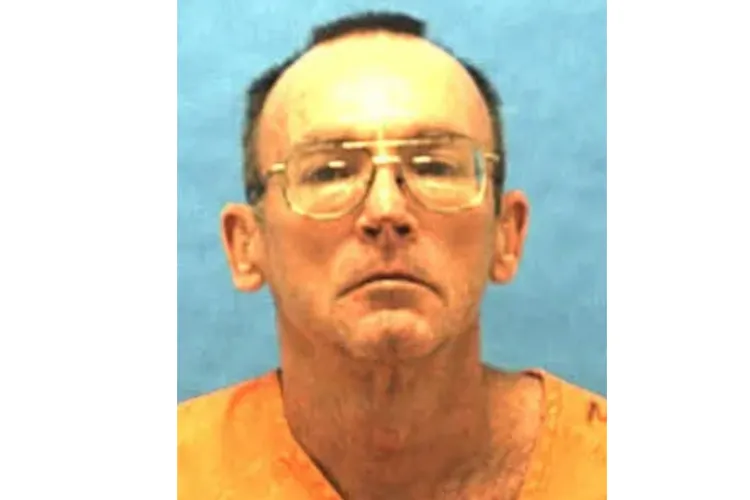

A 65-year-old Florida man convicted of raping and killing his neighbor was executed by lethal injection on Tuesday evening, marking the state’s 15th execution this year — the highest annual total in its history.
Norman Grim was put to death at Florida State Prison for the 1998 rape and murder of Cynthia Campbell, a lawyer who lived next door to him in Pensacola. Campbell’s body was discovered in nearby waters by a fisherman just hours after her death.
According to a 2001 appellate brief in the case, Campbell had suffered brutal injuries — she was struck 18 times in the head with what appeared to be a blunt instrument, possibly a hammer, fracturing her skull. The document also noted she had been stabbed at least 11 times, seven of those wounds to the heart, and had a large genital laceration.
Deputies from the Santa Rosa County Sheriff’s Office soon uncovered multiple pieces of evidence linking Grim to the crime. Earlier that day, Grim had repeatedly asked Campbell to join him for coffee — including in front of a police officer who had responded to her home when someone threw a lug nut through her window. She refused.
:max_bytes(150000):strip_icc():focal(155x0:157x2):format(webp)/grim_norman-56af11455f9b58b7d0146d7d.jpg)
A short time later, a tree branch broke off and hit Campbell’s car. Grim returned and again invited her for coffee. This time she agreed, and the officer departed.
When Campbell failed to arrive at work later that day, police went to her home. Grim claimed he hadn’t seen her — then fled, managing to evade an officer who tried to follow him. An eyewitness later spotted him on the pier where Campbell’s body was eventually found, with his car trunk and doors open.
After the body was recovered, investigators matched fabrics, rope, and tape found in Grim’s home to those on the victim.
Grim pleaded not guilty but was convicted in December 2000 of murder and sexual battery. He chose not to call any mitigating witnesses at his sentencing hearing.
Though he filed several appeals, Grim told the court earlier this week that he would not seek an emergency stay of his execution from either the Florida or U.S. Supreme Court.