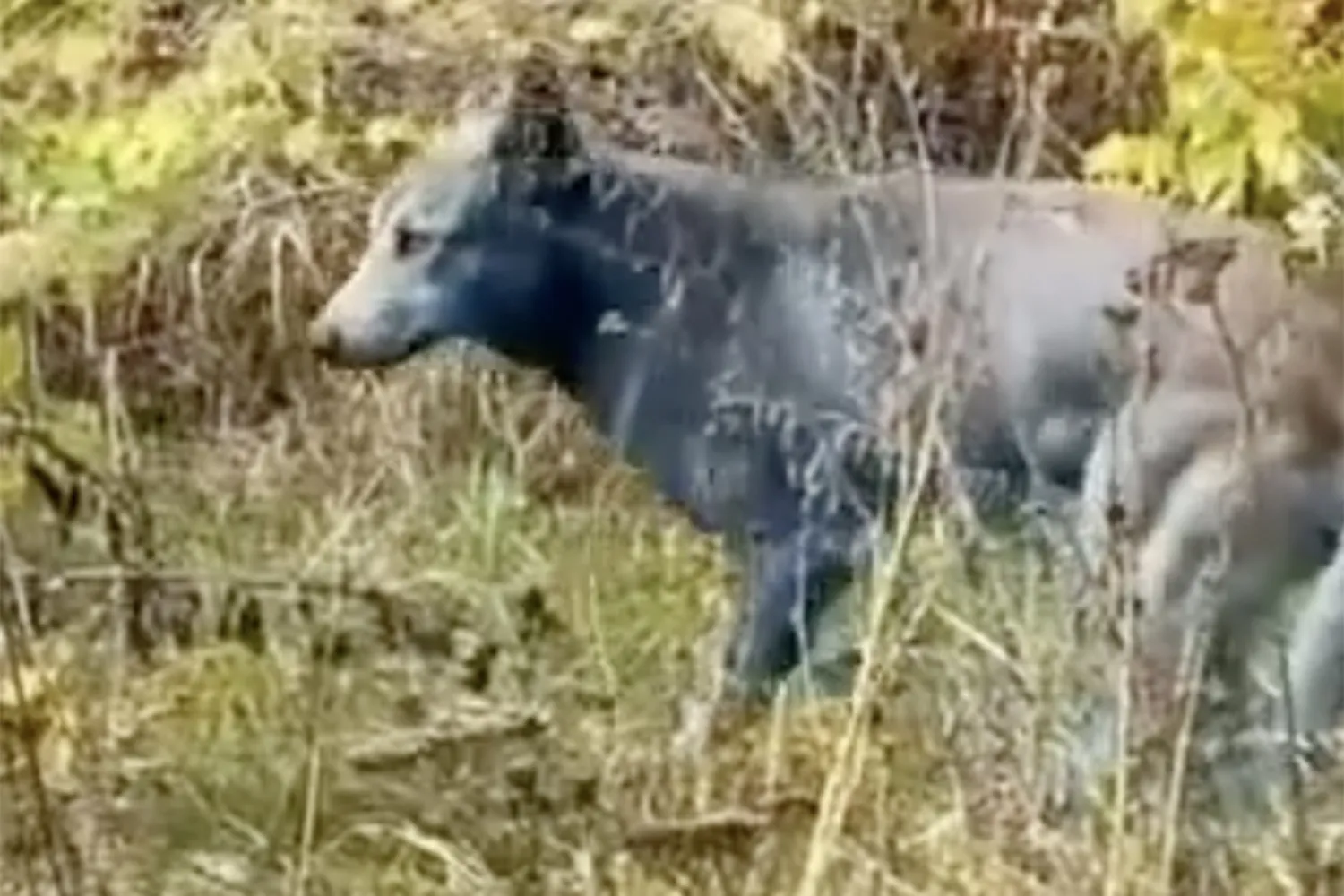

Earlier this month, several dogs in Ukraine’s Chernobyl Exclusion Zone were spotted with striking bright blue fur, according to an Instagram post from Dogs of Chernobyl, an affiliate of the non-profit Clean Futures Fund. On Oct. 13, the organization wrote that while they had not yet managed to catch the animals, doing so would help determine why their fur had turned blue.
“We are on the ground catching dogs for sterilization and we came across three dogs that were completely blue,” the group wrote in the caption. “We are not sure exactly what is going on.”
Despite the strange coloring, the dogs appeared to be healthy and active. Dogs of Chernobyl suggested that the animals might have come into contact with a chemical substance.
According to CBS News, Clean Futures Fund (CFF) noted that the dogs could have gotten into a leaking portable toilet. The organization also said the vivid hue was unlikely to be related to radiation exposure or paint, adding that the dye was probably temporary.
The CFF website explains that the stray dogs living inside the Chernobyl Exclusion Zone are not allowed to leave, so the organization continues to care for them on-site.
:max_bytes(150000):strip_icc():focal(708x385:710x387):format(webp)/blue-dogs-chernobyl-102925-4-9178166a659d46208bb3ea90da19e63a.jpg)
Following the 1986 explosion at the Chernobyl Nuclear Power Plant, residents were forced to evacuate a roughly 19-mile area around the site. More than 120,000 people left behind most of their belongings — including their pets — after being told they could return a few days later. They never did. The abandoned animals became strays and formed the population of dogs still living in the zone today.
:max_bytes(150000):strip_icc():focal(703x430:705x432):format(webp)/blue-dogs-chernobyl-102925-2721ebcb4f5040a58969fca6a11681c3.jpg)
CFF estimates that more than 700 dogs now inhabit the area. Many of them are malnourished, exposed to disease, and in need of medical attention. The organization continues to provide food, vaccinations, and sterilization efforts for these resilient survivors.