
A newly floated concept from former President Donald Trump — sending “at least $2,000 a person” to Americans using revenue collected from tariffs — is drawing sharp pushback from a leading fiscal watchdog group.
Trump recently took to Truth Social to promote what he calls “tariff dividends,” suggesting that tariff proceeds could be redistributed as direct payments to most Americans, excluding higher-income households. The idea mirrors aspects of the pandemic-era Economic Impact Payments, which sent relief checks to millions.
However, the Committee for a Responsible Federal Budget (CRFB) says the math doesn’t work.
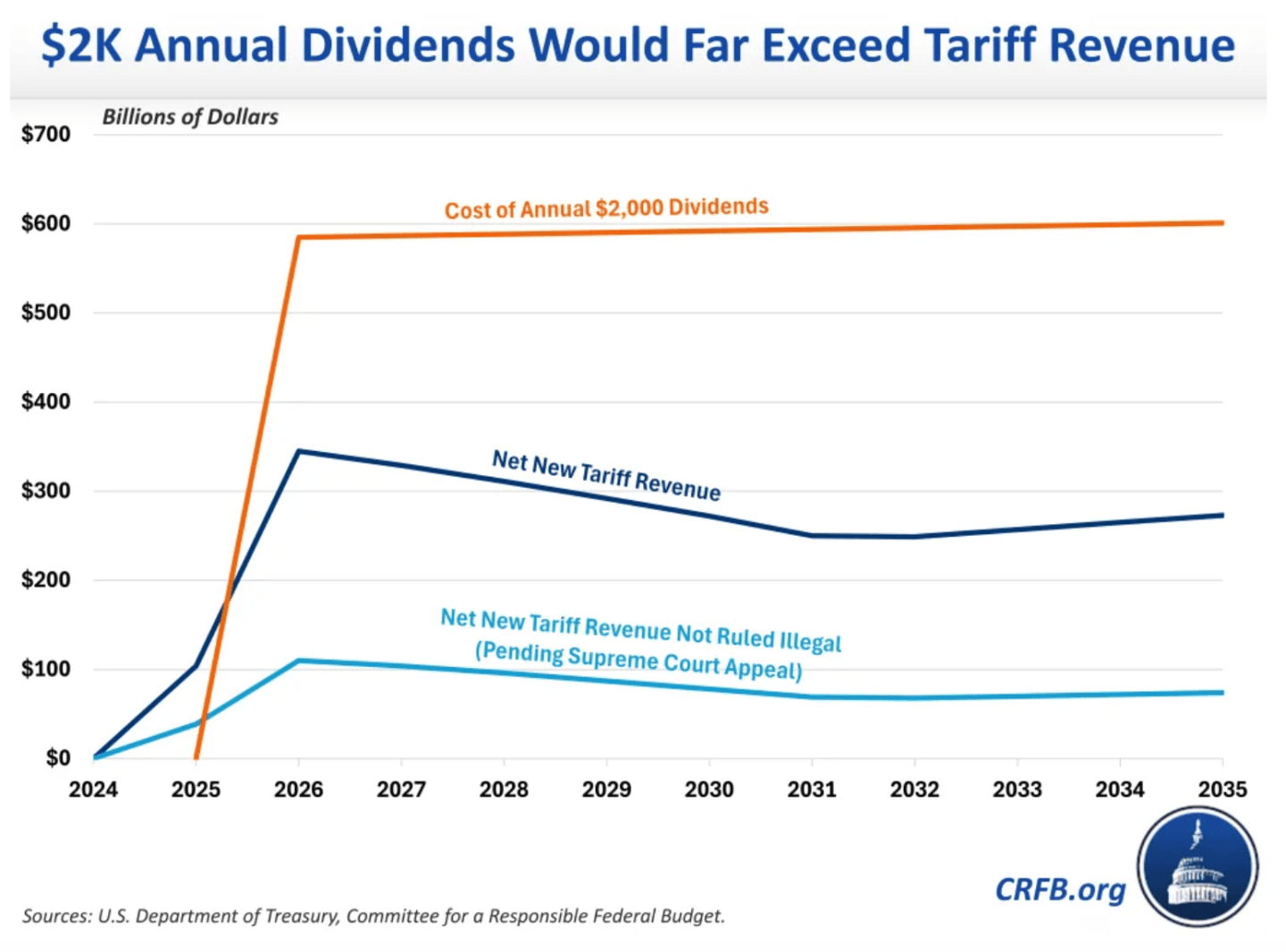
According to its analysis, issuing even a single round of $2,000 payments — including adults and children — would carry an annual price tag of about $600 billion. Meanwhile, tariffs backed by Trump have generated only around $100 billion so far, and updated projections put future tariff revenue at about $300 billion annually, depending on the outcome of pending legal challenges.
A Policy That Would Drive Up Deficits
“If tariff dividends are paid annually, deficits would increase by $6 trillion over ten years,” the CRFB reports — roughly twice the amount the tariffs are expected to raise over that same period. Instead of covering the cost of the payouts, tariff revenue would fall far short and increase fiscal pressures.
To keep the policy “revenue neutral,” the group estimates that dividend payments could only happen every other year beginning in 2027. And if courts strike down some of the tariffs currently tied up in litigation, remaining revenue may only fund dividend checks once every seven years.
Risks to Debt Reduction Efforts
There are broader consequences as well. If all tariff revenue were redirected into annual payments, the government would lose the ability to use that income to slow the growth of federal deficits or reduce national debt — goals some policymakers have cited for tariff use. The CRFB forecasts that diverting these funds could push U.S. debt to 127% of Gross Domestic Product (GDP) by 2035, compared to 120% under existing policies. Annual $2,000 payments could push the debt ratio even higher — to about 134% of GDP.
These warnings arrive amid rising alarm over the federal government’s fiscal trajectory. Budget shortfalls are nearing $2 trillion a year, and total national debt is on track to hit new records.
Eligibility Matters — and the Stakes Could Be Higher
The proposal borrows structural elements from the Economic Impact Payments of the COVID era, which imposed income limits to reduce costs. The CRFB noted that its estimates already assume similar eligibility cutoffs — suggesting the fiscal impact could balloon further if payments were made more universally.