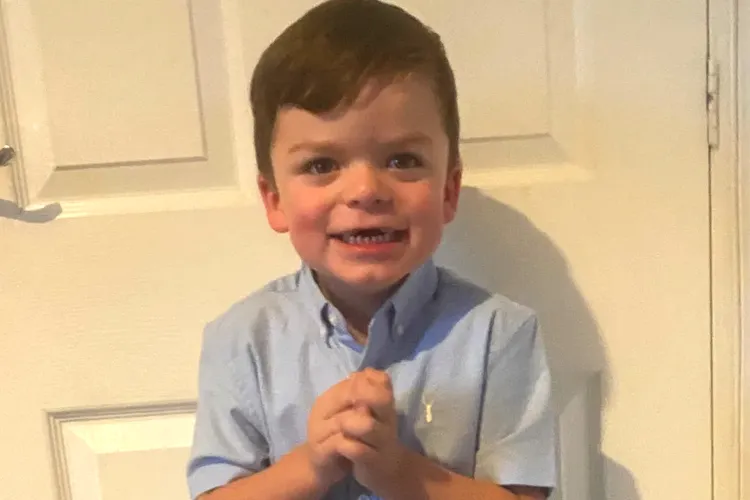

A mother in the U.K. is urgently pursuing a clinical trial that she hopes will slow the progression of her 4-year-old son’s rare and degenerative condition — often referred to as childhood dementia.
“The next year is quite critical in Tate’s life as it’s around now that things start to show,” Tammy McDaid told the BBC about her son, Tate. Although he was initially diagnosed with autism at age 2, McDaid says she always felt “there was something more.”
Those fears were confirmed in March 2024 when an MRI scan showed changes in Tate’s brain associated with dementia. Additional tests revealed Sanfilippo Syndrome, a rare genetic disorder that primarily affects the central nervous system. According to Cleveland Clinic, it causes cognitive, behavioral, and physical decline that ultimately leads to premature death. There is currently no cure, and treatment focuses only on managing symptoms such as gastrointestinal issues, hearing and respiratory problems, and worsening intellectual disabilities.
:max_bytes(150000):strip_icc():focal(999x0:1001x2):format(webp)/mom-holding-little-boys-hand-111225-ec196bec6a6540c191db724a560eaeab.jpg)
Tate was diagnosed with Type A — the most severe form of the condition. Children with this subtype typically have a life expectancy of just 11 to 19 years.
“My little boy has never spoken a word, and now I know I will never get to hear his voice,” McDaid wrote on a GoFundMe she created to help cover his care and possible treatment.
The goal of fundraising is to access potential therapies overseas. “These potential trials or therapies could give him more time being mobile and eating food — more days filled with climbing, running, and me living on edge to see where he will escape to next!” she wrote, noting that the costs are extremely high.
“If there’s any chance to help him, I have to take it,” McDaid said.
Although she understands that a cure doesn’t exist, she hopes treatment could slow the loss of Tate’s mobility — the decline she fears most. “He could climb before he could walk. I just want him to be able to do this for as long as possible,” she told the BBC.
“I am so blessed and proud of him,” she added. “Even though he can’t talk, he hugs and kisses me.”