

The White House sharply criticized journalist and podcast host Katie Couric following a contentious exchange with Sen. John Fetterman, D-Pa., on Thursday’s episode of her podcast Next Question.
During the interview, Couric pressed Fetterman to distance himself from President Donald Trump and Turning Point USA founder Charlie Kirk, who was killed in September. Fetterman resisted those calls, arguing that disagreement with someone’s politics should not diminish the right to grieve after a killing.
Couric asked Fetterman whether it was appropriate for Kirk’s body to be transported on Air Force Two and whether he should have been posthumously awarded the Medal of Freedom. She noted that some critics viewed the Trump administration’s honors as excessive. Fetterman replied that those decisions belonged to the administration.
Couric then raised concerns about Kirk’s past rhetoric, describing it as “extreme” in the view of some observers. Fetterman said that while he often disagreed with Kirk, that did not justify what happened to him.
“A father of young children was shot in public because of his political views,” Fetterman said, calling the killing a tragedy and urging people to give the family and supporters room to mourn. He added that he chose not to use the moment to re-litigate political arguments after children lost their father in “a violent, public way.”
Fetterman also said that inflammatory political language can contribute to dangerous outcomes, remarking that “extreme rhetoric makes it easier for extreme reactions or to justify them.” Couric responded that many people would describe Kirk’s rhetoric as fitting that description.
After the episode aired, White House Communications Director Steven Cheung posted a blistering response on X, accusing Couric of attempting to rationalize Kirk’s killing and calling her remarks disgraceful.
The discussion also revisited Trump’s political conduct. Couric challenged Fetterman on his earlier statement that Trump is not an autocrat because his presidency resulted from a democratic election. She argued that elected leaders can still govern in anti-democratic ways, pointing to Trump’s past actions and asking whether they troubled him.
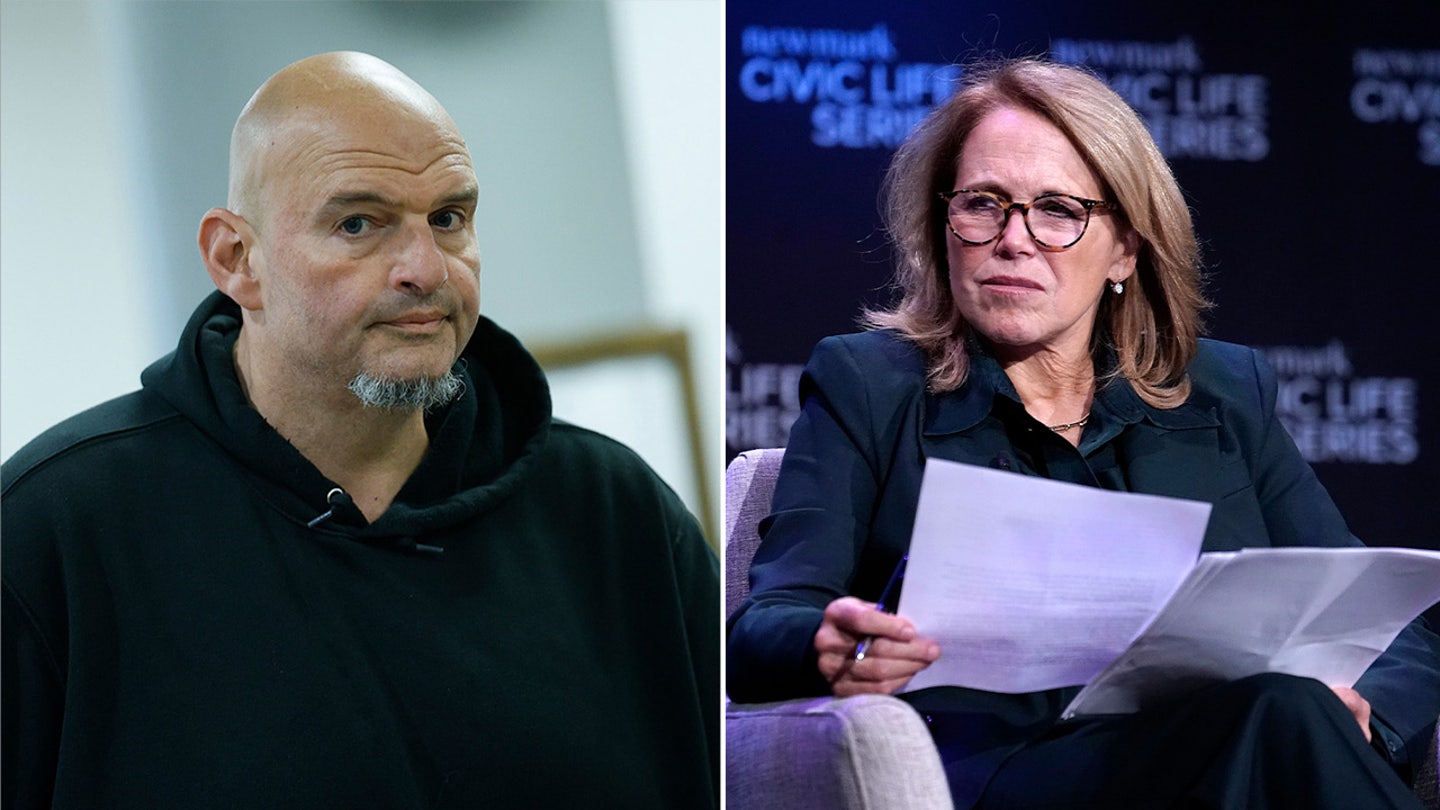
Fetterman said they did. He noted that he strongly rejected Trump’s claims about the 2020 election in Pennsylvania. Still, he maintained that the U.S. is not currently an autocracy. “We’re in a democracy,” he said, adding that democratic institutions remain functional even amid turmoil.
Couric continued pressing him on whether Trump’s current agenda is anti-democratic or unconstitutional. Fetterman acknowledged that, as a Democrat, he and Couric see Trump differently. But he argued that branding political opponents as fascists or Nazis is both inaccurate and politically damaging, saying such comparisons helped fuel Democratic losses in the previous election.