
A federal judge on Monday dismissed the criminal cases against former FBI Director James Comey and New York Attorney General Letitia James, ruling that the prosecutor who brought the charges at President Donald Trump’s urging was illegally appointed by the Justice Department.
The decisions from U.S. District Judge Cameron McGowan Currie pause, at least for now, two high-profile prosecutions targeting some of the president’s most prominent political adversaries. They also amount to a sharp rebuke of the Trump administration’s efforts to install a little-tested loyalist willing to file the cases.
Currie’s orders do not address the underlying allegations against Comey or James. Instead, they focus on the unusual process by which Lindsey Halligan was installed as interim U.S. attorney for the Eastern District of Virginia. Defense attorneys argued that the Trump administration lacked legal authority to make that appointment — and in two closely related rulings, Currie agreed, finding that the defective appointment required the cases to be thrown out.

“All actions flowing from Ms. Halligan’s defective appointment,” including obtaining and signing the indictments, “were unlawful exercises of executive power and are hereby set aside,” she wrote.
A White House spokeswoman said the rulings will “not be the final word on the matter,” and Attorney General Pam Bondi vowed at a separate news conference that the Justice Department would seek an “immediate appeal.” Prosecutors may also attempt to refile the charges, a possibility Currie explicitly left open.
Indictments Under Sustained Attack
The challenge to Halligan’s appointment is just one part of a broader legal assault on the indictments by Comey and James, whose other motions to dismiss remain unresolved.
Both have argued that the prosecutions were politically motivated, pointing to them as examples of a Justice Department being used as a weapon. Comey’s legal team recently seized on a judge’s findings of multiple grand jury irregularities and missteps by Halligan, while James has accused the government of “outrageous conduct” leading up to her indictment.
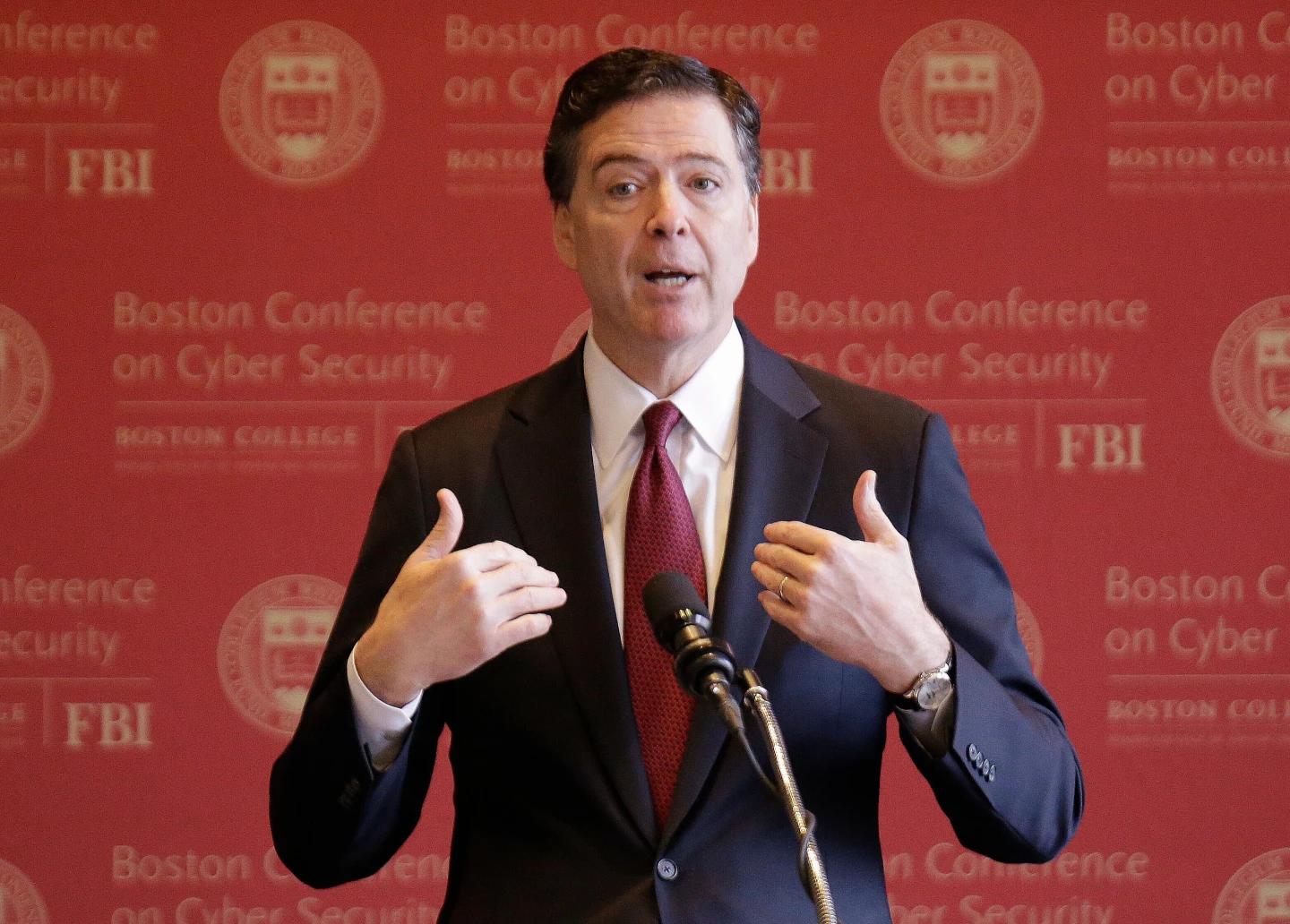
“I am grateful that the court ended the case against me, which was a prosecution based on malevolence and incompetence and a reflection of what the Justice Department has become under Donald Trump, which is heartbreaking,” Comey, who has pleaded not guilty to charges of making a false statement and obstructing Congress, said in a video statement.
In a separate statement, James — a Democrat who has pleaded not guilty to mortgage fraud charges — said, “I am heartened by today’s victory and grateful for the prayers and support I have received from around the country.” She added that she remains “fearless in the face of these baseless charges as I continue fighting for New Yorkers every single day.”
How Lindsey Halligan Was Installed
At the core of Currie’s rulings is the mechanism the Trump administration used to put Halligan, a former White House aide with no prior prosecutorial experience, in charge of one of the Justice Department’s most prominent offices.
Halligan was selected to replace Erik Siebert, a veteran prosecutor who had been serving as interim U.S. attorney. Siebert resigned in September after sustained pressure from the Trump administration to bring charges against both Comey and James. He stepped down shortly after Trump told reporters he wanted Siebert “out.”
The next night, Trump announced he would be naming Halligan as interim U.S. attorney and publicly pressed Bondi to move against his political rivals. In a Truth Social post, he wrote, “We can’t delay any longer, it’s killing our reputation and credibility” and insisted that “JUSTICE MUST BE SERVED, NOW!!!”
Comey was indicted three days after Halligan was sworn in by Bondi. James was charged two weeks later.
Under federal law, attorneys general can appoint an interim U.S. attorney for up to 120 days. Lawyers for Comey and James said that once that 120-day period expires — as it had in Siebert’s case — only the federal judges in that district can appoint someone to serve until the vacancy is permanently filled. By naming another interim U.S. attorney on its own, they argued, the Justice Department sidestepped this requirement.
“The 120-day clock began running with Mr. Siebert’s appointment on January 21, 2025. When that clock expired on May 21, 2025, so too did the Attorney General’s appointment authority,” Currie wrote. “Consequently, I conclude that the Attorney General’s attempt to install Ms. Halligan as Interim U.S. Attorney for the Eastern District of Virginia was invalid and that Ms. Halligan has been unlawfully serving in that role since September 22, 2025.”
The Justice Department defended the appointment but disclosed last month that Halligan had also been given a separate title of “Special Attorney,” presumably as a backstop to shield the indictments from being invalidated. Currie ruled that this after-the-fact designation could not rescue the prosecutions.
“The implications of a contrary conclusion are extraordinary,” she wrote. “It would mean the Government could send any private citizen off the street — attorney or not — into the grand jury room to secure an indictment so long as the Attorney General gives her approval after the fact. That cannot be the law.”
What Happens Next
Though Comey and James had asked Currie to dismiss the cases with prejudice — which would prevent the Justice Department from bringing them again — the judge dismissed them without prejudice, leaving the door open to a possible reindictment.
Timing may pose a serious obstacle in Comey’s case. He was indicted just days before the five-year statute of limitations was set to expire, complicating any attempt to bring new charges. One of his attorneys, Patrick Fitzgerald, said in a statement that Currie’s ruling “further indicates that because the indictment is void, the statute of limitations has run and there can be no further indictment.”

In other cases, judges have found that interim U.S. attorneys in New Jersey, Los Angeles and Nevada were serving unlawfully but nevertheless allowed prosecutions from their offices to move forward. Lawyers for Comey and James argued that Currie needed to go further here because Halligan appeared to be the sole prosecutor who presented evidence to the grand juries.
Longtime Trump Adversaries
Comey has been one of Trump’s most persistent critics. Appointed FBI director in 2013 by President Barack Obama, Comey was overseeing an investigation into whether Trump’s 2016 campaign conspired with Russia to influence the election’s outcome. Trump, enraged by that probe, fired him in May 2017.
James has likewise been a frequent target of Trump’s public attacks, especially since she secured a major judgment against him and the Trump Organization in a civil case alleging he misled banks by inflating the value of his properties on financial statements. An appeals court later overturned the monetary penalty — which had grown to more than $500 million with interest — but upheld the lower court’s finding that Trump committed fraud.