
A longtime evangelical pastor who once counted himself a loyal Republican voter has launched a surprise bid for Congress — this time as a Democrat — saying the modern GOP has “lost its moral compass” and abandoned the values that first drew him into politics.
The announcement sets up what could become one of the most closely watched House races of the cycle in a traditionally conservative district that has been slowly trending purple in recent years.
From Pulpit to Politics
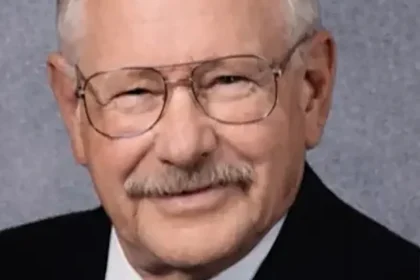
Rev. Daniel Brooks, 48, senior pastor of Grace Fellowship Church in the suburbs of Riverbend, stood before a packed fellowship hall Sunday evening and declared that he will run for the U.S. House in the state’s 9th Congressional District.
“I spent two decades telling my congregation that faith without works is dead,” Brooks said, drawing applause. “At some point I realized that meant me, too. I can’t preach about justice, mercy, and truth on Sunday and then stay silent the rest of the week while our leaders do the opposite.”
Brooks, a registered Republican for most of his adult life, said he officially changed his party affiliation earlier this year, citing growing discomfort with the GOP’s approach to issues like voting rights, immigration, and poverty.
“This is not about left versus right for me,” he said. “It’s about right versus wrong.”
Breaking with the GOP
In his announcement speech, Brooks described the decision to leave the Republican Party as “painful but necessary,” especially given the backlash he knew would come from some longtime friends and supporters.
“I grew up believing the Republican Party stood for integrity, personal responsibility, and a respect for institutions,” he told the crowd. “What I see now is a party more focused on winning at any cost than telling the truth or serving the common good.”
He criticized what he called “performative culture wars” and “political theater” that do little to address the everyday struggles of families in his district.
“Fighting over who can score the loudest soundbite on cable news doesn’t lower the price of insulin, fix our roads, or help a single working parent find childcare,” Brooks said. “People here are exhausted. They want problem-solvers, not arsonists.”
Taking Aim at an Entrenched Incumbent
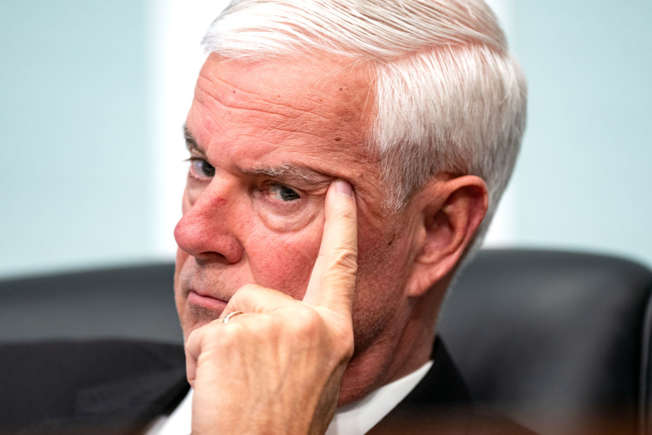
Brooks will face three-term Republican Rep. Marcus Kellogg, a staunch conservative who has easily won his past elections but has seen his margins narrow as the district’s demographics have shifted.
Kellogg’s campaign has not yet released a formal statement on the pastor’s bid, but a spokesperson responded briefly when asked about the challenge.
“Congressman Kellogg remains focused on fighting for lower taxes, safer communities, and strong borders,” the statement read. “Voters know where he stands and they know he delivers.”
Brooks didn’t mention Kellogg by name in his speech but sharply criticized what he described as “rubber-stamp politicians” who, in his view, answer more to party leadership and big donors than to their constituents.
“If your representative’s main job seems to be posting angry videos and voting ‘no’ on everything, that’s not representation,” Brooks said. “That’s branding.”
A Message Focused on Kitchen-Table Issues
Setting a tone more pastoral than combative, Brooks outlined a campaign agenda framed around “dignity and opportunity”:
- Economic security: Supporting policies that raise wages, expand the child tax credit, and provide targeted relief for small businesses.
- Healthcare access: Pushing to cap prescription drug prices and expand mental health services, particularly in rural and working-class communities.
- Democracy and voting rights: Backing stronger protections for access to the ballot and condemning efforts to undermine trust in elections.
- Immigration reform: Calling for “secure borders with humane policies,” including a path to legal status for law-abiding undocumented immigrants and protections for Dreamers.
“I’ve sat in hospital rooms with families trying to decide whether they can afford a life-saving treatment,” Brooks said. “I’ve prayed with parents who work two jobs and still can’t pay the rent. These aren’t abstract ‘issues’ to me. They’re people — people I know by name.”
Risking Backlash in the Pews
A pastor entering partisan politics is not without controversy, and Brooks acknowledged that some congregants are uncomfortable with his decision. He emphasized that his church would remain nonpartisan and that he has no intention of turning sermons into campaign rallies.
“My calling as a pastor is to serve everyone who walks through those doors, regardless of how they vote,” he said. “If I win, that doesn’t change. If I lose, that doesn’t change.”
Still, he admitted that some longtime members have already told him they plan to leave the church.
“They feel betrayed,” he said afterward. “I understand that. All I can do is be honest about why I’m doing this and respect their choices.”
Others, however, approached him after the announcement with hugs and tears, thanking him for “finally saying out loud what we’ve been whispering about for years,” as one congregant put it.
A Test Case for a Changing Political Landscape
Political observers say Brooks’ candidacy could become a test of whether disillusionment with the GOP among some faith-based voters translates into actual votes for Democrats or moderates.
“White evangelical support for Republicans has been remarkably durable, but there are cracks,” said Dr. Alicia Monroe, a political scientist at Riverbend State University. “A well-known local pastor switching parties and running a values-based campaign could be a significant data point — especially in a district that’s already shifting.”
The district has grown younger and more diverse over the past decade, with new housing developments bringing in professionals from nearby cities. Recent elections have seen closer margins, even as Republicans continued to win.
“If there’s a year this seat could be in play, this is it,” Monroe said.
‘I’m Not Running Against My Neighbors’
As he wrapped up his announcement, Brooks stressed that he doesn’t see his campaign as a crusade against conservatives or people who still identify with the GOP.
“I’m not running against my neighbors,” he said. “I’m running for them — including the ones who will never vote for me.”
He paused, then added: “I know I’ll be called a traitor, a fake Christian, a radical. But if standing up for truth, compassion, and basic decency costs me a label, I can live with that. What I can’t live with anymore is silence.”
With that, the pastor-turned-candidate stepped down from the stage, shook hands along the front row, and headed into what promises to be a bruising, high-stakes campaign — one that could test not only the strength of the local GOP, but the depth of political realignment within the pews.