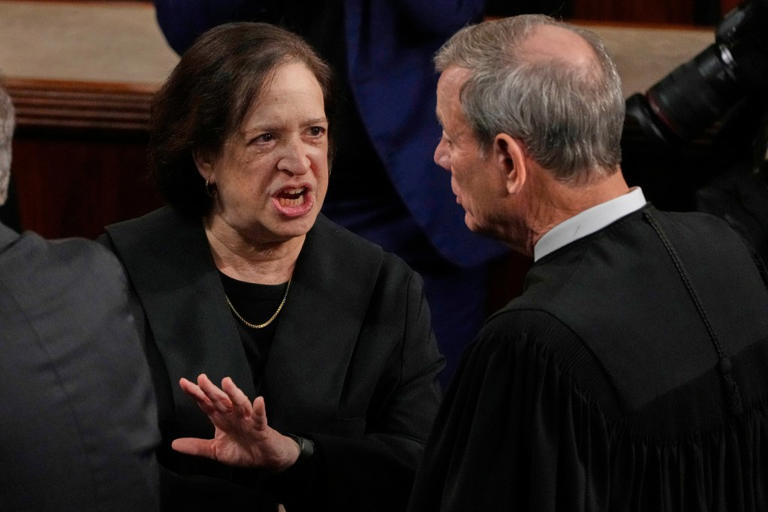

Justice Elena Kagan emerged as a surprising skeptic of New Jersey’s stance on Tuesday as the Supreme Court considered whether a faith-based crisis pregnancy center can challenge a state subpoena in federal court.
Her pointed questions suggested she may join the court’s conservatives in backing First Choice Women’s Resource Centers, which contends that the state’s investigation risks violating its First Amendment rights.
Why It Matters
The dispute began when Democratic Attorney General Matthew Platkin’s consumer-protection division issued a subpoena to First Choice, seeking extensive information—including a list of the group’s donors—as part of an investigation into whether the center misrepresented the services it provides.
Crisis pregnancy centers, which encourage women to continue their pregnancies and often present themselves as offering broad reproductive health counseling, have faced heightened scrutiny in Democratic-led states since the Supreme Court ended the nationwide right to abortion in 2022.
What To Know
First Choice resisted the subpoena, arguing that the investigation was baseless and that forcing disclosure of donor identities would deter people from supporting the organization. Lower courts rejected the challenge as premature because the subpoena had not yet been enforced, prompting the center to ask the Supreme Court to intervene.
A majority of the justices appeared open to First Choice’s argument that the risk of disclosure alone can burden its supporters. Chief Justice John Roberts questioned why donors should feel at ease if their personal details might ultimately be turned over to the government. He pressed New Jersey’s attorney, Sundeep Iyer, on whether donors would really be unconcerned knowing “their name, phone number, address, et cetera, could be disclosed.”
Iyer replied that the state sought the information only to contact donors and determine whether they had been misled, and argued that no constitutional injury could arise before a court actually ordered enforcement of the subpoena. Kagan, however, challenged that view with one of the day’s most striking exchanges.
She suggested that a typical donor, confronted with a subpoena demanding name, address, phone number, email, contribution history, and other details, would hardly find comfort in assurances that the information would not be misused or compromise their privacy.
Her comments echoed worries raised by conservative justices about the chilling effect of state demands for sensitive donor information, hinting at rare cross-ideological agreement on that point.
New Jersey cautioned that siding with First Choice could invite a surge of early federal lawsuits from the many businesses and organizations that receive similar subpoenas. But allies of the center—including the Trump administration and the American Civil Liberties Union—argued that only groups alleging comparable First Amendment harms would be able to bring such challenges.
Erin Hawley, an attorney with Alliance Defending Freedom representing First Choice, framed the issue as “non-ideological,” warning that organizations with unpopular viewpoints could be especially vulnerable to intrusive investigations.
First Choice executive director Aimee Huber said she hopes a favorable ruling will discourage future investigations targeting similar centers.
What People Are Saying
Carol Tobias, president of National Right to Life, said in a statement to Newsweek, “No government official needs to know which charitable organizations Americans support, and no attorney general should be allowed to misuse state power to intimidate or harass pro-life groups. Forcing disclosure of donor information has been used throughout history as a political weapon. This kind of government overreach chills free speech, threatens the safety and privacy of donors, and diverts vital resources away from helping women and saving lives.”
Jeanne LoCicero, an attorney with the ACLU of New Jersey, told Politico that although her organization supports “different policy outcomes than” the crisis pregnancy centers involved, it agrees with their legal position: “We are on the same page that investigatory subpoenas seeking sensitive information put all advocacy at risk. Federal court should remain open to anyone who believes their First Amendment rights are being violated, regardless of viewpoint.”