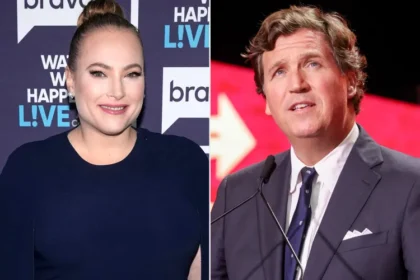

A Democratic upset in Tuesday’s special election for Tennessee’s Seventh Congressional District could give former Vice President Kamala Harris a timely political lift more than a year after her loss to President Donald Trump.
Why This Race Matters
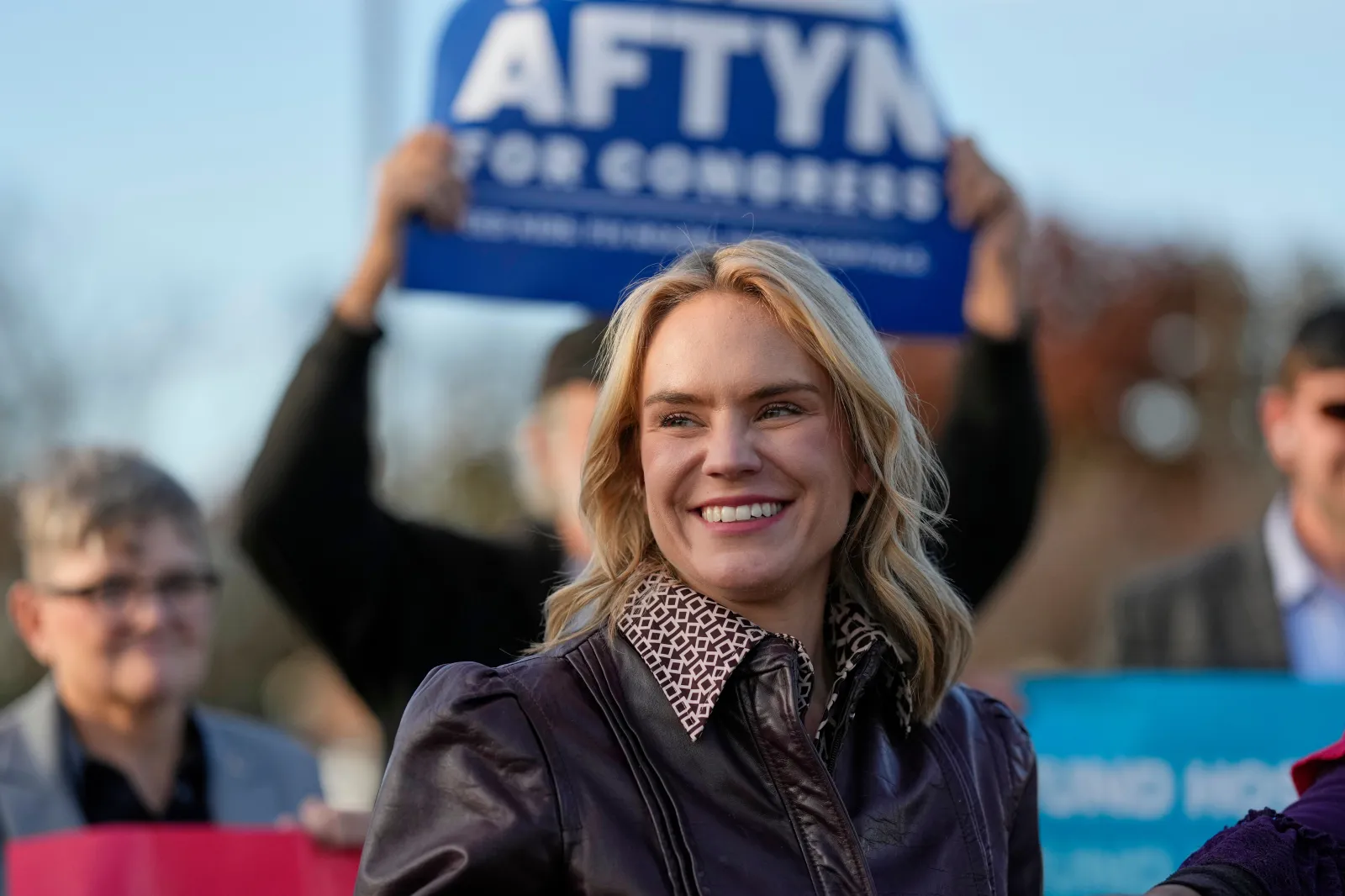
Voters in the district will choose between Democratic state legislator Aftyn Behn and Republican veteran Matt Van Epps in a special election to replace former Representative Mark Green, who resigned earlier this year to take a private sector role.
The seat has long been considered safely Republican—Trump won it by about 22 points last November. Still, Democrats see an opening: the party has outperformed expectations in several special elections this year, and recent polling suggests this contest is competitive.
The race has drawn national attention, pulling both Trump and Harris back into the political spotlight. Harris has reemerged on the campaign trail to rally Democratic voters, and a Behn victory in a conservative district would be read as a blow to Trump and a symbolic win for Harris, who is frequently mentioned as a potential 2028 presidential contender.
What to Watch in the Tennessee Contest
Turnout is likely to decide the outcome. Tennessee’s Seventh District includes parts of Nashville and Clarksville, as well as surrounding rural and suburban communities in central Tennessee. Democrats are counting on strong participation in Nashville to push Behn over the line, while Republicans will be favored if conservative-leaning areas see higher turnout.
Harris and Trump have both been involved in the race.
Harris has not formally endorsed Behn, but she traveled to Nashville last month for a canvassing event with Democrats, urging supporters to cast their ballots in the special election, reported The New York Times. Earlier that day, she spoke at Fisk University, a historically Black college. While Harris was unable to defeat Trump last November, a Behn win over a Trump-backed candidate in a Republican-leaning district would be seen as a significant political setback for the former president.
“This election is 14 days from today,” Harris said at the canvassing event, per The Times.
Behn joined Harris at the event and framed the contest as the “most competitive” race in the country. Her campaign told The Nashville Banner, when asked why Harris did not endorse Behn by name, that her team “did not organize the event.”
Trump, for his part, has strongly backed Van Epps. In a post on Truth Social on Sunday, he urged Republicans to “GET OUT AND VOTE” for his preferred candidate.
“Do not take this Race for granted. The Radical Left Democrats are spending a fortune to beat one of the best Candidates we’ve ever had, Matt Van Epps! You can win this Election for Matt. GET OUT AND VOTE FOR MATT VAN EPPS, who has my Complete and Total Endorsement — HE WILL NEVER LET YOU DOWN!” Trump wrote.
John Geer, co-director of the Vanderbilt Poll and a professor of political science, told Newsweek that a Behn victory could serve as a meaningful “boost” for Harris.
“I think it would be a boost for her for sure, but really, this election—it would be a serious setback for both for Trump,” he said.
He added that a Democratic flip would also be a “setback” for House Speaker Mike Johnson, as it would trim the GOP’s already narrow majority in the House of Representatives.
According to Geer, Harris’ decision to appear at the canvassing event “speaks to the fact that this race is closer than people thought.”
Kent Syler, a professor of political science at Middle Tennessee State University, suggested that the broader implications for Harris might still be limited.
“I’m sure the Behn campaign was honored to get the former vice president’s endorsement,” he said. “But in all honesty, this election is about one person, and that’s President Donald Trump.”
Syler noted that midterm elections are typically viewed as referendums on the sitting president. If Democrats keep the race close, it will likely be interpreted as a warning sign for Trump ahead of the midterms, when Democrats hope to reclaim control of both the House of Representatives and the Senate.
If Behn reaches the mid-40s in her share of the vote, Syler said, it would show that recent Democratic overperformances are continuing. That pattern could help the party recruit strong contenders in more competitive districts next year. Anything above 45 percent would be “the cherry on top,” he added.
Republicans, meanwhile, have tried to keep the spotlight away from Trump and focused squarely on Behn and the Democratic Party, Geer said.
“If you take a look right now at Van Epps’ advertisements, they’re not talking about his ties to Trump. They’re trying to attack Behn as a radical, or that Van Eppps is going to be really good at keeping costs down, which is of course the primary issue that the American public is now worried about is inflation, the cost of living,” he said.
In the primary, however, Van Epps was “wrapping himself in the MAGA flag,” Geer noted.
What Comes Next
Polls close in Tennessee at 7 p.m. local time. Election forecasters still give Republicans the advantage—both the Cook Political Report and Sabato’s Crystal Ball rate the contest as “Likely Republican.”
Even so, polling indicates a tight race. An Emerson College survey of 600 likely voters, conducted from November 22-24, found Behn trailing Van Epps by just 2 points (49 percent to 47 percent) among likely voters after undecided respondents were pushed to choose. The poll had a margin of error of plus or minus 3.9 percentage points, underscoring just how close this race could be.