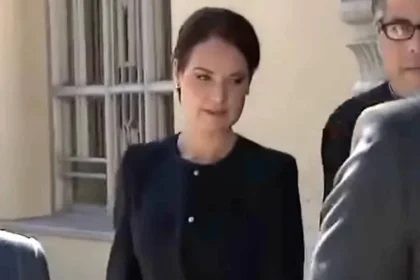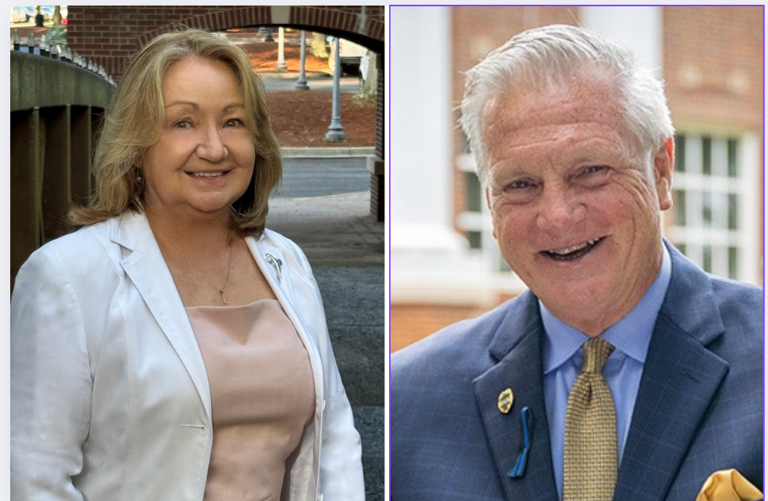

A former Democratic state lawmaker has been elected mayor of Roswell, Georgia, defeating an incumbent who enjoyed the public support of the state’s Republican governor.
Mary Robichaux, who represented a Georgia House district from 2019 to 2023, won the mayoral runoff with 53 percent of the vote, unseating Mayor Kurt Wilson, who received 47 percent.
Although the contest was officially non-partisan, Georgia Governor Brian Kemp urged voters to back Wilson, describing him as a “Republican” mayor who had kept Roswell “safe and thriving.” Robichaux, by contrast, has been closely associated with Democratic politics through her prior service in the state legislature.
The runoff was triggered after neither candidate secured a majority in the November 4 general election. In that earlier contest, the race was already tight, with just 185 votes separating Wilson and Robichaux.
Why It Matters
While the Roswell mayoral race is local and non-partisan on paper, it unfolded in a state that has become one of the country’s most closely watched political battlegrounds. Outcomes in municipal contests can hint at voter mood ahead of statewide and national elections.
In 2020, former President Joe Biden narrowly carried Georgia over Donald Trump by 11,779 votes, or 0.24 percent of roughly 5 million ballots cast, ending a decades-long Republican hold on the state. In 2024, Trump reclaimed Georgia, winning 50.7 percent of the vote to former Vice President Kamala Harris’ 48.5 percent.
Speaking to Newsweek, Thomas Gift, an associate professor of political science and director of the Centre on U.S. Politics at University College London, said that it would be misguided to see the Roswell result as purely local.
“Almost all politics in America has been nationalized, so it would be a mistake to view this race as a purely local issue,” he said.
What To Know
Wilson was first elected mayor in 2021. His administration, however, has recently faced pushback over local development decisions. In November, 21 former elected officials signed an open letter urging Wilson and the city council to halt a proposed property development over concerns about its impact on trees and the surrounding environment.
Gift noted that such local debates still play a key role in shaping how voters view their leaders, even in races where party labels are absent.
“Even in officially non-partisan contests, voters often read the candidates through a national partisan lens, and high-profile endorsements reinforce that dynamic,” he said. “That said, local factors always matter at the margins, especially in municipal elections where issues like development, zoning, and public safety can heavily affect perceptions of both incumbents and challengers.”
Roswell’s mayoral race was one of several elections on the ballot Tuesday. In Tennessee, Republican Matt Van Epps, an Army veteran, won a special election in the state’s 7th District with 53.9 percent of the vote, defeating Democratic state legislator Aftyn Behn, who received 45.0 percent. While that result was a win for Republicans, the margin was narrower than some polls had predicted.
What Happens Next
Attention will now shift toward the midterm elections scheduled for November 2026, when Georgia and other closely contested states will again be in the national spotlight. Local races like Roswell’s may offer early clues about turnout patterns, voter priorities, and the strength of each party’s ground game heading into those larger contests.