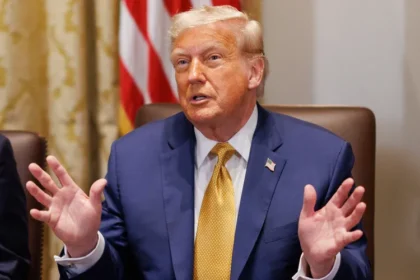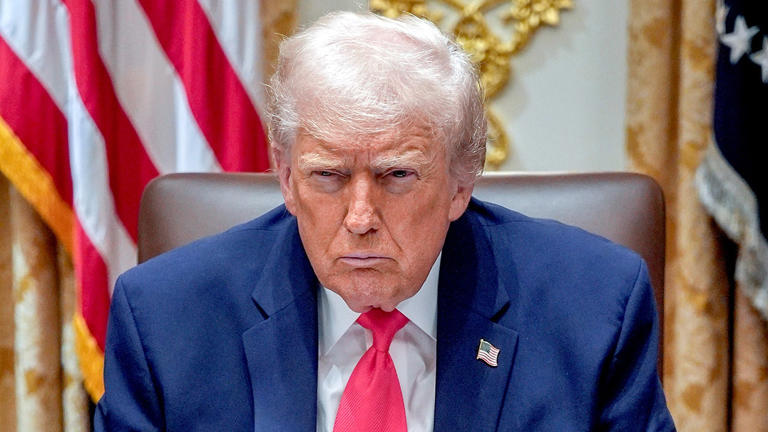

President Donald Trump and his team are adamant that living costs are easing, but many Americans — including some who helped return him to the White House — aren’t feeling the relief.
Even after Republicans were hit hard on affordability concerns in last month’s off-year elections, Trump has continued to brush off the issue, a sharp shift from his focus on kitchen-table economics during last year’s campaign.
“The word ‘affordability’ is a con job by the Democrats,” Trump said during a cabinet meeting on Tuesday. “The word ‘affordability’ is a Democrat scam.”
Yet a new Politico poll shows that 37% of Americans who voted for him in 2024 say the current cost of living is the worst they can remember, while another 34% say it’s bad, though they recall other periods that felt worse.
The White House argues that Trump inherited an inflationary environment from President Joe Biden and has highlighted specific essentials that have gotten cheaper since Trump’s second term began, such as gasoline.
According to the poll, 57% of Trump voters still believe Biden bears full or almost full responsibility for today’s economy. But a notable 25% now blame Trump entirely or almost entirely.
This comes as the annual pace of consumer inflation has ticked higher since Trump launched his global trade war in April, and grocery prices alone have climbed 1.4% between January and September.
Last month, Vice President JD Vance urged Americans to show “patience” on the economy, acknowledging that people want to see prices actually fall, not simply rise more slowly.
Even a slight weakening in Trump’s support could matter in next year’s midterm elections, when his name won’t be on the ballot to energize his base.
One potential vulnerability: Republicans who don’t see themselves as part of the “MAGA” movement. Among those voters, 29% say Trump has had the opportunity to change the economy but hasn’t acted, compared with just 11% of self-identified MAGA supporters who feel that way.
Across the entire electorate, 45% of voters named groceries as the hardest expense to manage, followed by housing (38%) and health care (34%), the Politico survey found.
The poll lands at a moment when even higher-income households are finding it difficult to cover basic necessities, and discount chains such as Walmart and Dollar Tree report more customers from wealthier brackets.
In a widely shared Substack post last month, Michael Green, chief strategist and portfolio manager at Simplify Asset Management, argued that traditional measures of poverty are badly outdated. He wrote that if the “crisis threshold” — the income level below which families can’t realistically function — is updated to reflect current spending patterns, it would be about $140,000. By contrast, the official poverty line sits near $31,200, which he described as measuring something closer to “starvation” than basic security.