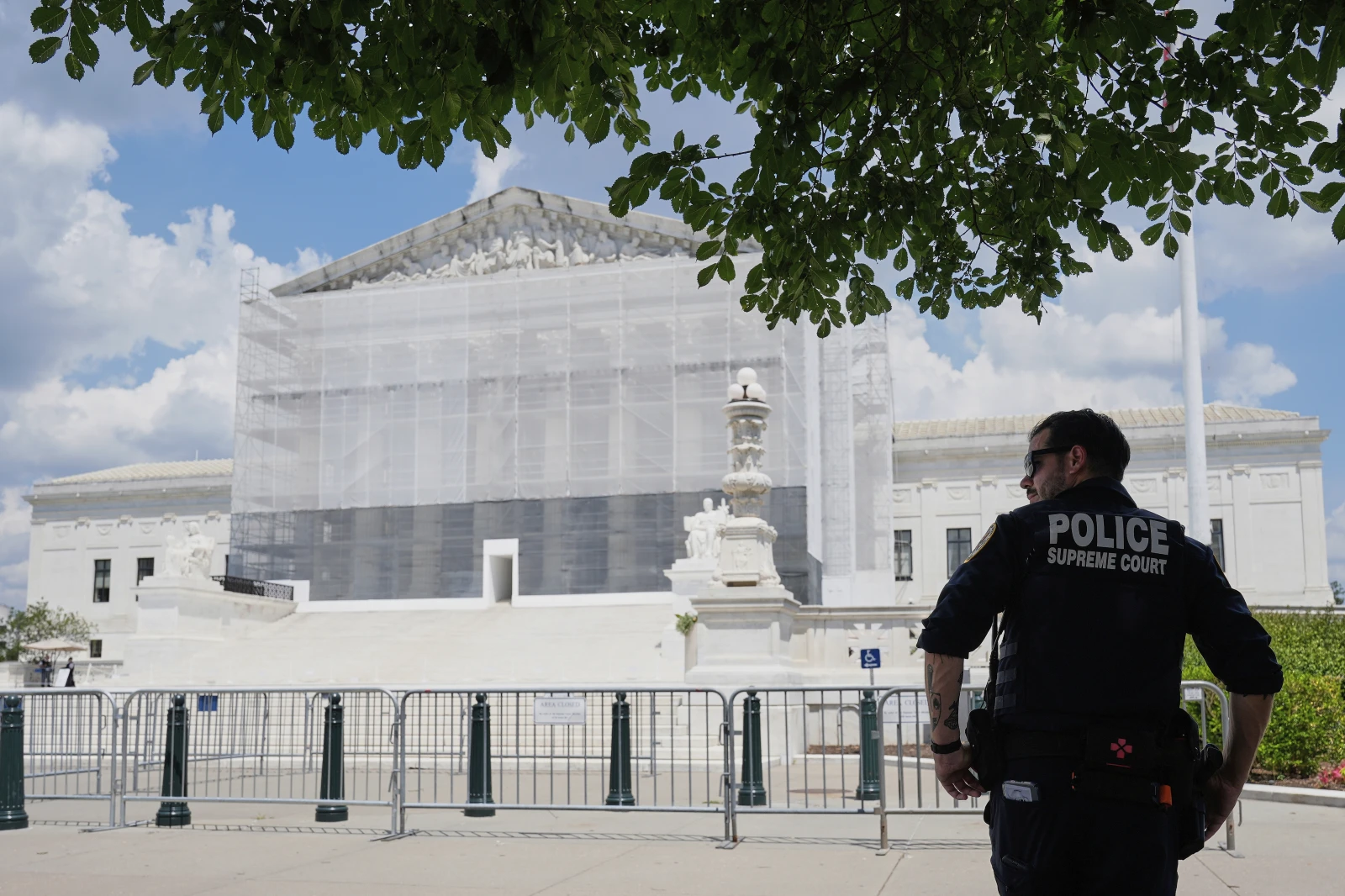

The U.S. Supreme Court ruled Friday that federal judges cannot issue nationwide injunctions, marking a major shift in how legal challenges to federal policies are handled. But the ruling stopped short of deciding whether former President Donald Trump’s controversial order restricting birthright citizenship can take effect.
In a 6-3 decision led by Justice Amy Coney Barrett, the conservative majority said federal judges overstep their authority when they block government policies on a nationwide scale, rather than limiting their rulings to the plaintiffs in a given case.
The ruling is a significant win for Trump, who has long criticized federal judges for halting his policies nationwide. Since returning to office in January, courts have blocked several of Trump’s executive actions, including the order denying U.S. citizenship to children born on American soil to undocumented or temporary immigrants.
Despite the high court’s decision, Trump’s birthright citizenship order remains blocked for now. The court did not directly rule on the policy’s constitutionality, instead sending the case back to lower courts to rework their rulings in line with the Supreme Court’s limits.
Legal Uncertainty and Patchwork Enforcement
The justices acknowledged that their decision could lead to a confusing patchwork of rules, especially since 22 states are suing to block Trump’s order. Enforcement of the policy is paused for 30 days, giving courts time to respond to the new guidance.
“Federal courts do not exercise general oversight of the Executive Branch,” Barrett wrote. “They resolve cases and controversies consistent with the authority Congress has given them.”
Justice Sonia Sotomayor, writing in dissent for the court’s three liberal justices, called the decision “an open invitation for the government to bypass the Constitution.” She warned that the ruling could allow potentially unconstitutional policies to be enforced as long as they are not challenged by the right plaintiffs in the right jurisdictions.
What Happens Next?
The ruling means lower courts must now narrow the scope of their injunctions, possibly limiting protections only to those directly involved in the lawsuits. However, Justice Brett Kavanaugh suggested an alternative path: courts might still block policies on a larger scale by certifying broad “nationwide classes” of plaintiffs — a suggestion rights groups are already exploring.
States like Massachusetts, which sued to block Trump’s order, say they’ll argue that only a nationwide hold can adequately protect residents.
“We fully expect to prevail,” said Massachusetts Attorney General Andrea Campbell. “The 14th Amendment remains the law of the land.”
The Fight Over Birthright Citizenship
At the heart of the case is Trump’s executive order that would deny automatic U.S. citizenship to children born on U.S. soil if their parents are in the country illegally or on temporary visas. The order challenges long-standing interpretations of the 14th Amendment, which has guaranteed birthright citizenship since shortly after the Civil War.
In the landmark 1898 case United States v. Wong Kim Ark, the Supreme Court affirmed that children born in the U.S. — except those of diplomats, enemy soldiers, or members of sovereign Native American tribes — are citizens at birth.
The Trump administration argues that children of non-citizens are not “subject to the jurisdiction” of the United States, as required by the amendment’s text. Critics call the move a political effort to redefine constitutional rights that have stood for over a century.
So far, every judge who has ruled on the order has sided against Trump, but none of those rulings have yet resolved the policy’s future under the new Supreme Court precedent.
Political and Legal Fallout
President Trump called the Supreme Court ruling “a monumental victory for the Constitution,” praising it as a restoration of judicial restraint and the separation of powers.
But Senate Majority Leader Chuck Schumer called it a “terrifying step toward authoritarianism”, warning that it could pave the way for future abuses of executive authority without meaningful judicial checks.
Rights groups are now preparing for a new round of legal battles, arguing that limiting injunctions won’t stop them from challenging unconstitutional laws — even if they must now do so piece by piece.
For now, the future of birthright citizenship in the United States remains uncertain, hinging on how lower courts apply the new rules and how far the administration will go to implement the policy in states not currently covered by injunctions.