
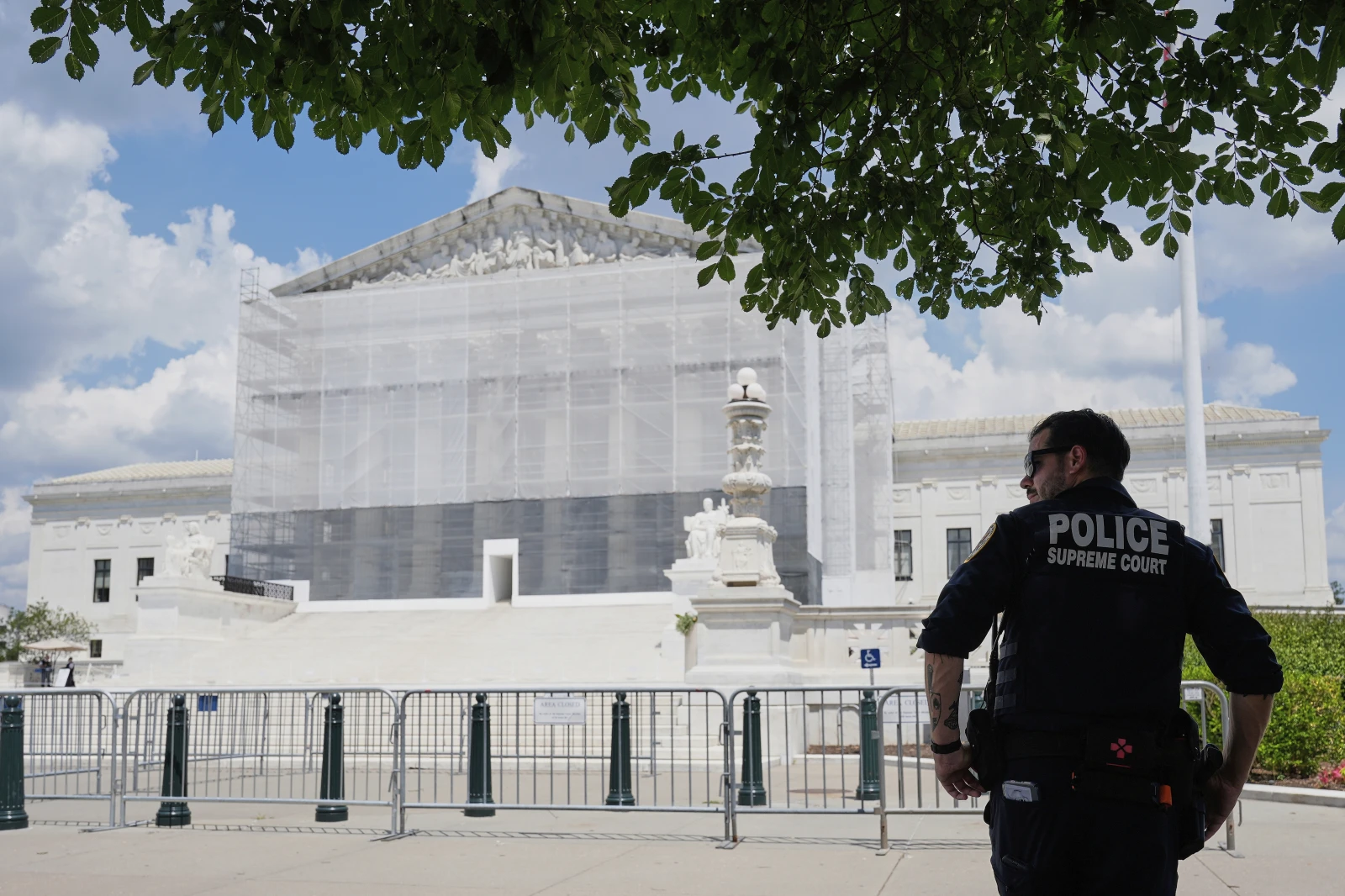

The U.S. Supreme Court’s decision to limit nationwide injunctions has handed former President Donald Trump a legal win — but it hasn’t resolved the central question: Can he legally end birthright citizenship?
The 6–3 ruling along ideological lines sends the legal fight over Trump’s executive order back to the lower courts, where its constitutionality is still very much up for debate. Immigrant advocates, civil rights groups, and several states say they are prepared to continue battling to protect what they argue is a fundamental constitutional right.
What Is Birthright Citizenship?
Birthright citizenship means that anyone born on U.S. soil is automatically a U.S. citizen — even if their parents are undocumented or in the country temporarily. This principle is rooted in the 14th Amendment, ratified after the Civil War to ensure former slaves and their children were granted full citizenship.
Over 125 years ago, the Supreme Court affirmed this in United States v. Wong Kim Ark, ruling that almost all children born in the U.S. — regardless of their parents’ status — are citizens.
Trump’s Order to End It
On his first day back in office in January 2025, Trump signed an executive order aimed at denying citizenship to children born in the U.S. to undocumented or temporary residents. Trump has long claimed birthright citizenship encourages illegal immigration and called it a “magnet” for undocumented families.
His administration interprets the amendment’s phrase “subject to the jurisdiction thereof” to mean that children of undocumented immigrants do not qualify for automatic citizenship. But judges across the country have consistently rejected that view.
“This is a blatantly unconstitutional order,” said U.S. District Judge John Coughenour earlier this year. Another judge in Maryland called Trump’s interpretation one that “no court in the country has ever endorsed.”
What Did the Supreme Court Decide?
The justices did not rule on whether Trump’s policy is constitutional. Instead, they focused on the scope of judicial power — particularly, whether a single federal judge can block an executive order nationwide. In siding with Trump, the court said that power should be more limited, meaning future legal challenges must be more targeted.
Trump called the ruling a “monumental victory,” and his Attorney General, Pam Bondi, said the administration is confident the court will eventually uphold the executive order itself.
Legal Uncertainty Ahead
For now, Trump’s birthright citizenship order remains blocked for at least 30 more days. In that time, lower courts must decide whether to narrow their existing injunctions — and how to do so in line with the new Supreme Court standard.
The path forward could be complicated. Without a nationwide block, different states could end up with different interpretations of citizenship — a legal patchwork critics say would lead to “chaos and confusion.”
Some groups are already trying to stop that. Within hours of the ruling, new class-action lawsuits were filed in Maryland and New Hampshire, aiming to keep the order blocked nationwide by certifying affected individuals as a legal class.
Still, experts warn that using class-action lawsuits as a workaround is far from easy.
“It’s not the case that a class action is a breezy way to get around the limits of nationwide injunctions,” said Suzette Malveaux, a law professor at Washington and Lee University.
A Deeply Divided Court
Justice Sonia Sotomayor, writing for the three liberal justices in dissent, said the Trump administration may now be able to enforce harmful policies — like ending birthright citizenship — even if lower courts find them unconstitutional.
She urged lower courts to act swiftly and decisively:
“Policies as blatantly unlawful and harmful as the Citizenship Order must be reviewed urgently.”
What Are the Stakes?
Opponents of Trump’s order say allowing states to enforce citizenship rules differently would undermine more than a century of legal precedent.
“Birthright citizenship has been settled constitutional law for over 100 years,” said Krish O’Mara Vignarajah, president of Global Refuge. “By denying lower courts the ability to enforce that right uniformly, the Court has invited chaos, inequality, and fear.”
In Short: What Happens Now?
- Trump’s order remains blocked for 30 days.
- Lower courts will now decide how to revise or maintain that block in line with the ruling.
- New class-action lawsuits are being filed in hopes of keeping the order from taking effect nationwide.
- The Supreme Court is likely to revisit the issue during its next term — possibly deciding whether Trump’s executive order is constitutional.


