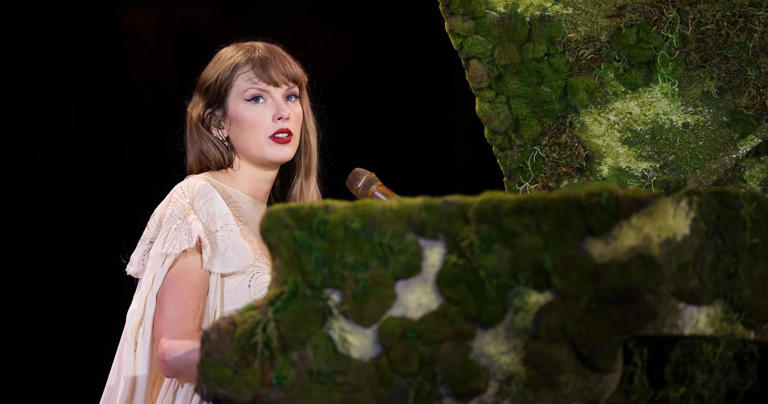

In her new Disney+ documentary, The End of an Era, Taylor Swift fights back tears as she reflects on the real-world fear that shadowed parts of the Eras Tour — including violent attacks and threats directed at her fans.
“It was little kids,” Swift says, recalling a July 2024 knife attack in Southport, England, where three young girls were fatally stabbed during a Swift-themed dance class. She notes that eight other children were injured, along with the teacher. Overwhelmed, Swift explains that she’ll be meeting — and performing for — some of the victims’ families that night at Wembley Stadium.
“I swear to God, I’m not gonna do this,” she says, referring to her tears. “I’m gonna be smiley. So any of this gets out of the way before you ever go onstage. You lock it off. [For] three and a half hours, they don’t have to worry about you.”
She compares the emotional pressure to a pilot guiding a plane through turbulence — unsure how rough the landing might be, but determined not to alarm the passengers. Her solution is performance-as-reassurance: project calm, deliver certainty, and keep the room steady. “Got a little turbulence up ahead, but it’s nothing we haven’t seen before,” she says, leaning into a practiced confidence. “Just keep your seatbelts fastened, and welcome to the Eras Tour!”
At the same time, Swift is also shown grappling with the attempted bombing of her Vienna, Austria, concert dates in August 2024 — a plot that was reportedly stopped before it could happen, but still forced her to cancel three shows. The CIA said suspects intended to kill thousands of people, and that the plan was allegedly inspired by the Islamic State.
In the documentary, Swift learns about the threat while she’s mid-flight to Vienna. Later, backstage at Wembley — ahead of her first show after the terror scare — she talks through the moment with Ed Sheeran, focusing on what she needs to do to reclaim the feeling that performing usually gives her.
“I just need to do this show, remember the joy of it,” she tells herself. “I get two months off after this, which I need. I need more than anything.”
The cameras capture her crying before she steps onstage. Looking back, she puts words to a life that can flip from terrifying to triumphant in minutes — and the expectation that she must make that switch seamlessly.
“From a mental standpoint, I just do live in a reality that is very unreal a lot of the time,” she reflects, “but it’s my job to kind of be able to handle all of these feelings and then perk up immediately to perform. That’s just the way it’s got to be.”