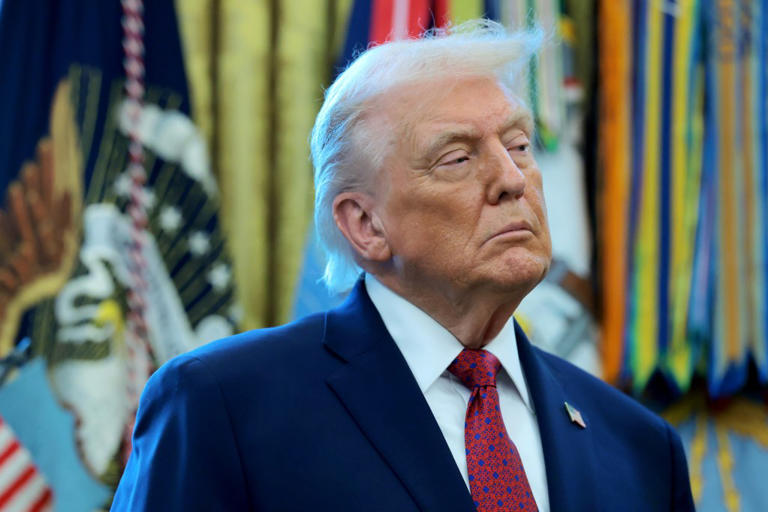

The BBC said it plans to contest a $10 billion lawsuit filed by President Donald Trump, who alleges the U.K. public broadcaster defamed him through an edited clip of his January 6, 2021 speech featured in a documentary.
The complaint, filed Monday in the Southern District of Florida, seeks $5 billion in damages for each of two claims: defamation and an alleged violation of a Florida trade practices law.
“As we have made clear previously, we will be defending this case,” a BBC spokesperson told BBC News on Tuesday. “We are not going to make further comment on ongoing legal proceedings.”
Why it matters
Trump’s suit reflects an escalation in his long-running campaign of legal and rhetorical attacks on media coverage he considers hostile. The case is also notable for targeting the public broadcaster of a close U.S. ally, raising questions about cross-border legal disputes involving press freedom and the political pressures placed on international news institutions.
What to know
Trump had previously said he intended to pursue damages of up to $15 billion after the resignations of BBC Director-General Tim Davie and BBC News CEO Deborah Turness in November. Their departures followed criticism of a BBC Panorama episode titled “Trump: A Second Chance?”, which some accused of presenting a misleading sequence of remarks.
According to reporting cited in the coverage, two portions of Trump’s January 6 speech were edited together in a way that made it appear he was urging supporters toward the violence at the U.S. Capitol. The documentary aired just days before the 2024 U.S. presidential election.
In the original remarks, Trump told supporters: “We’re going to walk down to the Capitol, and we’re going to cheer on our brave senators and congressmen and women.”
Nearly an hour later, he added: “And we fight. We fight like hell.”
In the Panorama episode, the documentary showed him saying: “We’re going to walk down to the Capitol… and I’ll be there with you. And we fight. We fight like hell.”
The edit omitted Trump’s call for supporters to act “patriotically and peacefully.” A leaked internal memo reportedly said the cut “distorted the day’s events” and raised concerns about the BBC’s impartiality.
“They had me saying things that I never said coming out. I guess they used AI or something,” the president told reporters on Monday, hours before the suit was filed.
BBC Chair Samir Shah apologized last month for what he called an “error of judgment,” though the corporation has maintained there was no intent to mislead. The broadcaster also said it had “no plans to rebroadcast the documentary on any BBC platforms.”
The BBC has said the program aired only in the U.K. and was not distributed in the U.S. beyond geo-restricted platforms such as iPlayer. Trump’s legal team argues it was accessible in the United States via BritBox. Legal analysts have noted the hurdles Trump would face in U.S. court, including proving U.S. availability, showing measurable reputational harm, and meeting the “actual malice” standard required in defamation cases involving public figures.
Some observers also argue the lawsuit could draw renewed attention to Trump’s words and conduct surrounding January 6.
What people are saying
U.K. health minister Stephen Kinnock told Sky News on Tuesday: “I think they have apologized for one or two of the mistakes that were made in that Panorama program, but they’ve also been very clear that there is no case to answer in terms of Mr. Trump’s accusations on the broader point about libel or defamation. So I think it’s right that the BBC stands firm on that point.”
George Freeman, executive director at the Media Law Resource Center, told Newsweek in November: “There are steep hurdles in U.S. defamation law. A plaintiff must prove falsity, harm and actual malice. All of them create some difficulties.”
Mark Stephens, an expert in international media law, previously told Newsweek: “From a PR perspective, he’s got the BBC on the back foot, and he’s taken a few heads—Davie and Turness. I think that’s the PR victory he needs to bank. He doesn’t need to get into the litigation.”
What happens next
The case will proceed in federal court in Florida. Observers say it could become a closely watched test of cross-border media disputes and the limits of defamation claims involving international broadcasters and U.S. public figures.