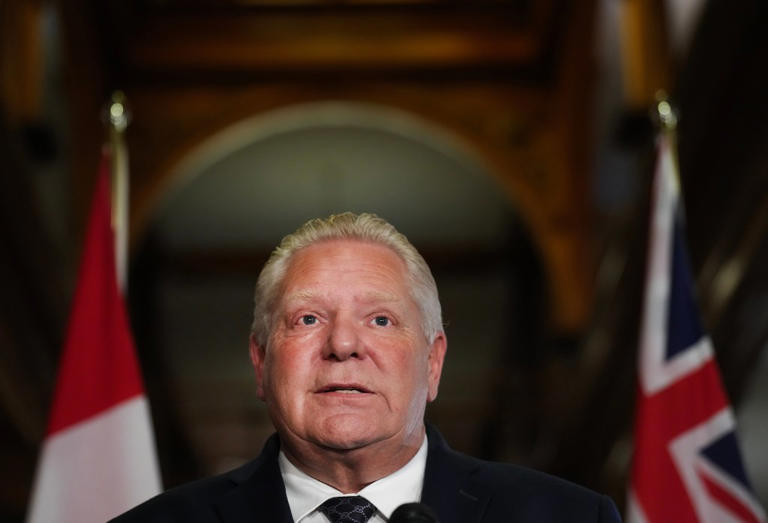

Ontario Premier Doug Ford says he won’t take his usual winter trip to Florida, arguing that a growing boycott by Canadian “snowbirds” is already hurting the state’s economy—and adding that it’s also weighing on President Donald Trump’s standing.
“They’re hurting down there right now. They’re hurting on all fronts—their economy especially,” Ford said at a press conference Monday. He also claimed Trump “has the lowest approval rating of any president in their first year in… probably a hundred years,” and suggested the backlash is “taking effect.”
Why It Matters
A broader pullback from U.S. travel and American-made products—fueled by Trump’s tariffs and his repeated references to Canada as a “51st state”—is showing up in tourism numbers and in business impacts that extend beyond Florida. Canadian provinces have also kept some U.S. alcohol products off store shelves, adding pressure on affected brands and distributors.
What To Know
Ford, a conservative premier who has repeatedly criticized Trump’s economic approach and sparred with him publicly, made the remarks while unveiling a multibillion-dollar plan aimed at transforming Niagara Falls—on the Ontario–New York border—into a “world-class” tourism hub.
Asked about what he described as an “organic boycott” of U.S.-bound travel, Ford said this will be the first winter he skips Florida. Still, he framed the decision as personal and stopped short of telling Canadians they must follow suit.
“That’s my personal choice. Maybe some families have gone to Florida their whole lives—go to Florida, that’s great,” he said. “But I encourage people to stay here and support local tourism. You can’t let one tyrant change your life.”
Florida typically relies on a winter surge of “snowbird” visitors—especially retirees escaping colder climates—but the latest indicators suggest that traffic from Canada is sliding as cross-border tensions rise.
According to Florida’s state tourism board, visits from Canada fell 20 percent year-over-year in the three months ending June 30, after a 17 percent drop in the first quarter.
A recent Snowbird Advisor survey of 4,000 members found 70 percent planned to spend the winter in the U.S., down from 82 percent last year. Many respondents said they were choosing alternatives such as Mexico, Costa Rica, or warmer parts of Europe.
The drag isn’t limited to tourism-dependent businesses. The souring climate—and a wider rise in anti-U.S. sentiment among Canadians—also appears to be affecting Florida’s housing market.
Realtor.com analysis found Florida metros made up six of the 10 U.S. areas where home values were falling the fastest, driven by multiple demand pressures. Niall Phelan, a real estate agent on Florida’s west coast, told Newsweek that Canadian clients are increasingly selling because of the “current environment between Canada and the U.S.” He said Canadians typically account for 15 to 20 percent of his buyers, and their retreat is becoming “a significant loss in the purchasing market.”
A new report from the U.S. Congress Joint Economic Committee (JEC)-Minority suggests the fallout is spreading across the border region well beyond Florida.
“From January to October 2025, the number of passenger vehicles crossing the U.S.-Canada border declined by nearly 20 percent compared to the same time period in 2024, with some states seeing declines as large as 27 percent,” the report said, citing U.S. Customs & Border Protection figures. It added that businesses across the region are reporting fewer tourists, higher vacancies, and weaker sales.
“It’s not just the tariffs. It’s not something that will be solved as soon as we conclude trade negotiations,” said one B&B owner quoted in the report. “This is long-lasting damage to a relationship and emotional damage takes time to heal.”
What People Are Saying
Ford, speaking Monday, said: “I always say we love our American friends, and Americans love Canadians. There’s just one guy I don’t see eye to eye with—and that’s President Trump. We’ll keep fighting, and I’ll never apologize to that guy. Ever.”
Alan Bradshaw, a professor of marketing at Royal Holloway, University of London, told Newsweek that tourism softness could deepen as the political climate remains tense. He pointed to policies that he said could further discourage travel, including proposals to require social media and email history access for some tourists seeking visas.
JEC report excerpts also highlighted how quickly reduced cross-border traffic can hit small businesses. Kyle Daley, a grocery store owner in New Hampshire quoted in the report, warned: “When our neighbors stay away, our margins disappear… The friction at the border is no longer just a headline; it is an empty parking lot and a threat to our livelihood.”
Sylvain Charlebois, senior director of Dalhousie University’s Agri-Food Analytics Lab, told Newsweek that travel is the most visible early signal of changing consumer behavior. He said Canadians appear to be delaying or rerouting U.S. trips—especially to Florida—toward Mexico, the Caribbean, or domestic options, alongside a “soft boycott” in retail marked by heightened attention to country-of-origin and stronger buy-local sentiment. He added that such boycotts are often episodic, but could persist through the winter if rhetoric stays heated.
What Happens Next
The boycott of U.S. goods and travel is expected to continue as Canada and the U.S. attempt to restart trade talks—after Trump canceled negotiations in October following anger over an advert produced by the Ontario government.