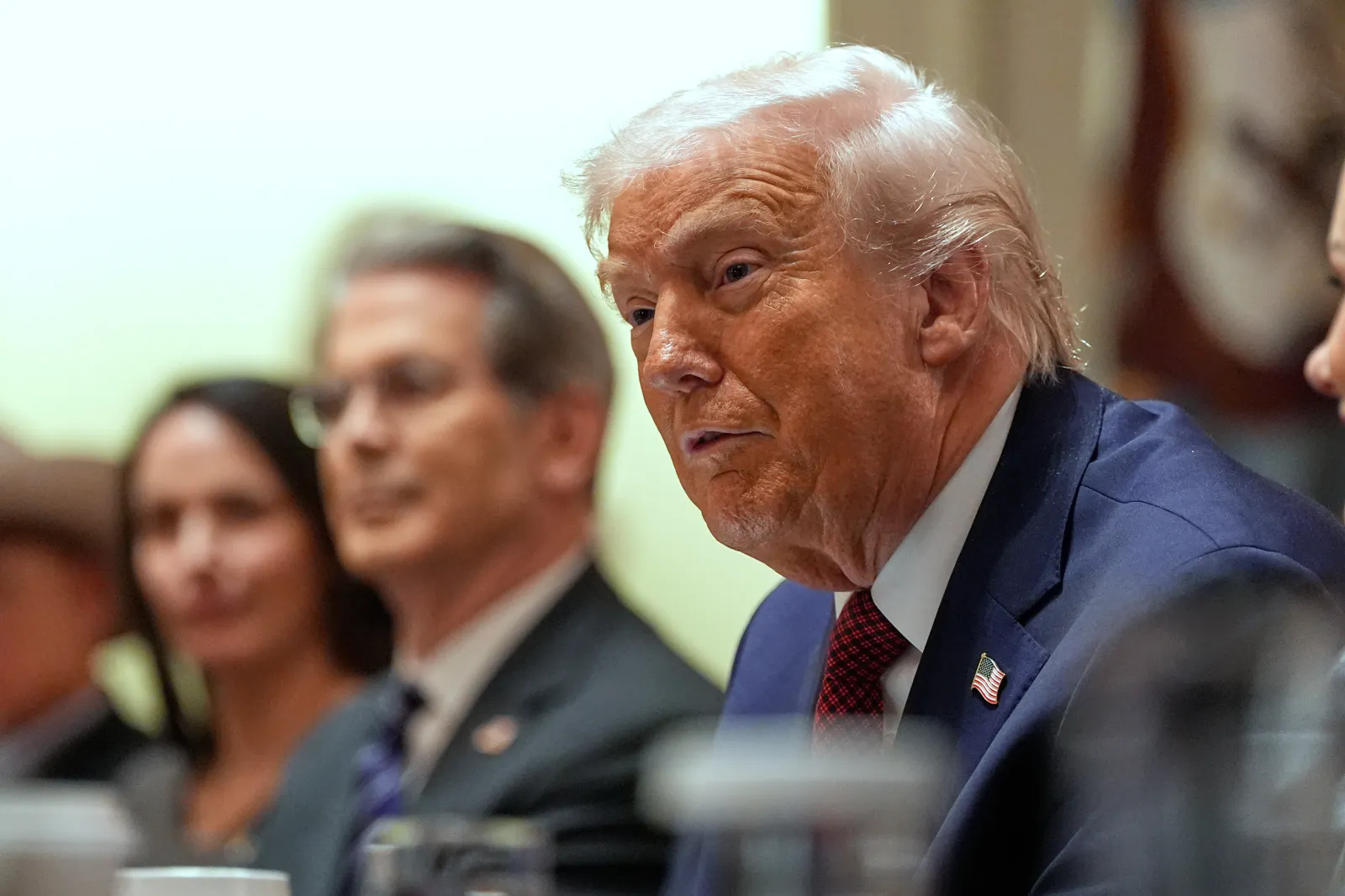

A record share of Americans say they expect their personal finances to deteriorate over the next year—one of the highest readings recorded during President Donald Trump’s two terms.
According to the Federal Reserve Bank of New York, 38.97% of respondents said they believe they’ll be worse off financially a year from now. The last time the figure was this high was November 2023.
“It reflects an economy that is technically growing, but doesn’t feel like it is improving fast enough for regular households,” Michael Ryan, a finance expert and founder of MichaelRyanMoney.com, told Newsweek.
Why It Matters
How people feel about their financial future is a major measure of economic confidence—and often a reflection of how voters judge the broader direction of the country and its leadership.
With inflation still shaping the cost of necessities and new tariffs affecting prices, many households are also contending with layoffs and continued economic uncertainty.
What To Know
The New York Fed also reported that mean unemployment expectations—the average probability respondents assigned to the U.S. unemployment rate being higher one year from now—improved slightly, slipping by 0.4 percentage points to 42.1%.
At the same time, perceptions of credit access weakened, with fewer respondents saying they expect borrowing to be easier a year from now.
“Inflation has cooled on paper, but prices never went back down, so people are living with a permanently higher cost base for essentials,” Ryan told Newsweek.
“Households feel squeezed from both sides: credit costs more, savings buffers from the pandemic are mostly gone, and wage gains are no longer clearly outrunning the price of everyday life.”
Kevin Thompson, CEO of 9i Capital Group and host of the 9innings podcast, said the rise in financial pessimism reflects more than inflation alone—pointing to affordability pressures and the reality that many households don’t benefit from stock-market gains.
“While Trump has played a role, the broader issue lies in excessive government spending and mounting deficits. Inflation was always waiting behind the door, and now it’s just finally showing its face,” Thompson said.
What People Are Saying
Michael Ryan told Newsweek: “When nearly 39 percent say ‘I’ll be worse off next year,’ they’re not doing macroeconomics, they’re doing kitchen-table math. Think of a family whose rent jumped 20 percent over three years and whose car insurance is up 30 percent: even if inflation is “only” 3 percent now, their budget never reset lower.”
Alex Beene, a financial literacy instructor for the University of Tennessee at Martin, told Newsweek: “There should be no surprise in recent polling that indicates more Americans are concerned about their financial futures in the year ahead. Inflationary pressures have been weighing on consumers every year since the pandemic subsided, and while substantial price increases in some industries have cooled, prices on many everyday purchases are still too high for the majority of families that are on fixed budgets. When you add in headlines of mass layoffs in a number of sectors this year and fears of more job cuts to come, it’s easy to see why many Americans are worried about their personal economic outlooks.”
What Happens Next
Ryan said the public is hearing mixed messages: slower-growth signals from the Fed and independent forecasters, versus more optimistic projections from the administration. In that environment, he argued, most people rely on what they see in their own budgets.
“When the White House insists everything is great and your grocery bill says otherwise, you stop believing the White House, not the grocery bill,” Ryan told Newsweek.