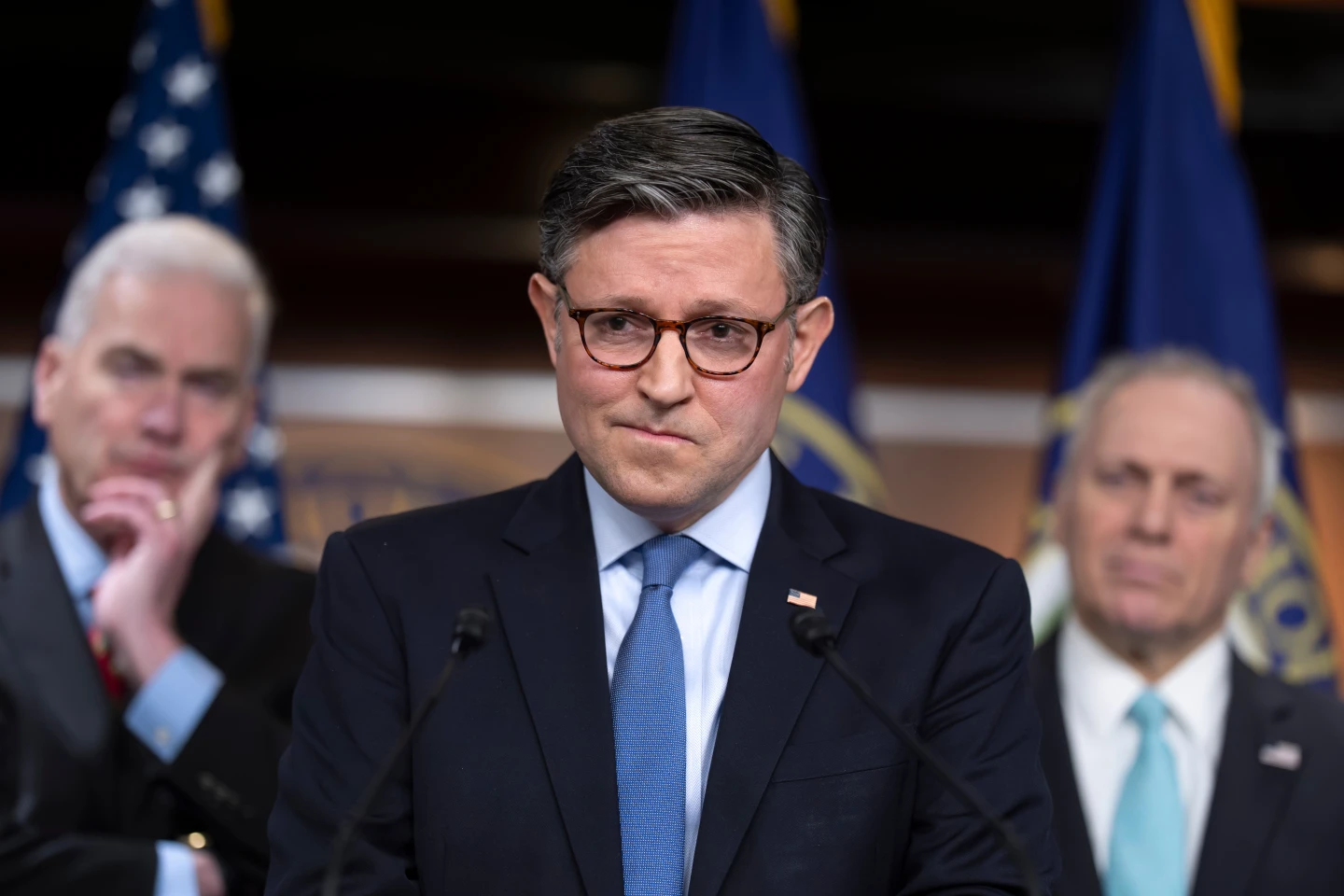

Speaker Mike Johnson has leaned on a simple talking point when pressed on why Republicans haven’t moved to extend federal health care subsidies: he says the party’s focus is lowering costs for all Americans, not only the roughly 7% enrolled in Affordable Care Act plans.
This week, that message collided with the reality of a closely divided House.
In an unusually public break with leadership, four Republicans joined a Democratic discharge petition that effectively guarantees the House will vote in January on extending the ACA subsidies. With the petition reaching the 218-signature threshold, Republican leaders no longer have the procedural tools to block a floor vote.
For Democrats, the move capped a months-long strategy to make the looming expiration of the subsidies politically unavoidable—an effort that gained momentum during the fall shutdown fight. Republicans in competitive districts, facing constituent backlash over rising premiums, increasingly felt compelled to act.
“Nothing has changed with House Republican leadership, but something has changed within their own ranks,” said Rep. Pete Aguilar, chair of the House Democratic Caucus.
A standoff heading into the holidays
Standing with his caucus on the Capitol steps Thursday, House Democratic Leader Hakeem Jeffries demanded that Johnson allow a vote on a three-year extension before lawmakers left town for the holidays.
“Not tomorrow. Not next week. Not next year. Today,” Jeffries said.
Johnson refused, insisting the vote will happen “that first week of January when we return.”
The delay leaves the issue unresolved as members head home—while pressure builds on GOP leaders to satisfy centrist lawmakers who may be willing to side with Democrats to extend the subsidies for three years.
The Senate looms, and so does 2026
Even if the House passes a bill, the fight would shift to the Senate, where the path is uncertain. Senate Majority Leader John Thune must contend with the same political reality, but he signaled strong resistance to a three-year extension.
Thune told reporters Thursday that a three-year extension of “a failed program that’s rife with fraud, waste and abuse is not happening.”
A bipartisan group of senators has been discussing potential compromise options—extending the subsidies while adding new limits—but they do not expect serious consideration until January.
Meanwhile, neither chamber’s Republican leadership has offered a plan that fully addresses concerns about sharp insurance cost increases many Americans could face in 2026 and beyond.
The White House has participated in discussions but has largely allowed House Republicans to work through their internal divisions, according to a senior administration official granted anonymity to speak about private talks.
Johnson’s alternative plan—and moderates’ unease
House Republicans on Wednesday passed a sweeping health care package aligned with long-standing GOP priorities, including expanding coverage options for small businesses and the self-employed. The bill also targets pharmacy benefit managers—middlemen that manage drug costs and process insurance claims.
Johnson promoted the bill as “a bigger and better and more important thing for 100% of Americans, not just 7% of Americans.”
But for some Republicans staring at tough reelection fights, the immediate problem is the projected spike in ACA plan costs. The holiday recess now gives Johnson a brief window to try to peel moderates away from the discharge petition effort.
Notably, while only four Republicans have publicly signed on, the petition “freezes” once it hits 218 signatures—meaning other GOP members could still be privately supportive without formally adding their names.
Rep. Ryan Mackenzie, one of the four Republicans who signed the Democratic petition, said it has “generated more conversations” and expressed hope that “over the next three weeks” those talks could produce “some bipartisan efforts” capable of passing both chambers.
“I think allowing a vote is critically important,” Mackenzie said. “I think everybody should be able to put up their votes on the board, and they should be able to let everybody in the American public see how they voted on these individual issues.”
Jeffries’ long bet pays off—for now
For months, Jeffries dismissed a proposed one-year extension pursued by a bipartisan group, calling it a “non-starter” and “a laughable proposition.” Instead, he held to a three-year extension without income caps or cost offsets.
That decision now looks strategic: as Johnson declined to allow any vote on an extension, GOP moderates moved closer to Jeffries’ position simply to force the issue onto the floor.
Jeffries has faced criticism from progressive Democrats and grassroots groups who want a more aggressive posture against Trump and Republicans. But on Thursday, much of the party rallied behind him, with several lawmakers praising the approach.
“As Leader Jeffries has said all along, this is the only real plan on the table,” Aguilar said.
Still, securing a vote is not the same as securing an outcome. Premiums for millions are expected to rise next year, and a three-year extension remains difficult—especially with Senate Republicans already opposing it. Some GOP senators who are open to negotiation suggested, however, that a House vote could create momentum.
“We could have a vehicle — if we could get Republicans and Democrats behind it — then we could send it back,” said GOP Sen. Thom Tillis, adding that it “means that there’s still a chance.”
For Democrats, the battle has also sharpened a campaign message they believe can resonate with voters.
“The Republican health care crisis is unacceptable, unconscionable, and un-American,” Jeffries said.
A narrow majority, a louder rebellion
The defection is the latest sign of strain inside a House GOP conference governing with a slim margin. Johnson argues that the turmoil—members forcing votes over leadership objections—is a predictable consequence of a narrow majority.
He said he lacks the leverage a speaker has with a large cushion, when “the speaker had a long stick that he would administer punishment.”
“I don’t have that, because we have a small margin,” he said. Johnson added that leadership had “talked about it at length” with GOP moderates, describing the conversations as “some intense fellowship.”
“Everybody’s in good spirits now and everybody understands what’s happening,” he said.
Some Republicans appear unconvinced. As lawmakers departed for the holidays, frustration lingered.
“I don’t know how we did not vote on a good bipartisan extension,” said GOP Rep. Don Bacon, warning that Democrats will use the health care issue “like a sledgehammer” on the campaign trail.
House Majority Leader Steve Scalise, R-La., offered a different view, insisting Republicans are ending the year “as united as we’ve ever been.”
“We set out on a course to do big things, not little things,” Scalise said. “And that means we’re going to have some differences along the way.”