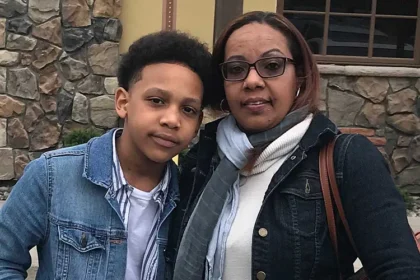

Nadine Mallebranche was just five years old when her family fled Haiti in the late 1980s to escape the brutal regime of Francois “Baby Doc” Duvalier. They came to the U.S. seeking safety, but now — four decades later — she faces deportation to a country she hasn’t seen since childhood.
After her parents died when she was 13, Mallebranche spent years in the foster care system. Despite efforts by social workers to resolve her immigration case, it fell through the cracks. For decades, her legal status remained uncertain — until Temporary Protected Status (TPS) gave her a chance to stay, work, and live without fear of being sent back.
“For 15 years, it was my lifeline,” Mallebranche, now 45, told the Miami Herald. “The only home I know is the United States.”
That lifeline may now be cut. On Friday, the Trump administration announced it would terminate TPS for Haitians this fall, affecting over half a million people nationwide — many of them in Florida, home to the largest Haitian-American population in the country.
Mallebranche could be forced to return to Haiti as soon as September 2. The country is currently gripped by gang violence, political collapse, food shortages, and widespread displacement. The United Nations estimates over 2,700 people were killed in Haiti in the first half of 2025 alone. Roughly 1.3 million are internally displaced, and nearly six million face severe hunger.
Despite that, the Department of Homeland Security claimed conditions in Haiti had “improved enough” to justify ending TPS. This came just days after the U.S. State Department issued an urgent warning for Americans to avoid travel to Haiti due to rampant kidnappings and lawlessness — and urged those already there to “depart as soon as possible.”
“This Is Insanity”
Outrage was swift from Haitian leaders and lawmakers in South Florida.
“Deporting Haitians back to Haiti is a kiss of death,” said Rep. Frederica Wilson (D-Miami). “This is insanity on steroids. We cannot send more people back to Haiti. This ruling is hateful, inhumane and heartless.”
Rep. Sheila Cherfilus-McCormick, the first Haitian-American Democrat elected to Congress, called the decision “deeply concerning” both morally and economically. “TPS holders contribute more than $3.6 billion in federal and local taxes every year. Their removal will hurt Florida and the entire nation.”
The Florida Immigrant Coalition condemned the policy as “a humanitarian catastrophe,” pointing to Haiti’s crumbling infrastructure and healthcare system, ongoing gang rule in Port-au-Prince, and near-complete political collapse.
“We’re Not Disposable”
Advocates say Haitian TPS holders have become essential to U.S. society — working in schools, hospitals, restaurants, and homes.
“These are the hands that heal you, feed you, teach your children, and serve your communities,” said one Haitian TPS recipient who asked to remain anonymous. “You don’t get to call us essential when it benefits you, and disposable when it doesn’t.”
The Haitian American Chamber of Commerce in Florida expressed solidarity with families now living in fear, noting that many Haitian households include a mix of citizens, green card holders, and undocumented immigrants.
“Our community’s strength has always been in its unity and resilience,” the Chamber said in a statement. “We will continue to stand together.”
Legal Battle Brewing
The Biden administration had extended TPS protections through July 2025. But Trump-appointed DHS Secretary Kristi Noem reversed that earlier this year. On Friday, DHS announced TPS would officially end on August 3, with deportations beginning 30 days later.
Lawsuits challenging the move are expected. For now, Haitian immigrants who’ve lived, worked, and built families in the U.S. are left scrambling for answers — including Mallebranche.
“I haven’t even told my loved ones yet,” she said. “I don’t know what to say. This is infuriating — not just for me, but for everyone this is happening to. What are we supposed to do?”