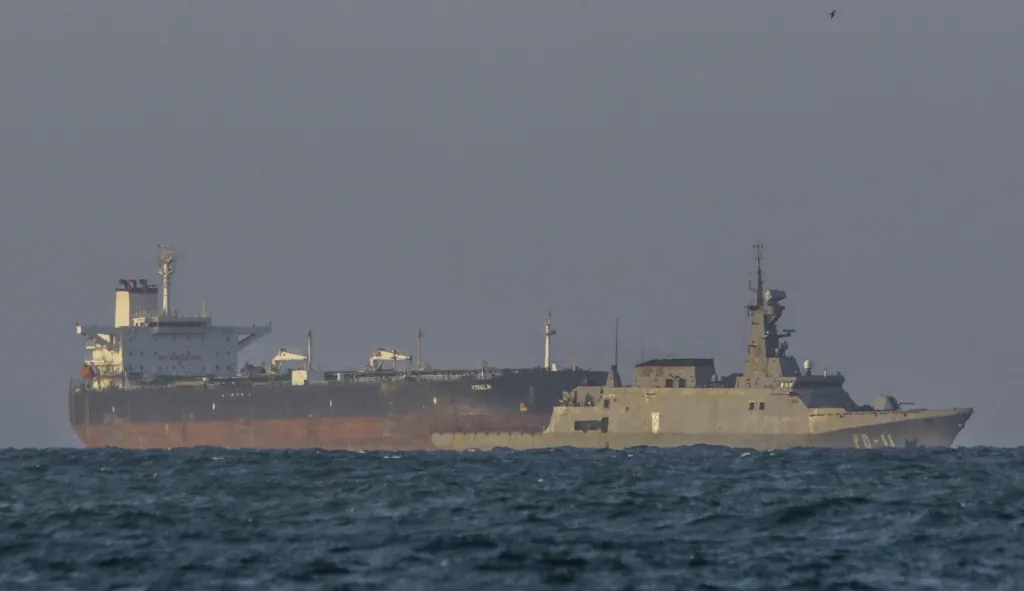

The U.S. seizure of a massive oil tanker off Venezuela this week marked a sharp escalation in the Trump administration’s confrontational posture in the region. It also underscores a broader reality: Washington is becoming more deeply entangled in South America’s petroleum politics at a moment when the continent is poised to drive much of the world’s new oil supply growth.
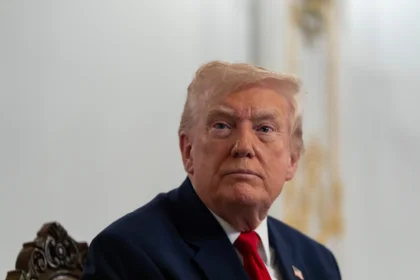
The United States may already lead the world in oil and gas production, but President Trump’s new national security framing—often described as a “Trump corollary” to long-standing hemispheric doctrine—leans toward tighter U.S. influence across the Western Hemisphere. In practice, that means greater pressure, leverage, and presence in South America, where new output is rising quickly and where politics, investment, and security are increasingly shaped by crude oil.
From pushing Venezuela to the sidelines, to supporting a major bailout for Argentina, to backing Guyana’s territorial waters amid rising tensions, much of the administration’s regional agenda intersects—directly or indirectly—with the strategic value of “black gold.”
The White House continues to cite national security priorities such as drug trafficking and immigration as justification for its actions, including repeated, controversial strikes targeting boats in Venezuelan waters that have left more than 80 people dead so far. Yet Venezuela also sits atop the world’s largest proven oil reserves, and any shift in its political and regulatory environment—especially one that opens the sector further to U.S. and foreign capital—could unlock far greater flows of crude.
That matters to Trump for another reason: he has long favored shaping global oil volumes to keep gasoline prices lower at home, without relying heavily on OPEC.
“In the next five years, we’re going to see a lot more oil coming from South America,” said Jorge León, head of geopolitical analysis at Rystad Energy. He expects U.S. influence in the region to grow as Washington seeks to attract American and international companies—potentially echoing the 1980s, when U.S. oil majors played a larger role across South America. “I wouldn’t be surprised if you see a new wave of companies flying back there to unlock this massive oil potential,” León said.
If Trump succeeds in forcing Nicolás Maduro out, investment in Venezuelan production could surge. Venezuelan crude is heavier than most U.S. shale oil and is especially well-suited for many American refineries, León noted. But that outcome remains highly uncertain. Maduro has shown little sign of yielding, framing U.S. pressure as outright plunder—warning that Venezuela will not become a U.S. “oil colony” and accusing Washington of piracy.
Francisco Monaldi, director of the Latin America Energy Program at Rice University’s Baker Institute for Public Policy, argues that oil is central to the geopolitical landscape—but not always the single driving motive.
“Trump does have the view that he can control the mineral reserves,” Monaldi said.
He described the posture as an updated version of a hemispheric dominance strategy—“some sort of new Monroe Doctrine,” as he put it, sometimes dubbed the “Donroe” Doctrine. The goal, in his view, is a U.S.-led order in which Washington exerts outsized influence over raw materials while limiting the reach of rivals such as China.
Monaldi also pointed to shifts at home and abroad: U.S. oil production is maturing and showing signs of leveling off, while Washington wants more leverage over global petroleum supply beyond the Middle East and Russia. Meanwhile, major companies—including Exxon Mobil and Chevron—are helping grow South American output as the region’s politics trend rightward, whether coincidentally or not.
“Bottom line, the region could become much more aligned with President Trump,” Monaldi said. “Not so long ago, the region was absolutely ruled by the left or the hard left, which was super anti-American.”
Venezuela’s Oil Paradox
Venezuela, despite holding the world’s largest proven oil reserves, produces less than 1% of global oil—making it one of the starkest underperformers in modern energy history.
Once pumping nearly 4 million barrels per day, Venezuela’s output has collapsed from about 3.2 million barrels per day in 2000 to roughly 960,000 today. The decline reflects years of mismanagement, chronic underinvestment, and intensifying U.S. sanctions under the authoritarian socialist governments of Maduro and his predecessor, Hugo Chávez.
Few countries appear to provoke Trump’s ire as consistently as Venezuela. Sanctions, threats, and diplomatic pressure have not yet forced Maduro from power.
Even if drugs and immigration are the administration’s stated priorities, Monaldi said Venezuela’s Orinoco Oil Belt remains a major geopolitical asset—particularly because it sits outside the world’s most volatile Eastern Hemisphere flashpoints.
“Venezuela looks like a very important piece of the puzzle,” he said. “The oil reserves are there, and the geological risks are pretty low. The problems in Venezuela are above ground.”
From a purely technical standpoint, he added, Venezuela could potentially produce four or five times more oil than it does today—if it could attract the massive capital required. “This requires tens of billions of dollars in investments,” Monaldi said.
Starting this fall, the U.S. has carried out more than 20 known strikes against boats in Venezuelan waters. The administration maintains—without presenting evidence—that the boats are involved in narcotics trafficking. Washington has also reinforced its military posture in the area, dispatching the U.S.S. Gerald R. Ford aircraft carrier to the Caribbean alongside fighter jets and guided-missile destroyers.
On December 10, the U.S. moved further, seizing the sanctioned tanker Skipper for allegedly making repeated illegal shipments of Venezuelan and Iranian oil. The vessel had been placed under U.S. sanctions under a different name in 2022 for transporting Iranian crude. Officials have warned that additional seizures could follow—an approach that could further squeeze Venezuela’s already battered economy.
In a recent interview with Politico, Trump said Maduro’s “days are numbered,” while declining to comment on the prospect of a land invasion.
Asked about the role of oil in U.S. actions, White House spokeswoman Anna Kelly said Trump is focused on stopping “narcoterrorists bringing deadly poison” into the United States. “The President will continue to use every element of American power to stop drugs from flooding into our country,” she added.
The Corporate Dimension
In July, Trump granted Chevron a new, restricted license to operate in Venezuela. Chevron is the only U.S. oil producer still active in the country and has maintained a presence there for roughly a century. Working with state oil company PDVSA, Chevron is tied to about a quarter of Venezuela’s crude output. Yet due to U.S. sanctions, Venezuela still sends roughly 80% of its oil to China, often at steep discounts.
At a Washington conference in November, Chevron Chairman and CEO Mike Wirth acknowledged the volatility but framed Venezuela’s long-term potential as worth the challenge. “The kinds of swings that you see in places like Venezuela are challenging,” he said. “But we play a long game.” He described the country as “blessed with a lot of geologic resource and bounty,” adding that the company aims to be part of rebuilding Venezuela’s economy if and when circumstances change.
Chevron spokesman Bill Turenne echoed that message in a statement, arguing the company’s presence helps stabilize the local economy and supports U.S. energy security.
Matt Reed, vice president at the geopolitical and energy consultancy Foreign Reports, said some of the loudest pressure for stronger U.S. intervention comes from hawkish Republican figures and Maduro’s domestic opponents—many of whom frame Venezuelan oil access as an added economic incentive.
“They are trying to convince Trump to jump in with both feet and get rid of Maduro, making the argument there are also economic incentives with oil,” Reed said. “They’re the ones pushing the idea that American companies are going to profit in the long run if they can get access to Venezuelan oil resources.”
Trump may want Maduro out and Venezuelan production unlocked, Reed added, but he appears wary of a full-scale military quagmire. “Getting involved in regime change in Venezuela would probably be the most ambitious military mission he would be involved in,” Reed said. That’s why he doubts Trump will overcommit.
Instead, Reed expects a strategy focused on pressure: “tighten the noose and make Maduro untenable—make sure everyone understands that maybe the U.S. and Venezuela can turn the page once he’s out of the picture.”