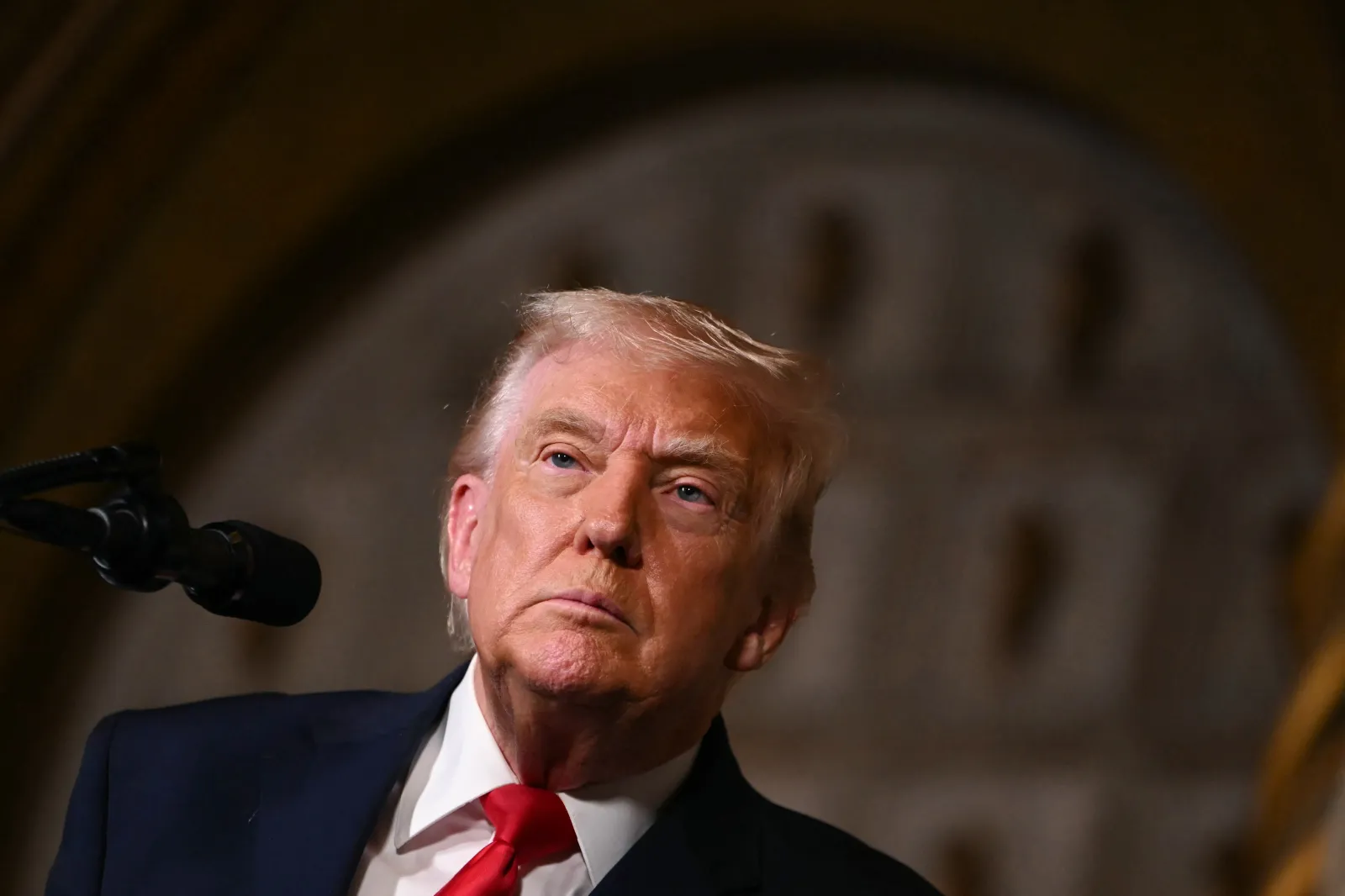

President Donald Trump’s approval rating among working-class Americans has fallen to a new low as many voters continue to feel squeezed by day-to-day costs—an economic reality that could complicate Republican hopes in next year’s elections and shape the remainder of his second term.
In the latest YouGov/Economist poll, just 31 percent of respondents earning $50,000 or less said they approve of Trump’s performance as president. By contrast, 65 percent disapprove, while 4 percent said they were unsure.
Why It Matters
Working-class Americans narrowly backed Trump in the 2024 presidential election, according to exit polls—an outcome that ran against some recent historical patterns. During the campaign, Trump repeatedly criticized his opponent’s record on the economy and immigration, while promising more jobs and lower prices “on day one” of his second term.
But high prices and signs of a cooling labor market have kept affordability front and center, especially for lower-income households. Democrats have leaned into these concerns in recent elections, and some Republican voices have warned that continued cost pressures could become a serious headwind in the 2026 midterms.
What To Know
The YouGov/Economist survey questioned nearly 1,600 adults between December 20 and 22 and carries a margin of error of 3.4 percentage points. Trump’s net approval among working-class Americans—defined here as those earning $50,000 or less—stood at -34 points. That marks a notable decline from November, when 34 percent approved and 62 percent disapproved, producing a net rating of -28.
Among respondents earning under $50,000, only 29 percent said the United States is “generally headed in the right direction,” while 61 percent said it is “off on the wrong track.” Higher-income respondents were somewhat less downbeat: 40 percent of those earning over $100,000 said the country is on the right track, compared with 51 percent who said it is on the wrong track and 9 percent who were unsure.
On jobs and the economy specifically, 32 percent of working-class respondents approved of Trump’s handling, while 58 percent disapproved—48 percent of them “strongly.”
The poll’s findings align with other recent measures of economic sentiment. The Conference Board’s latest consumer confidence survey reported that its main index fell for a fifth straight month, reaching its lowest level since April. While pessimism extended across income groups, the steepest declines were again concentrated among lower earners—excluding those with annual incomes under $15,000.
The organization said Americans’ assessments of current business and labor conditions “plummeted” from November. Meanwhile, its forward-looking Expectations Index remained weak.
“The Expectations Index has now tracked under 80 for 11 consecutive months,” it wrote in Tuesday’s release, “the threshold below which the gauge signals recession ahead.”
What People Are Saying
Dana M. Peterson, chief economist at The Conference Board, wrote: “Consumers’ write-in responses on factors affecting the economy continued to be led by references to prices and inflation, tariffs and trade, and politics. However, December saw increases in mentions of immigration, war, and topics related to personal finances—including interest rates, taxes and income, banks, and insurance.”
Trump, speaking from the White House last week, said: “Here at home, we’re bringing our economy back from the brink of ruin. The last administration and their allies in Congress looted our treasury for trillions of dollars, driving up prices and everything at levels never seen before. I am bringing those high prices down and bringing them down very fast.”
What Happens Next
The latest GDP report showed the economy grew faster than expected in the third quarter of 2025. Still, with labor market softness and inflation remaining above the Federal Reserve’s long-term target, kitchen-table concerns are likely to continue shaping how Americans—especially lower-income voters—judge Trump’s economic stewardship heading into early 2026.