
A woman in eastern Kentucky is facing several criminal charges after authorities say she ended her own pregnancy using abortion medication.
State police arrested Melinda S. Spencer, 35, charging her with first-degree fetal homicide, abuse of a corpse and tampering with physical evidence, according to a local Kentucky news outlet. Investigators allege that Spencer ordered abortion medication online, used it to terminate her pregnancy and later buried the fetal remains in her backyard.
Officials have not disclosed how far along the pregnancy was at the time. Police described the fetus as “developed,” the Lexington Herald Leader reported.
Spencer was booked into the Lee County jail in Beattyville on Thursday, according to jail records, and remained in custody as of Friday evening.
Kentucky law prohibits doctors from performing abortions after conception. However, like most states, Kentucky does not explicitly ban individuals from inducing, or “self-managing,” their own abortions. Medical experts widely agree that using abortion pills during the first trimester is a safe and effective method.
The use of abortion medication obtained online has increased sharply since the U.S. Supreme Court overturned Roe v. Wade in 2022, triggering a wave of state abortion bans. By the end of 2024, one in four abortions involved online providers who consulted with patients remotely and mailed abortion pills. Tens of thousands of these procedures occurred in states with abortion bans, according to data from the research group #WeCount.
Despite this, women across the U.S. have increasingly faced criminal investigations tied to pregnancy outcomes, including miscarriages. Researchers at the reproductive justice organization Pregnancy Justice documented 412 prosecutions for pregnancy-related cases in the two years following the fall of Roe.
Of those cases, 16 involved homicide charges, while seven involved allegations related to improper conduct surrounding birth or death. Only nine cases explicitly included charges connected to undergoing, attempting or researching an abortion, making it difficult to determine how many prosecutions were directly driven by abortion suspicions.
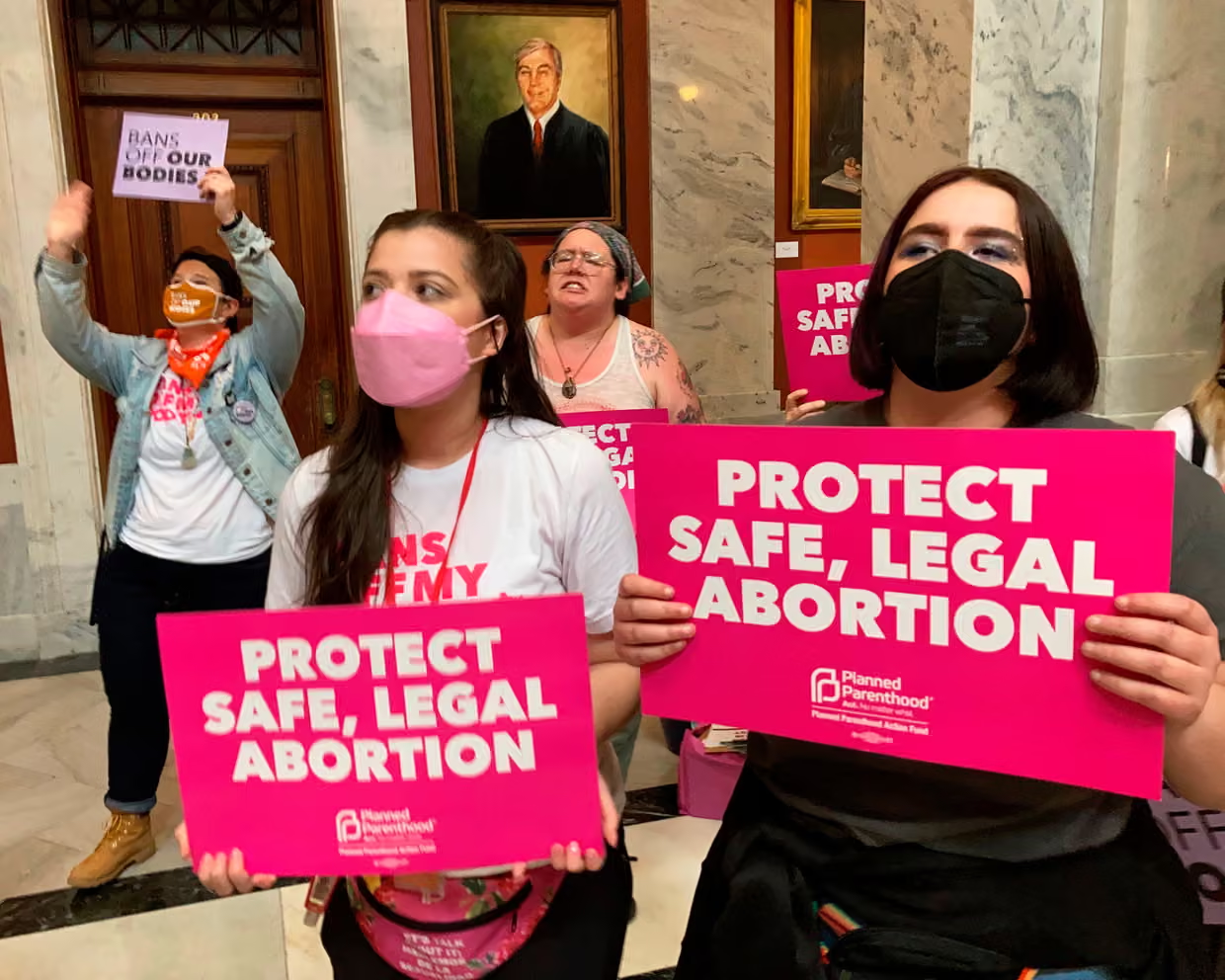
Abortion rights advocates argue that these prosecutions reflect a broader push to establish “fetal personhood,” a legal theory granting embryos and fetuses full legal rights—potentially placing those rights in conflict with those of pregnant individuals.
“The idea that the fetus can be a person and a victim of a crime is being wielded in significant ways when there’s a pregnancy loss,” Wendy Bach, a law professor at the University of Tennessee, said in a 2024 interview. “Instead of responding with care and support, pregnancy loss is increasingly met with criminal suspicion, investigation and prosecution.”
Similar cases have emerged in other states. In Georgia, police arrested a woman after she was found bleeding and unconscious following a miscarriage. In Ohio, another woman was arrested after miscarrying into a toilet. Both cases were later dropped.
In Spencer’s case, Kentucky police reportedly became involved after she discussed her pregnancy with clinic staff. Healthcare workers frequently serve as the initial source of information in pregnancy-related criminal cases. Pregnancy Justice found that in 264 of the 412 documented prosecutions, authorities relied on information disclosed in medical settings.
A person who answered the phone at Kentucky State Police headquarters said no one was available to comment due to the holidays. A jail official stated that Spencer had been advised by her attorney not to speak with the media or law enforcement. Her attorney was not immediately available for comment.