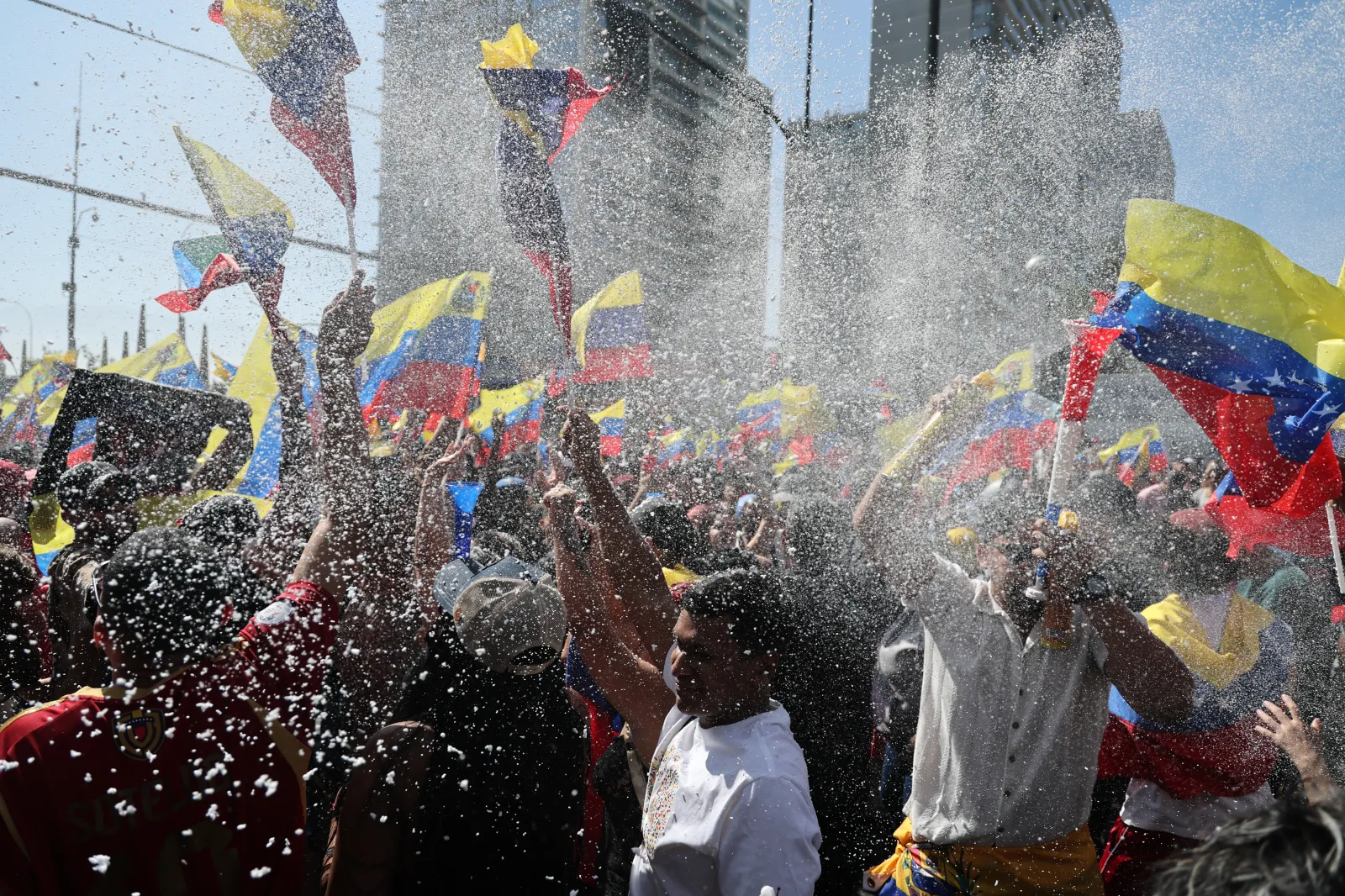

World leaders reacted with surprise and alarm on Saturday after the United States launched early-morning strikes in Venezuela and detained President Nicolás Maduro, prompting a wave of urgent diplomatic responses ranging from calls for clarification to outright condemnation.
The White House referred inquiries to a statement posted by President Donald Trump on Truth Social, in which he said the United States had carried out a “large-scale strike” against Venezuela and captured Maduro and his wife, Cilia Flores. Trump wrote that the operation was conducted alongside U.S. law enforcement and that further details would follow.
Why It Matters
U.S. Attorney General Pam Bondi confirmed that Maduro and Flores have been formally indicted in the Southern District of New York. Trump said the pair were captured during the operation against Caracas, which came hours after multiple explosions were reported in the Venezuelan capital, leading Maduro to declare a national emergency.
Maduro has faced U.S. charges of narco-terrorism for years. He was first indicted in March 2020 on conspiracy charges tied to drug trafficking, and in August 2025 the United States raised its reward for information leading to his arrest to $50 million.
The operation followed a steady escalation in U.S. pressure. Last week, a CIA drone strike reportedly hit a docking area allegedly used by Venezuelan drug cartels, marking the first known direct U.S. action on Venezuelan soil since maritime strikes began in September. Trump has repeatedly warned he might authorize land strikes, while U.S. forces have also seized sanctioned oil tankers and enforced blockades aimed at tightening economic pressure.
Cautious Responses From Allies
Several Western leaders stopped short of condemning the action, urging restraint while seeking more information.
British Prime Minister Sir Keir Starmer said the situation was “fast moving” and stressed that the United Kingdom was not involved in the operation. He said London would establish the facts and consult allies before commenting further.
The European Union adopted a similarly careful tone. European Commission President Ursula von der Leyen said the bloc was closely monitoring developments, reaffirming support for the Venezuelan people and a peaceful, democratic transition. She emphasized that any resolution must respect international law and the U.N. Charter.
Strong Condemnation From Major Powers
China reacted sharply, saying it was “deeply shocked” and strongly condemning what it called the United States’ blatant use of force against a sovereign nation and its president. Beijing said the action violated international law, undermined Venezuela’s sovereignty, and threatened regional peace in Latin America and the Caribbean.
Russia’s Foreign Ministry echoed that view, stating that Latin America should remain a zone of peace and that Venezuela has the right to determine its future without outside military interference. Russian officials said the justifications for the operation were untenable.
Iran’s Supreme Leader, Ayatollah Ali Khamenei, accused Washington of arrogance and of attempting to impose its will on another nation. In a statement posted on X, he said resistance and unity would ultimately defeat such actions.
Mexico’s Foreign Ministry also condemned the strikes, calling them a clear violation of Article 2 of the U.N. Charter. Mexican officials reiterated that dialogue and negotiation are the only legitimate ways to resolve disputes and pledged support for mediation efforts to preserve regional peace.
Brazilian President Luiz Inácio Lula da Silva said the U.S. move crossed an unacceptable line, calling it a grave affront to Venezuela’s sovereignty and a dangerous precedent for the international community. He warned that repeated violations of international law could push the world toward instability where power overrides multilateral norms.
France offered a measured but critical response. Foreign Minister Jean-Noël Barrot said the military operation violated the principle against the use of force that underpins international law. He added that no lasting political solution can be imposed from outside and warned that repeated breaches of this principle by major powers could have severe consequences for global security.
Support From U.S. Allies
Not all reactions were negative. Argentine President Javier Milei praised the move in a post on X, declaring that “freedom moves forward” and arguing that the time for caution had passed.
Ukraine’s Foreign Ministry also expressed support, saying it consistently defends the right of nations to live free from dictatorship, oppression, and human rights abuses. The ministry accused the Maduro government of violating those principles and said it hoped future developments would align with international law, democracy, and the interests of Venezuelans.
What Happens Next
Venezuela’s Defense Minister, Vladimir Padrino López, announced the deployment of military forces and called for national unity in response to what he described as the most severe aggression the country has ever faced.
Trump said in a Saturday interview with Fox News that Maduro and his wife were being held aboard the U.S. warship Iwo Jima and were en route to New York, setting the stage for a legal and diplomatic confrontation likely to reverberate far beyond Venezuela’s borders.