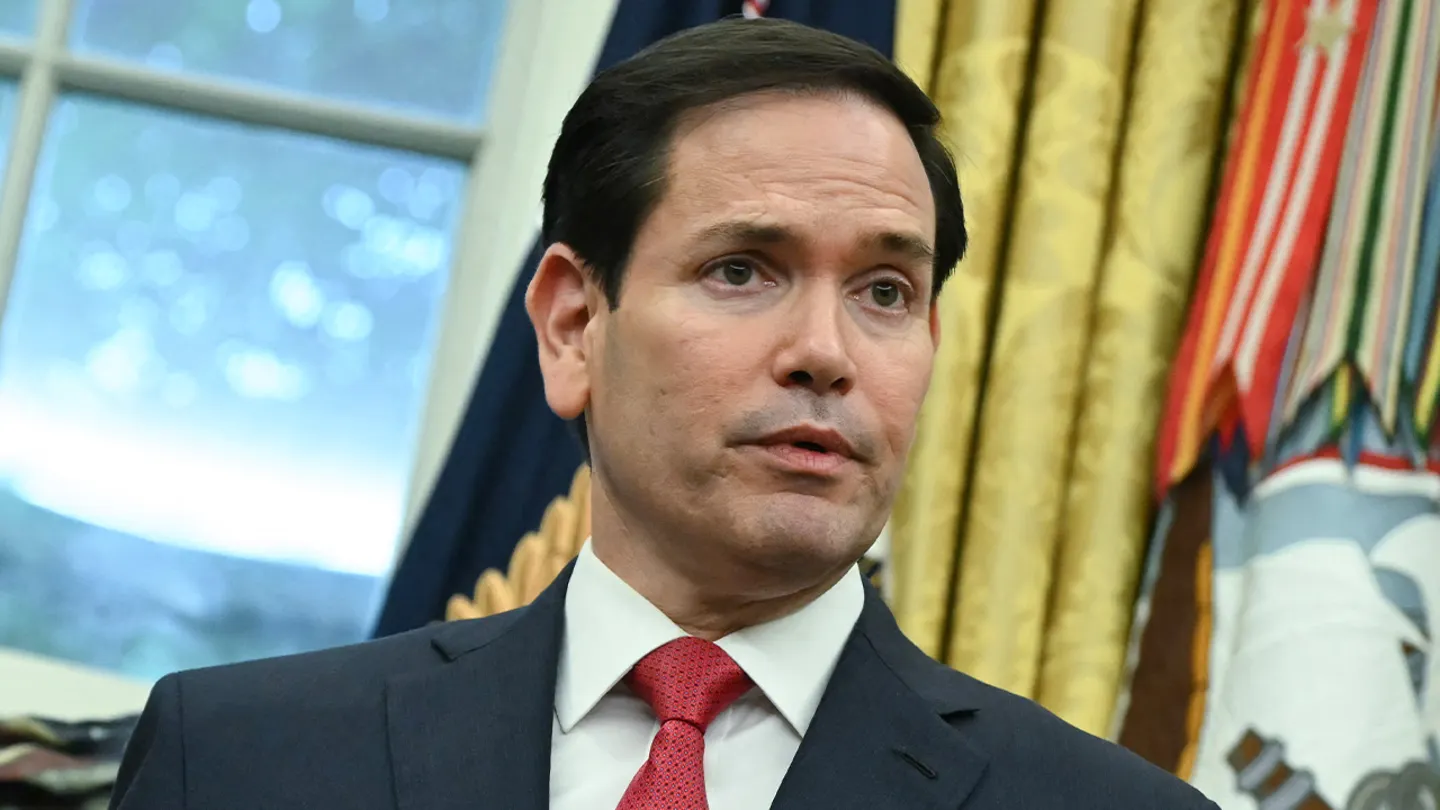

Secretary of State Marco Rubio said he is increasingly worried that American tourists could be detained overseas because of past social media activity, raising broader concerns about free speech protections in allied countries.
Since President Donald Trump’s inauguration, freedom of expression in Europe has emerged as a major foreign policy focus for his administration. While the United States maintains close ties with European nations—particularly the United Kingdom—Rubio suggested that growing restrictions on speech in some Western democracies are becoming a point of serious friction.
During a Dec. 19 press briefing, Rubio was asked about the State Department’s concerns over free speech in Europe and what goals the administration has in this area for 2026.
“Broadly, we’re concerned about any situation where American free speech could be implicated,” Rubio said.
He then posed a stark hypothetical. “Are we going to live in a world where some American puts up a social media post and then gets to some airport somewhere and is arrested?” Rubio asked.
Beyond individual cases, Rubio said the administration is also troubled by how European regulations are affecting U.S.-based technology companies. He pointed to the massive fines facing the social media platform X as an example of what American firms may encounter if they want to continue operating in certain European markets.
Rubio framed the issue as a challenge to the shared values that underpin transatlantic alliances. He argued that partnerships with Europe are meant to be based not just on geopolitics, but on common principles—chief among them freedom of expression.
“We all talk about how these alliances are built on our common values,” Rubio said. “One of those values, we hope, is freedom and the freedom of expression. And we are concerned that that is eroding.”
Tensions escalated further in August 2024, when a senior London police official sparked controversy by suggesting that U.S. citizens could be extradited to the United Kingdom for violating hate speech laws online. In the U.K., police have increasingly visited citizens over comments deemed politically incorrect on social media.
Vice President JD Vance echoed those concerns at the Munich Security Conference in February, warning European leaders that internal censorship posed a greater threat to the continent than external adversaries.
“Within living memory of many of you in this room, the Cold War positioned defenders of democracy against much more tyrannical forces,” Vance said. “Consider the side in that fight that censored dissidents, closed churches, and canceled elections.”
Vance added that it is now increasingly difficult to tell “what happened to some of the Cold War’s winners,” pointing to warnings from European Union officials about shutting down social media during periods of unrest and police actions against citizens accused of posting controversial views online.
In response to these developments, the Trump administration imposed visa bans on former European Union Commissioner Thierry Breton—one of the architects of the Digital Services Act—and four other anti-disinformation campaigners. The administration accused them of pressuring American companies to silence viewpoints they oppose.
“The State Department is taking decisive action against five individuals who have led organized efforts to coerce American platforms to censor, demonetize, and suppress American viewpoints,” Rubio said in a statement.