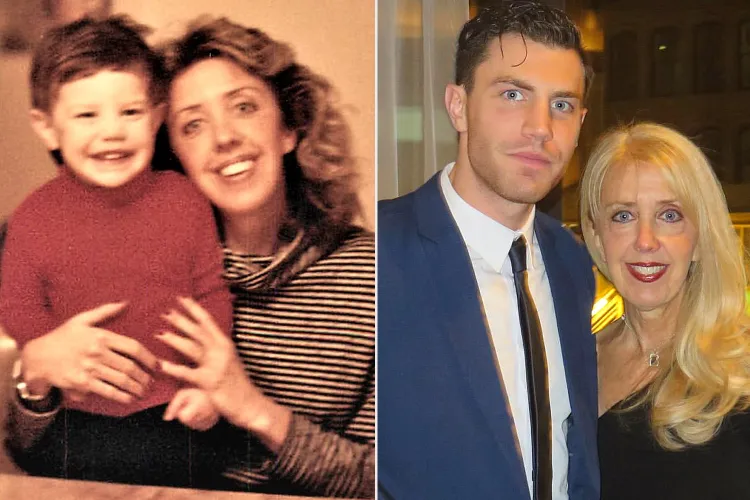

More than two years after his mother’s death, Jordan Kahana says the pain of her absence hasn’t faded — but he has learned how to live with it. As the content creator puts it, he’s “come a long way.”
That perspective shaped a video Kahana shared in October, offering a quiet update on his grief journey. Filmed during a sunset hike, the clip begins with a simple greeting directed at his late mother: “Hey, mom.”
Speaking as if she were right there with him, he continues, “It’s so beautiful out, and I’ve missed talking with you, so I just wanted to share this with you and let you see it as well.” He ends with a tender sign-off: “I’ll talk to you soon. I love you.”
Text layered over the video explains that the moment was inspired by his therapist, who suggested he record messages as though he were FaceTiming his mom. The exercise, Kahana wrote, could help him process his grief and maintain composure when emotions rise. The vulnerability resonated widely, with the video drawing millions of views.
Kahana’s mother died at 70 after suffering an unexpected stroke in July 2023. Before her death, FaceTime was one of the primary ways they stayed close. Weekly family video calls, a habit formed during the COVID-19 pandemic, became a meaningful ritual.
“We would ask each other challenging questions and go deeper than surface-level conversations,” he explains. “It was really about setting aside an hour each week to check in and feel how things were going.”
Those calls were never taken lightly, but Kahana also made a point to spend more time with his parents in person. About two months before his mother passed away, two close friends lost their parents — a wake-up call that prompted him to spend several weeks in Chicago, where his parents lived.
“It really hit me how fleeting our time with our parents is,” he recalls. During that stretch, he made a deliberate choice to be present. “I had dinner with them every night. I went on walks with my mom every afternoon.”
Kahana describes himself as deeply emotional, which has shaped how he experiences grief. That sensitivity is why the FaceTime-style recordings became such an important tool.
“When I speak earnestly or when emotions come up, I tend to get choked up,” he says. “What feels powerful now is being able to talk about my mom with love and clarity, instead of being overwhelmed and unable to get the words out.”
:max_bytes(150000):strip_icc():focal(599x0:601x2):format(webp)/jordan-kahana2-122425-c20b573d71514b51977a5632472016df.jpg)
That doesn’t mean suppressing emotion entirely. Part of the process, he says, is allowing himself to crack a little — but still keep going. The goal is learning to speak through the emotion rather than shutting down.
“The first few times I tried it, I couldn’t even get ‘hi’ out,” he admits. “You can rehearse it in your head, but saying it out loud and actually feeling it is completely different.”
The exercise, he explains, works on two levels: helping him grieve while also teaching him how to navigate emotionally intense conversations more broadly. That realization is what ultimately led him to share the video publicly.
“I hope people who are going through something hard can see they’re not alone,” Kahana says. “It’s about being a little open, a little vulnerable, and a little emotional — even on the internet — because sometimes that’s exactly what someone else needs to see.”