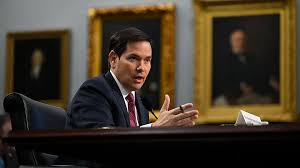

Secretary of State Marco Rubio announced that the Trump administration plans to “aggressively revoke” visas for Chinese students studying in the United States, escalating tensions between Washington and Beijing—this time, in the realm of higher education.
While Rubio did not provide an exact number, his comments suggest the policy could impact many of the approximately 277,000 Chinese students currently enrolled at American universities. He indicated the revocations would focus on students studying in “critical fields” or those allegedly linked to the Chinese Communist Party.
“Under President Trump’s leadership, the State Department, in coordination with the Department of Homeland Security, will move to aggressively revoke visas for Chinese nationals with ties to the CCP or those enrolled in sensitive academic programs,” Rubio said.
The announcement stunned many within the diplomatic community, including consular officials who were reportedly unaware of such a directive. Rubio’s remarks represent another escalation in the administration’s broader effort to confront China on multiple fronts, including trade, technology, and national security.
Chinese students represent the second-largest international student population in the U.S., behind only Indian students. For decades, attending an American university—especially elite institutions—has been considered a mark of prestige in China.
The proposal is already prompting concerns from both U.S. and Chinese officials, who warn it could severely damage educational and cultural exchanges between the two nations. It may also discourage future students from applying to American universities, potentially reducing the global appeal of U.S. higher education.
The move could also financially strain U.S. universities, which depend on the tuition paid by international students—often at full price—to fund scholarships and operations. Additionally, the Trump administration has recently threatened to withhold federal funding from schools it accuses of not doing enough to combat antisemitism, intensifying pressure on college administrators.
Even some national security experts are sounding alarms over the sweeping nature of the policy.
“There are legitimate concerns about non-traditional espionage, but this approach casts too wide a net,” said Mary Gallagher, dean of the Keough School of Global Affairs at the University of Notre Dame and an expert on Chinese politics. “This kind of crackdown could harm U.S. scientific leadership and weaken our academic institutions.”
Rubio’s comments mark the latest front in the administration’s efforts to combat what it calls China’s growing influence in U.S. education. Congress recently passed a bill to block funding to American universities that maintain partnerships with Chinese institutions affiliated with Chinese law enforcement or intelligence.
The new visa crackdown echoes earlier Trump-era efforts. During his first term, the Department of Justice launched the China Initiative, a program aimed at investigating Chinese researchers in the U.S. that drew accusations of racial profiling and flawed prosecutions.
As of now, it remains unclear when or how the visa revocations will begin—or whether the policy will withstand expected legal and diplomatic pushback.