
For Meg Kate and Kyle McAlarney, waiting to introduce smartphones isn’t an accidental delay—it’s a conscious family decision shaped by shared community values and a desire to preserve a more analog kind of childhood.
When their daughter was in first grade, the McAlarneys joined other families in her class in signing the “Wait Until 8th” pledge, a parent-to-parent agreement to hold off on giving kids smartphones until the end of eighth grade.
For Meg, the goal is simple: stretch out the time before screens become the default. She says it’s about protecting space for real conversations and everyday connection before the distractions of constant notifications and scrolling take over.
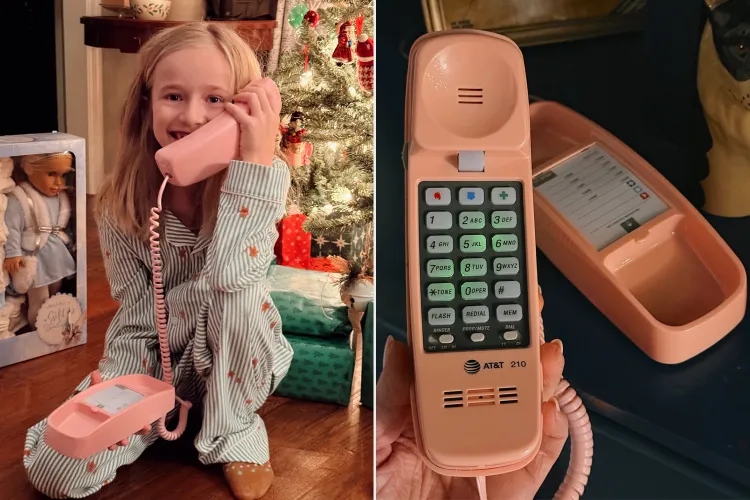
Last Christmas, the McAlarneys found a compromise that felt both practical and nostalgic. Along with several parents from their daughter Maddie’s third-grade class, they gave their children Tin Can landline phones—an old-school solution with a modern purpose.
They wanted Maddie’s first experience with having a phone to feel calm and intentional rather than overwhelming. In Maddie’s case, the gift came from her grandmother in New York, which made it feel even more meaningful.
:max_bytes(150000):strip_icc():focal(749x0:751x2):format(webp)/Maddie-McKenzie-landline-phone-010926-09c5c5d351d542e5a1a59070015cae9c.jpg)
Meg says the Tin Can phone hit the sweet spot: Maddie could talk with friends when school was out and stay connected with family who live far away—without stepping directly into the world of smartphones and social media.
According to the company’s website, Tin Can is a screen-free, kid-friendly home phone that allows children to call and receive calls only from approved contacts, offering a sense of independence without internet access or smartphone risks.
The McAlarneys know that delaying social media isn’t always easy, especially when many kids get devices early and it can feel like everyone is already plugged in. Meg describes it as a constant balancing act—wanting to set boundaries without making a child feel left out.
Still, the bright, easy-to-use landline quickly became a hit. For Meg, it also brought back memories of growing up with a household phone—the jitters of calling a friend, the hope that a parent or older sibling wouldn’t pick up, and how those small moments made conversations feel special.
:max_bytes(150000):strip_icc():focal(710x291:712x293):format(webp)/Kristiana-Lilli-Jilly-landline-phone-011026-ef8ff03b8d224178bf30b6f4a2f6b0de.jpg)
Meg recorded her now-8-year-old daughter using the phone on Christmas and shared it on TikTok. The video has since passed 3 million views. She says the response surprised her in the best way: so many people recognized that same feeling of nostalgia and connection, and she loved the idea that Maddie could experience it too.
The landline has also supported Maddie socially. Meg says Maddie has had an Individualized Education Program (IEP) since kindergarten, and having voice conversations—rather than relying on texting—has helped her practice communication and build confidence.
Meg says hearing Maddie on the phone—laughing, chatting, and speaking comfortably with her friends—has been the greatest payoff. Watching her confidence grow in such a natural way, she explains, has been genuinely meaningful for their family.
:max_bytes(150000):strip_icc():focal(749x0:751x2):format(webp)/ellie-ivy-nora-landline-phone-010926-4ced9531b21942daae023c6043dd8597.jpg)
Since Dec. 24, the phone has barely stopped ringing, and it’s quickly become Maddie’s favorite Christmas gift.
More broadly, the McAlarneys prefer a slow, thoughtful approach to introducing technology at home. Their kids don’t have personal smart devices. They use iPads for school, and like most kids, they watch TV—so they aren’t disconnected from technology altogether, but the family tries to keep it age-appropriate and limited.
When their son James turned 10, he received a smartwatch to support his growing independence, especially since he rides to school on his own. For Maddie, who is two years younger, it can be harder when peers begin getting watches and phones. Meg says it helps that many parents in their community share similar boundaries, and that the Tin Can phone offered a reasonable, middle-ground option.
:max_bytes(150000):strip_icc():focal(749x0:751x2):format(webp)/Sabella-Mila-Charlotte-landline-phone-010926-e87f6056ab5f465082a90172e01b678a.jpg)
Even so, the McAlarneys admit that limiting devices is easier in theory than in practice. In a world built around screens, there’s no one perfect strategy—and every family has to make choices that fit their child and their circumstances.
Meg says parents face enormous pressure to hand over devices early, but she points to growing research suggesting constant access can be harmful for kids, particularly around comparison and self-esteem. Her takeaway is less about strict rules and more about confidence: trust your instincts, choose what feels right for your family, and accept that everyone is figuring it out as they go.