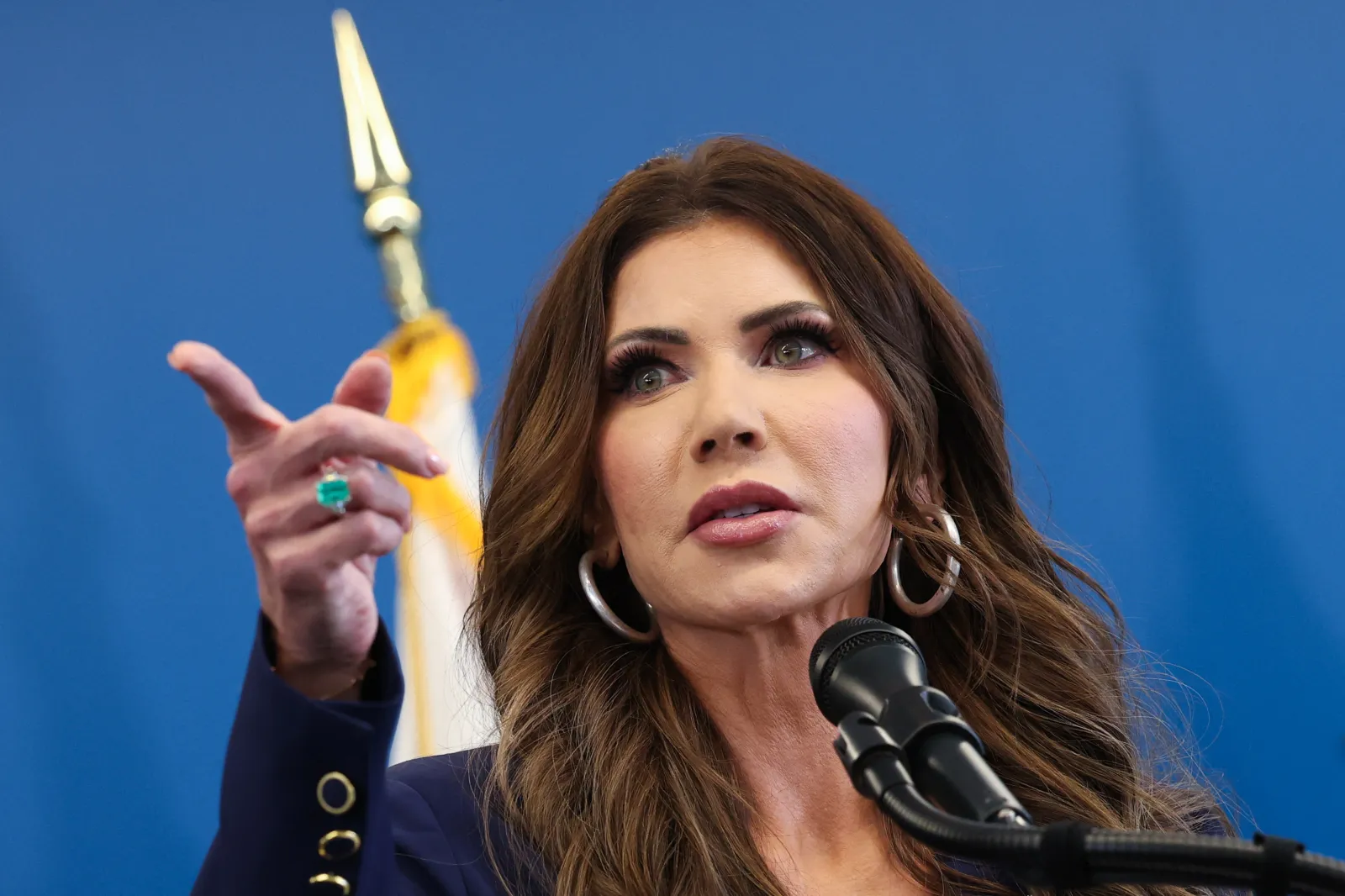

Homeland Security Secretary Kristi Noem has rolled out a new policy that restricts how members of Congress can visit immigration detention facilities—an update that only became public through a court filing late Saturday.
The change surfaced after three Minnesota Democratic House members said they were turned away from a detention facility inside the Whipple Federal Building in Minneapolis. The lawmakers—Reps. Ilhan Omar, Angie Craig, and Kelly Morrison—said they went to the site to conduct oversight and check on detainees’ conditions.
Why It Matters
The policy shift arrives amid rising tensions in Minneapolis following the reported fatal shooting of Renee Nicole Good by an ICE agent. The incident has sparked protests and intensified calls from residents and officials for ICE to leave the city.
More broadly, it underscores the widening clash between Democratic leaders in many large cities and states and the federal government’s immigration enforcement strategy. Senior federal officials—including Vice President JD Vance and Noem—have publicly backed ICE and the agent involved, describing the shooting as self-defense. Minnesota Democratic leaders have disputed that account, arguing the 37-year-old posed no threat when the agent fired three shots.
What Changed
Under the new restrictions, lawmakers must provide one week’s notice before conducting oversight visits to ICE facilities. The policy took effect as of Thursday but was not widely known until it appeared in court documents on Saturday.
The three Minnesota representatives said they were not informed in advance. They reported being initially allowed into the building before being abruptly told they had to leave.
The policy also appears to revive a fight that was already in court. Last month, U.S. District Judge Jia Cobb in Washington, D.C., rejected a similar approach, stating that federal spending laws require that congressional visits to ICE detention facilities remain unrestricted and not conditioned on advance notice.
Noem, however, is attempting a workaround: she has argued that congressional visits will be managed using funding tied to President Donald Trump’s “One Big Beautiful Bill” (OBBBA), rather than through the usual appropriations process—an approach she believes would sidestep the spending-law requirements cited by the judge.
Critics, including several Democratic lawmakers, say the move should be challenged in court.
What Happens Next
The conflict is expected to escalate in the courts and in Congress, especially as scrutiny continues around the Minneapolis shooting. Tensions may rise further after the FBI reportedly withdrew an offer to cooperate with Minnesota authorities investigating Good’s death.
Asked about evidence-sharing between federal and state authorities, Trump criticized Minnesota’s leadership as “crooked,” referencing a recently uncovered fraud scheme involving child care centers in the state that he said was tied to the Somali community.