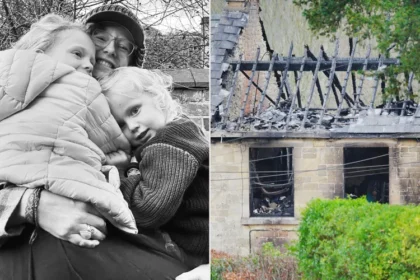
Renee Nicole Good, a 37-year-old mother of three, was fatally shot in Minneapolis on January 7 while driving home after dropping her son at school. She was pronounced dead at the scene. In the days since, the incident has sparked grief, anger, and intense political debate.
Public outrage has grown as protests have called for accountability over the ICE agent’s actions. At the same time, some officials have defended the shooting, arguing the agent acted in self-defense. President Donald Trump also weighed in on Truth Social, describing the video as “horrible” and claiming Good had been “disorderly” and “resisting,” alleging she ran over the agent and that the shooting was self-defense.
Competing claims over what happened
Several government officials, including Homeland Security Secretary Kirsti Noem, have publicly characterized Good as a “domestic terrorist.” Their position is that Good escalated the confrontation and struck the ICE agent with her vehicle while trying to drive away, leaving the agent no choice but to fire.
Minneapolis Mayor Jacob Frey has pushed back strongly. After viewing the footage himself, he said officials were already trying to frame the shooting as self-defense and called that characterization “bulls**t.”
YouTube forensic expert reviews the video
A popular YouTube commentator and forensic analyst known as Dr. G has reviewed video footage circulating online and focused on Good’s hands and vehicle movement in the moments before the shooting.
According to Dr. G’s analysis, Good’s hands appear to be turning the steering wheel left as if “preparing to leave.” He also notes the tires appear angled left, which he says supports that interpretation.
Dr. G further claims the brake and reverse lights on Good’s vehicle were illuminated, which he argues suggests she intended to back up and exit when she had space to do so. He also says that, despite the intensity of the confrontation and likely adrenaline, Good appears relatively composed and primarily focused on getting away from the situation.
“Flight state” and a small detail in her hands
Dr. G describes the encounter as placing Good into a “flight state,” meaning a stress response geared toward escape rather than confrontation. He says that as Good’s spouse tried to get into the vehicle and the ICE agent pulled on the driver-side door, Good attempted to reverse while her spouse’s hand was still on the handle of the locked door—something he interprets as a sign of reduced situational awareness under stress.
He argues that one subtle detail—her steering input—could indicate she was trying to maneuver away rather than aiming the car toward anyone.
“As soon as she put her car out of reverse, as soon as she started moving forward, then she started turning her steering wheel,” he said. “Her tyres are going to be aiming directly ahead temporarily because she has not fully turned them to the right.”