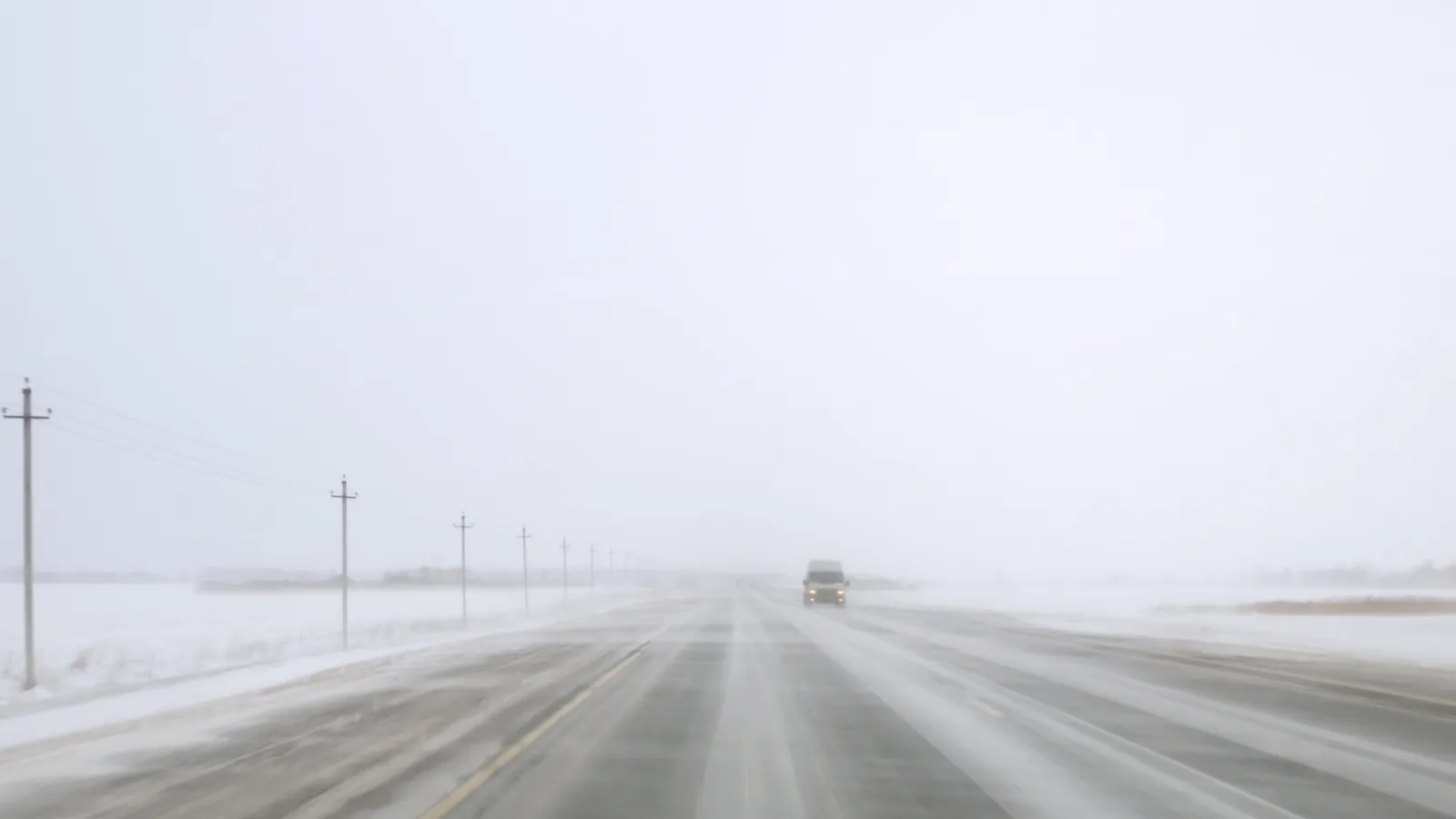

Drivers across parts of the Midwest and Northern Plains were urged to use extreme caution Friday as fast-moving snow squalls and strong winds threatened to rapidly turn normal roads into near-whiteout conditions.
Multiple National Weather Service (NWS) offices issued winter weather advisories and related alerts, warning that conditions could change in minutes as narrow, intense snow bands sweep through. News reports estimated the advisories and related warnings affected more than a million drivers across the region. (Newsweek)
Where travel conditions are expected to deteriorate
The core advisory area included Iowa, Nebraska, South Dakota, North Dakota, and Minnesota, with additional winter weather-related alerts reported in parts of Wisconsin, Michigan, West Virginia, Pennsylvania, New York, and Maine. (Newsweek)
In Iowa, the NWS warned that snow squalls could produce brief but intense snowfall rates, quickly covering roads and dropping visibility to a quarter mile or less. Gusty northwest winds were also expected to worsen blowing snow and visibility. (National Weather Service)
Why snow squalls are so dangerous
Snow squalls are a high-impact winter hazard because they move in and out quickly—often lasting less than an hour—yet can cause sudden whiteouts and icy roads within minutes. The NWS notes there’s a long history of serious and even deadly traffic pileups linked to snow squalls, despite relatively small snow totals. (National Weather Service)
What drivers should do right now
If a snow squall warning is issued for your area, the NWS advises delaying travel until it passes. If you’re already on the road and can’t safely exit in time:
- Reduce speed immediately
- Turn on headlights and hazard lights
- Increase following distance
- Avoid slamming on the brakes on slick or icy roads (National Weather Service)
Officials also urged drivers to keep monitoring local NWS updates, since snow squall conditions can develop quickly with little notice. (Newsweek)
Winds add another layer of risk
Beyond snow squalls, parts of the central U.S. were also dealing with strong wind threats. Separate reporting noted high wind warnings in parts of the Plains, with gusts that could reach around 70 mph in western Kansas. (Successful Farming)
Bottom line: If you must drive today in the Upper Midwest/Northern Plains, expect bursts of extremely poor visibility and sudden slick roads—especially in rural and open areas prone to blowing snow—and consider postponing non-essential trips until conditions improve. (National Weather Service)