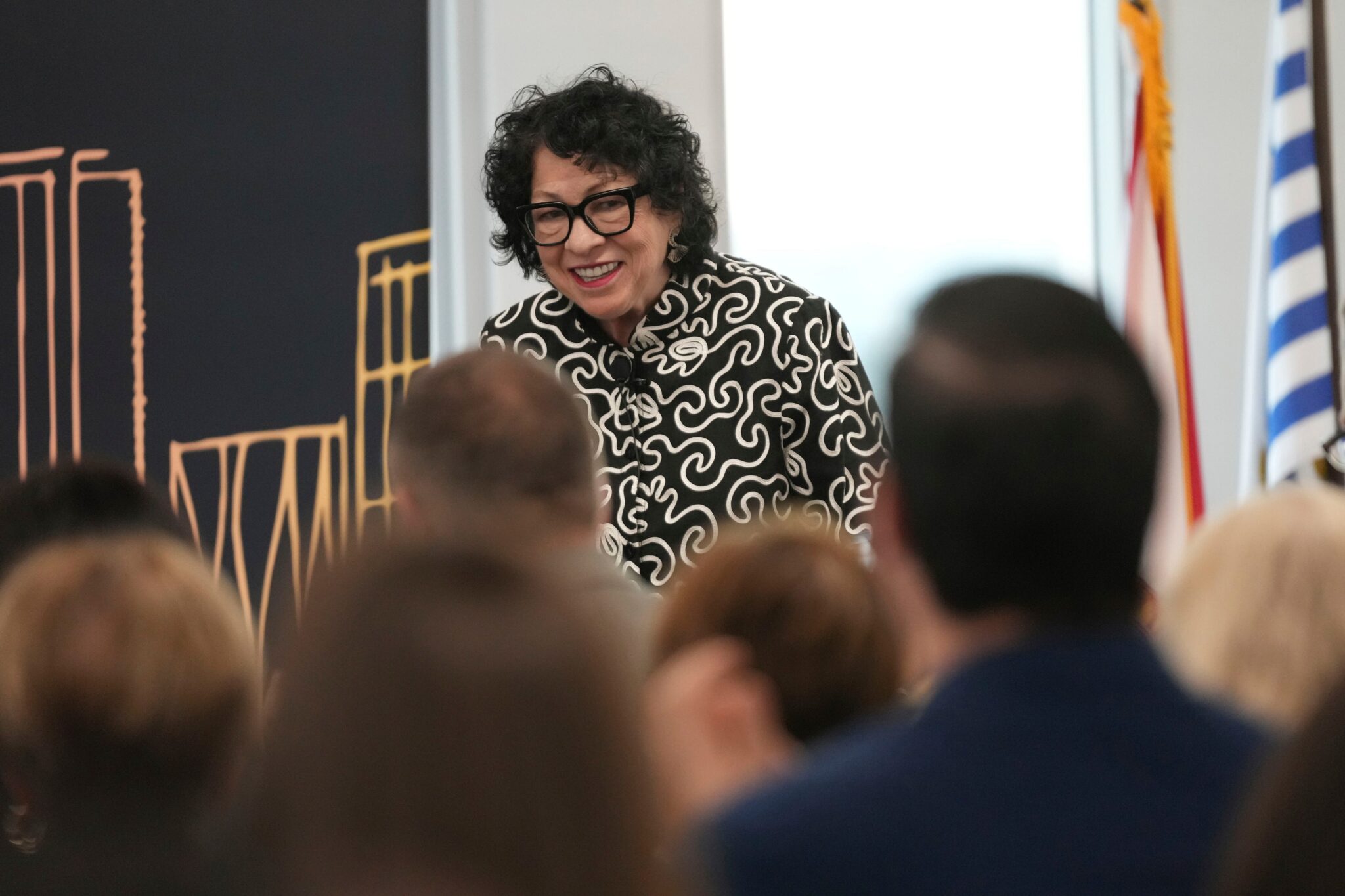

As the U.S. Supreme Court wrapped up its term for the summer, Justice Sonia Sotomayor extended the day with a blistering dissent that sharply criticized the Court’s conservative majority for dismantling the use of nationwide injunctions—orders that have been critical in halting executive actions across the country.
Sotomayor made clear that, while the case ostensibly dealt with judicial procedure, its heart lay in the Trump administration’s efforts to revoke birthright citizenship. In the dissent’s opening lines, she linked the Court’s decision to the infamous Dred Scott ruling, which denied citizenship to enslaved Black Americans.
“Children born in the United States and subject to its laws are United States citizens,” she wrote. “That has been the legal rule since the founding. This Court once tried to erase it in Dred Scott. The Fourteenth Amendment corrected that grievous error. Today, this Court forgets again.”
Though the Court’s majority, led by Justice Amy Coney Barrett, said the case only concerned the power of federal judges to issue nationwide injunctions, Sotomayor argued that the real issue—President Trump’s executive order targeting birthright citizenship—was being sidestepped because the government knew it couldn’t defend it on constitutional grounds.
“The government doesn’t even try to argue the order is legal,” Sotomayor noted. “It just wants the power to enforce it—against everyone except the plaintiffs who sued.”
The ruling significantly narrows the scope of judicial remedies by declaring that district courts can no longer block federal policies on a nationwide basis unless absolutely necessary to provide relief to specific plaintiffs. Sotomayor warned this fundamentally weakens the courts’ ability to check unconstitutional executive actions.
“The majority ignores whether the President’s Order is legal,” she wrote. “But its obvious unlawfulness is exactly why universal injunctions are needed.”
Barrett’s majority opinion argued that universal injunctions were unheard of at the time of the nation’s founding, and therefore beyond the scope of judicial authority.
“Nothing like a universal injunction was available at the founding—or for over a century afterward,” Barrett wrote.
Sotomayor strongly disputed that claim, citing historical examples of early American courts granting broad relief, including taxpayer suits that led to universal injunctions.
The dissent further warns that this decision opens the door to unchecked executive power.
“No right is safe in the new legal regime the Court creates,” Sotomayor cautioned. “Today it’s citizenship. Tomorrow, it may be guns, religion, or speech.”
She accused the Court of aiding a tactical ploy by the Trump administration—choosing a procedural fight over a substantive one it couldn’t win.
“The government’s gamesmanship is blatant,” she wrote. “And shamefully, this Court plays along.”
In a rare move, Sotomayor ends her dissent without the customary phrase “I respectfully dissent,” instead issuing a blunt warning about the future of constitutional protections in the U.S.
“The rule of law is not a given—it must be defended,” she concluded. “Today, the Court fails that test. I dissent.”
The majority did leave a narrow path open for judges to issue broad orders—if framed as “complete relief” for plaintiffs. But Sotomayor argues that workaround is insufficient and unpredictable.
“Until every affected person manages to file their own lawsuit and win their own injunction, unconstitutional government actions may continue indefinitely,” she wrote. “The Court’s decision all but invites lawlessness.”
In the end, Sotomayor’s dissent stands as a sweeping condemnation—not just of the ruling itself, but of what she sees as the Court’s abdication of its duty to uphold constitutional rights in the face of political expediency.