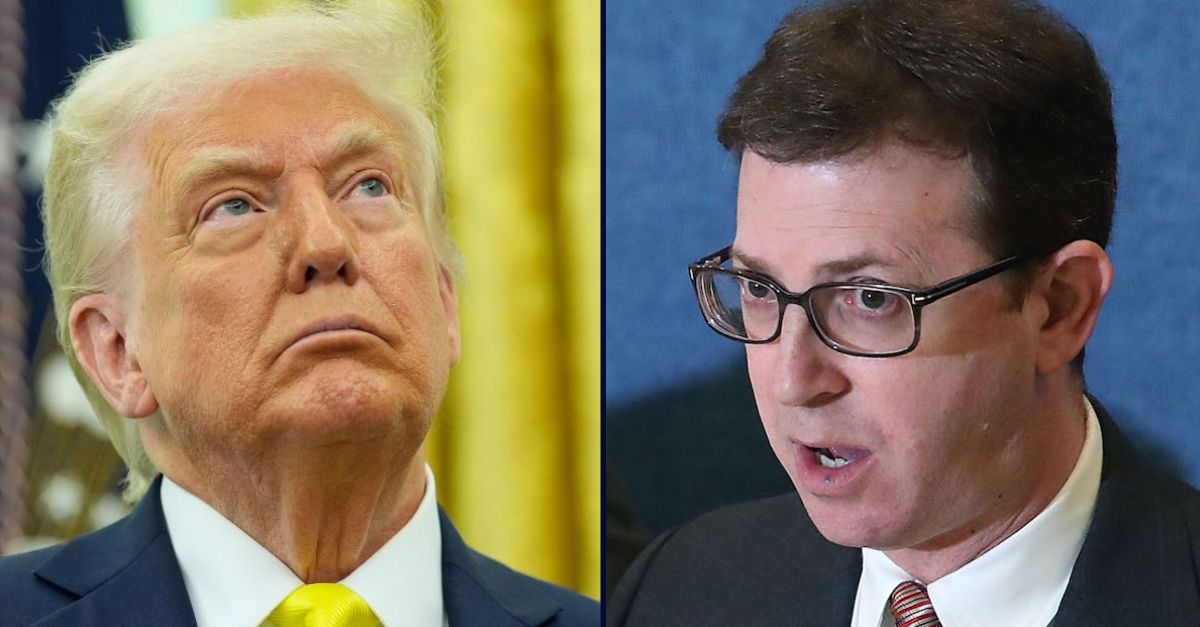

Veteran national security attorney Mark Zaid is taking on a new legal fight — this time as a plaintiff — after former President Donald Trump stripped him of his security clearance via executive order. Zaid’s legal team is now asking a federal judge to treat him like several prominent law firms that successfully challenged similar orders from Trump.
In late March, Trump — serving as both the 45th and 47th president — signed an executive order revoking the security clearances of Zaid and 14 other prominent individuals. The order simply stated that allowing them access to classified information was “no longer in the national interest.” Many of the individuals named are known critics or perceived enemies of Trump.
Zaid, however, argues the move was political retaliation and threatens his livelihood. His legal work, which focuses heavily on national security, depends on access to classified material. During a hearing Friday, Zaid’s attorney Abbe Lowell told U.S. District Judge Amir H. Ali that his client has built a “very specialized niche” over 30 years and is uniquely harmed by the clearance revocation.
Lowell, who launched his own firm in response to Trump’s targeting of legal institutions, called Zaid “one of the premier national security attorneys in the United States,” and said he was in the strongest legal position of the 15 affected individuals to fight back.
Zaid’s lawsuit calls Trump’s order unconstitutional and a form of “improper political retribution.” The court is currently weighing Zaid’s motion for a preliminary injunction to restore his clearance and the government’s motion to dismiss the case entirely.
Judge Ali questioned the urgency of Zaid’s case, noting the lawsuit was filed on May 5, weeks after the executive order on April 23. Zaid’s attorney Margaret M. Donovan responded that the issue is urgent and justified expedited court action.
The core legal battle centers on whether the court can even review the case. Government lawyers argue the president’s decision on who gets a security clearance is a “quintessential political question” and not subject to judicial oversight. They cited past rulings — including a 1988 Supreme Court case and a 2024 D.C. Circuit decision — affirming the president’s broad authority over classified information.
Zaid’s legal team rejected that claim, arguing that denying due process in security clearance revocations is a constitutional issue and should be reviewable in federal court.
To support their position, Zaid’s attorneys pointed to recent court victories by major law firms — Perkins Coie, Jenner & Block, WilmerHale, and Susman Godfrey — all of whom successfully fought back against Trump’s similar attempts to revoke access based on perceived political bias.
“This is not just about national security law,” Zaid said in an email to Law&Crime after the hearing. “This is about whether a president can wield unchecked power to punish his critics. We don’t have a king in this country.”
Zaid is no stranger to high-profile cases. He represented the intelligence community whistleblower whose complaint helped spark Trump’s first impeachment in 2019. Since then, he has frequently clashed with Trump and his allies.
The lawsuit notes Trump publicly attacked Zaid by name, calling him a “sleazeball” at a 2019 rally and later suggesting he be “sued” or even charged with “treason.”
Zaid’s access to classified material was never a problem before — even during Trump’s presidency — until after the impeachment. Now, he argues, this executive order is a continuation of personal political retaliation that violates his constitutional rights.
A ruling on the preliminary injunction is expected in the coming weeks.