
One North Carolina mom says she’ll never forget the moment her instincts took over.
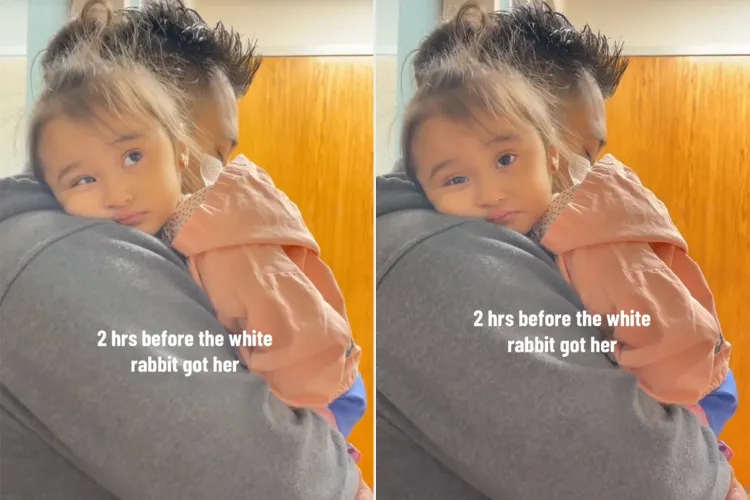
Three years ago, Stacy, 32, came home from work and immediately sensed something wasn’t right with her daughter, Lany, who was 3 at the time. The family was getting ready to head out for food, but one look at her child stopped her cold.
“Her eyes were watery, like she had been crying, and there was a heaviness in her expression that I had never seen before,” Stacy says. As they were about to leave, Lany suddenly paused, sat down on the couch near the door, and seemed too drained to move.
During the drive, Stacy kept checking the rearview mirror. Lany’s eyes didn’t look normal — they seemed unfocused, drifting in different directions. She responded when spoken to, but her presence felt distant.
“It felt like she wasn’t really present,” Stacy says. “This was very different from her usual tired or sleepy moments. I had a deep, sinking feeling in my chest that something was seriously wrong.”
Stacy and her partner, Pablo, 32, decided not to wait. They took Lany to the hospital immediately.
“Even though we didn’t yet know what was happening, we knew this wasn’t something we could wait out or ignore,” Stacy says.
At first, doctors suspected Lany might have ingested something that made her drowsy. But when Lany repeatedly complained that her head hurt, the medical team ordered a CT scan.
That’s when everything changed.
“While we were waiting for results, everything escalated quickly,” Stacy recalls. “She suddenly began having a seizure. Within seconds, nurses and doctors rushed in. Seeing her seize [and] connected to oxygen was one of the most terrifying moments of my life.”
Doctors quickly determined Lany needed to be moved to another hospital — but not by ambulance. A helicopter was called in to transport her, and only once it arrived did Stacy and Pablo learn what was happening: Lany had suffered a major brain bleed.
At the second hospital, specialists flooded the room. Stacy says the plan was to medically induce a coma to protect Lany’s brain while doctors worked to understand what caused the seizure and bleeding.
At the same time, Stacy says she and Pablo were questioned as part of an investigation into whether trauma could have caused Lany’s injuries — a blow that landed on top of an already unbearable night.
“That was devastating on top of an already unbearable situation,” Stacy says.
Then, just as doctors began preparing to induce the coma, Lany woke up — crying and calling for her parents. Because she was responsive, doctors decided not to proceed.
Stacy describes those hours as a blur of fear and helplessness.
“Watching your child suffer while being unable to fix it is every parent’s worst nightmare,” she says. “On top of that, being questioned as though we might have caused her injuries was emotionally crushing. I felt terrified, powerless, and broken all at once, but also desperate to stay strong for her.”
The next day, an MRI finally delivered answers. Lany was diagnosed with a cavernoma — an abnormal cluster of tightly packed small blood vessels, most often found in the brain, brainstem, or spinal cord. In Lany’s case, the cluster filled with blood and eventually burst, triggering the seizure.
Stacy says the diagnosis was overwhelming — but also brought relief.
“Finally, we had an explanation,” she says. “We knew it wasn’t something we missed or caused; it was something she was born with.”
Initially, surgery was discussed. But the cavernoma was located close to the area of the brain responsible for vision, making surgery a high-risk option. After additional evaluation and second opinions, Stacy and Pablo chose careful monitoring instead of an invasive procedure.
Lany was placed on seizure medication — and it worked.
“She has not had a single seizure since,” Stacy says. “Now, three years later, she continues to have yearly MRIs and sees a wonderful neurologist. We’re hopeful she may be able to stop taking medication next year. She’s thriving, healthy, and doing beautifully.”
:max_bytes(150000):strip_icc():focal(399x0:401x2):format(webp)/sticy-Saavedra-012226-ce5d76c1876b40cfb1339f8d0e7a45e6.jpg)
Looking back, Stacy says the experience permanently changed the way she approaches parenting — especially when it comes to advocating for her child.
“I no longer assume that if something is wrong, it will be obvious or immediately recognized by doctors,” she says. “I’ve learned to trust my intuition, speak up, and advocate relentlessly for my child.”
She says she now understands that getting answers can require persistence — and the willingness to push past discomfort.
“Being a parent sometimes means pushing for answers, asking uncomfortable questions, and seeking second opinions,” she says. “This journey made me more aware, more proactive, and more confident in my role as her protector.”
Stacy says she shared Lany’s story online with one hope: that another parent might recognize the early signs and act.
“Small changes matter,” she says. “That quiet feeling that something isn’t right can save a life. Parents know their children better than anyone.”
She adds that faith carried her through the darkest moments.
“Through everything, my faith in God has been my anchor,” she says. “I truly believe He guided the doctors, protected my daughter, and gave us strength when we had none left. Her recovery feels nothing short of a miracle.”